
Disclosure: As an Amazon Associate, Bookish Wisdom earns from qualifying purchases. This doesn't change our picks or your price.
TL;DR: Frantz Fanon, a psychiatrist and philosopher from Martinique who joined the Algerian independence movement, argues that colonialism is built on violence and that decolonization is also a violent process. He analyzes the psychological effects of colonialism and warns about the risks of the postcolonial elite.
Table of Contents
The Wretched of the Earth at a Glance
| Author | Frantz Fanon |
| First published | 1961 |
| Type | Political philosophy |
| Best for | readers studying colonialism and decolonization |
The Wretched of the Earth is a nonfiction book by Frantz Fanon, first published in 1961. The book was published in 1961, the year Fanon died. It has a preface by Jean-Paul Sartre. It is a landmark text but also controversial. Below you will find a part-by-part summary, five key takeaways, a few ideas worth remembering and a note on who will enjoy it most. The summary paraphrases the author's ideas rather than quoting them at length, so it works as a refresher or a preview, not a replacement for the book.
Content note: Discusses colonial violence and mental illness.
Key Ideas, Part by Part
On violence
Fanon argues that decolonization is a violent event that replaces one order with another.
Spontaneity and its weaknesses
He discusses the role of peasants and the urban elite in the struggle.
Pitfalls of national consciousness
He warns that the national bourgeoisie may repeat colonial patterns.
On national culture
He argues that culture is shaped by the struggle.
Colonial war and mental disorders
He describes psychiatric cases from the Algerian war.
Conclusion
He calls for a new humanism.
The Summary at a Glance
| Part | In one line |
|---|---|
| On violence | Fanon argues that decolonization is a violent event that replaces one order with another. |
| Spontaneity and its weaknesses | He discusses the role of peasants and the urban elite in the struggle. |
| Pitfalls of national consciousness | He warns that the national bourgeoisie may repeat colonial patterns. |
| On national culture | He argues that culture is shaped by the struggle. |
| Colonial war and mental disorders | He describes psychiatric cases from the Algerian war. |
| Conclusion | He calls for a new humanism. |
5 Key Takeaways
- Colonialism harms mind and society.
- Independence does not guarantee justice.
- Elites can betray liberation.
- Culture is shaped by struggle.
- The book is debated for its views on violence.
Ideas Worth Remembering
These are paraphrased, not direct quotes:
- The prose is passionate.
- Readers disagree on his arguments.
- It influenced liberation movements.
Who Should Read The Wretched of the Earth?
Read it if you study history and politics. It is dense and contested.
Questions to Think About After Reading
These prompts work for solo reading, a book club or a classroom discussion of The Wretched of the Earth:
- Which idea could you use this week, and what would the first step be?
- Where do you disagree with the author, and what evidence would change your mind?
- Who in your life would benefit most from this book, and why?
Quick Facts to Remember
- Book: The Wretched of the Earth by Frantz Fanon (1961)
- Type: Political philosophy
- Best for: readers studying colonialism and decolonization
- Main idea in one line: Colonialism harms mind and society.
Reading Time and Format
Nonfiction is easy to read in pieces. Many readers like an audiobook for the commute and a print or e-book copy for notes and highlights. Check the page count of your edition before you plan your reading time. Whichever format you choose, a library copy is a low-cost way to try the book before you buy, and used or digital editions are often cheaper than new print copies.
How to Use This Summary
Use this page as a quick reference before a book club meeting, an exam, or a decision about whether The Wretched of the Earth is worth your time. The takeaways are written to stand on their own. If a point interests you, go back to the book for the author's full argument, examples and style, which no short summary can carry.
A simple way to get the most from it: first read the TL;DR and the takeaways to decide if the book fits your interests, then read the part-by-part section for the structure, and finally write down one idea you want to remember or one question you want answered by the full text.
A Note on Accuracy and Spoilers
This summary is based on the published text of The Wretched of the Earth, not on any film, series or stage adaptation, which often change the story. Details are kept at the level of the main events so that nothing is invented. Editions differ slightly in length and wording, so page numbers and small details may vary from your copy.
Should You Read the Book?
If you decide to read it, skim the contents page first and read the sections that match your goal. Take notes in your own words, because ideas stick better when you rephrase them. If you are still unsure, read a free sample or the first chapter, because the opening pages usually show whether the voice and subject suit you. Reviews from readers with tastes like yours can help too, but your own reaction to a few pages is the best test.
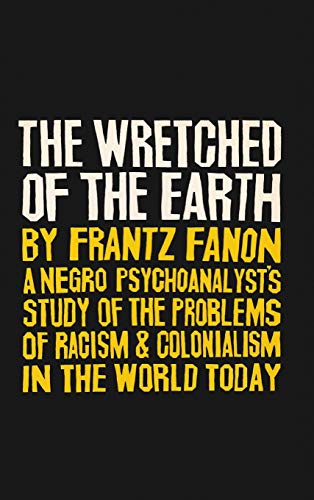
Check price of The Wretched of the Earth on Amazon
What to Read Next
- Black Skin, White Masks by Frantz Fanon: Fanon's earlier book
- Decolonising the Mind by Ngugi wa Thiong'o: language and colonialism
- How Europe Underdeveloped Africa by Walter Rodney: an economic history
Related: 15 Books Like The Wretched of the Earth You’ll Love
Frequently Asked Questions
Is The Wretched of the Earth about violence?
Violence is a central and debated theme.
Who wrote it?
Frantz Fanon.
Is it hard to read?
Yes, it is dense.
Is The Wretched of the Earth worth reading?
It depends on what you want. The book is best for readers studying colonialism and decolonization. If that describes you, it is likely a good fit. If not, the titles under What to Read Next may suit you better.
Can this summary replace reading The Wretched of the Earth?
No. A summary covers the main events and ideas, but it cannot carry the author's voice, detail or pacing. Use it to decide whether to read the book, to refresh your memory or to prepare for a discussion.