
Disclosure: As an Amazon Associate, Bookish Wisdom earns from qualifying purchases. This doesn't change our picks or your price.
Spoiler warning: this analysis discusses the whole book, including the ending of Alice's Adventures in Wonderland.
Quick answer: The main themes in Alice's Adventures in Wonderland by Lewis Carroll are identity and growing up, logic and nonsense, curiosity, authority and dreams. Each is explained below with what it means, how it develops in the story and questions you can use for study or discussion.
Quick facts
- Book: Alice's Adventures in Wonderland by Lewis Carroll
- First published: 1865
- Main themes: identity and growing up, logic and nonsense, curiosity, authority and dreams
Table of Contents
About Alice's Adventures in Wonderland
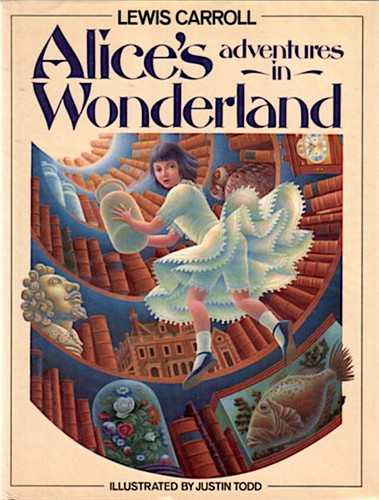
Bored on a riverbank, young Alice follows a White Rabbit with a pocket watch down a rabbit hole and falls into Wonderland, a world of nonsense and strange logic. She grows and shrinks after eating and drinking mysterious things, attends a mad tea party with the Mad Hatter and March Hare, meets the grinning Cheshire Cat and finally faces the bad-tempered Queen of Hearts, who shouts “Off with their heads!” at everyone. In the end Alice wakes up and realises it was all a dream.
Check price of Alice's Adventures in Wonderland on Amazon
The Main Themes in Alice's Adventures in Wonderland
1. Identity and growing up
Alice keeps changing size and asks “Who in the world am I?” Carroll captures the confusion of growing up, when children's bodies, roles and sense of self keep shifting.
Question to consider: Where in Alice's Adventures in Wonderland does identity and growing up matter most to the characters, and what does Lewis Carroll want readers to think about it?
2. Logic and nonsense
Wonderland's rules make no sense, yet its characters insist they do. Carroll plays with language and logic to mock adult rules and show how arbitrary they can seem to children.
Question to consider: Where in Alice's Adventures in Wonderland does logic and nonsense matter most to the characters, and what does Lewis Carroll want readers to think about it?
3. Curiosity
Alice's curiosity drives the story. The book celebrates curiosity and the courage to explore the unknown.
Question to consider: Where in Alice's Adventures in Wonderland does curiosity matter most to the characters, and what does Lewis Carroll want readers to think about it?
4. Authority
The Queen of Hearts and the court are ridiculous and unfair. Carroll mocks arbitrary authority.
Question to consider: Where in Alice's Adventures in Wonderland does authority matter most to the characters, and what does Lewis Carroll want readers to think about it?
5. Dreams
The story is a dream. Carroll explores dream logic and imagination.
Question to consider: Where in Alice's Adventures in Wonderland does dreams matter most to the characters, and what does Lewis Carroll want readers to think about it?
Symbols and Motifs
- The rabbit hole. It represents entry into the unknown.
- The Cheshire Cat. It symbolises mystery and madness.
- The potions. They stand for change.
- The croquet game. It represents chaotic authority.
How the Themes Connect
Identity and growing up are reflected in Alice's changing size, while logic and nonsense challenge the rules of the adult world. Curiosity drives her adventure, and authority is mocked through the Queen of Hearts. The dream frame ties it together, and the book's playful imagination has made it one of the most influential children's stories ever written.
How to Write About the Themes of Alice's Adventures in Wonderland
If you are writing an essay or preparing for class, these steps help:
- Pick one theme. A focused argument is stronger than a list of everything.
- Find evidence in the text. Point to specific scenes, characters and choices rather than general impressions.
- Explain, don't just describe. After each example, say what it shows about the theme.
- Connect to the ending. Ask how the final chapters resolve or complicate the theme.
- Consider other readings. A fair essay acknowledges that readers can disagree.
Discussion Questions
- Which of the themes above feels most relevant to your own life, and why?
- Do the characters in Alice's Adventures in Wonderland handle identity and growing up well or badly?
- How does the title relate to the themes of the book?
- Would the story change if it were set in a different time or place?
- What does Lewis Carroll leave unresolved, and why might that be?
Books With Similar Themes
- Through the Looking-Glass by Lewis Carroll
- Peter Pan by J.M. Barrie
Related: Alice’s Adventures in Wonderland by Lewis Carroll: Summary and Key Takeaways · Alice’s Adventures in Wonderland Ending Explained
Frequently Asked Questions
What is the main theme of Alice's Adventures in Wonderland?
The central theme is identity and growing up, supported by logic and nonsense and curiosity.
How many themes does Alice's Adventures in Wonderland have?
This guide covers 5 main themes, but readers may find others.
Who wrote Alice's Adventures in Wonderland?
Alice's Adventures in Wonderland was written by Lewis Carroll and first published in 1865.
Is Alice's Adventures in Wonderland a good book for studying themes?
Yes. Its themes are clear enough to follow and rich enough to support essays and group discussion.
What should I read after Alice's Adventures in Wonderland?
Try Through the Looking-Glass by Lewis Carroll or Peter Pan by J.M. Barrie.