
Disclosure: As an Amazon Associate, Bookish Wisdom earns from qualifying purchases. This doesn't change our picks or your price.
Spoiler warning: this analysis discusses the whole book, including the ending of Charlie and the Chocolate Factory.
Quick answer: The main themes in Charlie and the Chocolate Factory by Roald Dahl are good behaviour and reward, greed and excess, poverty and family, imagination and parenting. Each is explained below with what it means, how it develops in the story and questions you can use for study or discussion.
Quick facts
- Book: Charlie and the Chocolate Factory by Roald Dahl
- First published: 1964
- Main themes: good behaviour and reward, greed and excess, poverty and family, imagination and parenting
Table of Contents
About Charlie and the Chocolate Factory
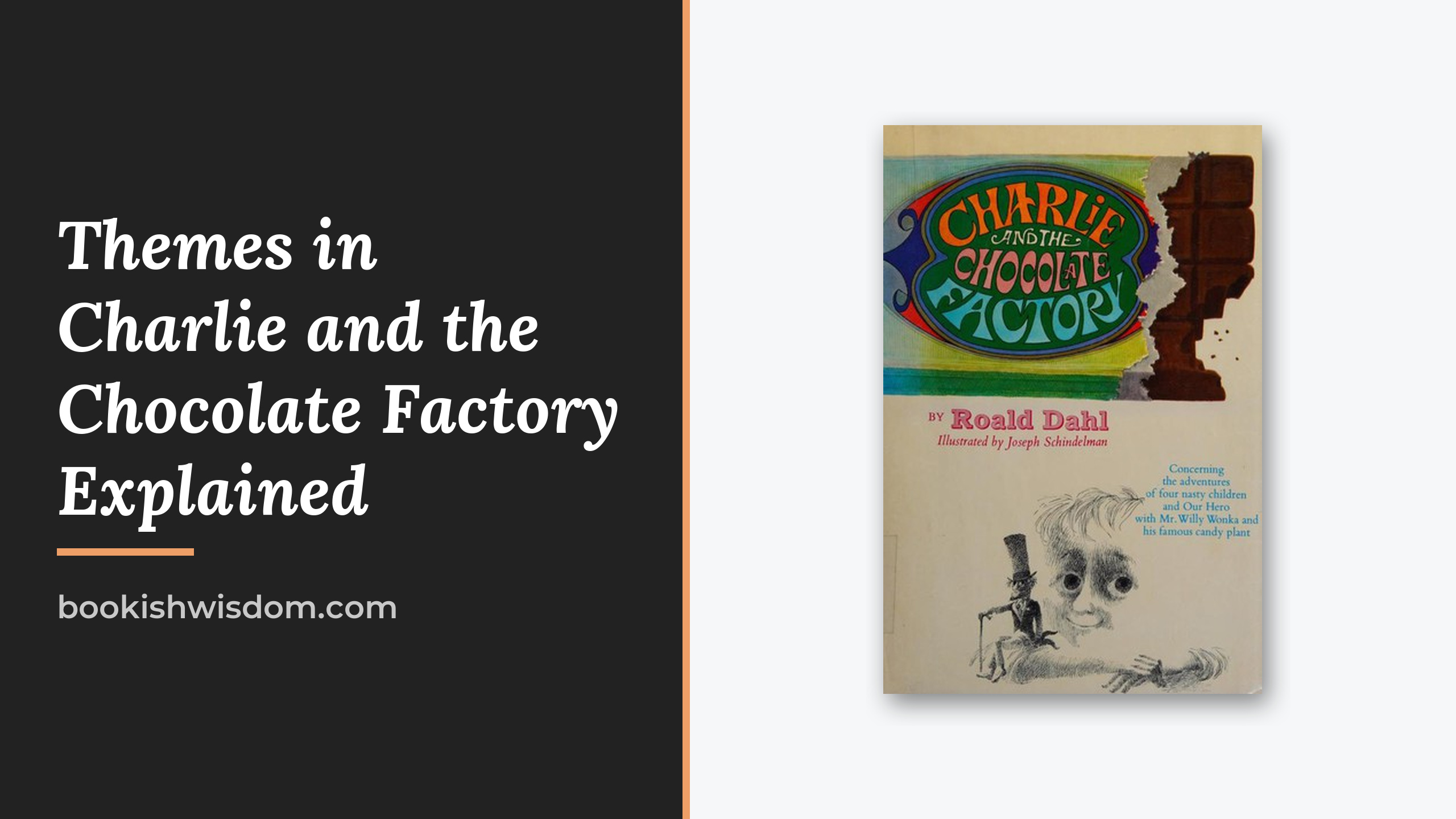
Charlie Bucket lives in poverty with his parents and four grandparents in a tiny house near Willy Wonka's mysterious chocolate factory. Wonka announces that five golden tickets have been hidden in chocolate bars, and the winners will tour the factory. Charlie finds the last ticket. Along with four spoiled children, he visits the wondrous factory, where each of the other children's bad behaviour leads to a comic disaster, and Charlie wins the greatest prize of all.
Check price of Charlie and the Chocolate Factory on Amazon
The Main Themes in Charlie and the Chocolate Factory
1. Good behaviour and reward
Each spoiled child is punished for a fault, while humble Charlie is rewarded. Dahl teaches that kindness and modesty matter more than wealth or greed.
Question to consider: Where in Charlie and the Chocolate Factory does good behaviour and reward matter most to the characters, and what does Roald Dahl want readers to think about it?
2. Greed and excess
Augustus Gloop's greed and Veruca Salt's demands lead to trouble. Dahl mocks greed and spoiled behaviour.
Question to consider: Where in Charlie and the Chocolate Factory does greed and excess matter most to the characters, and what does Roald Dahl want readers to think about it?
3. Poverty and family
Charlie's family is poor but loving. The book shows that love matters more than money.
Question to consider: Where in Charlie and the Chocolate Factory does poverty and family matter most to the characters, and what does Roald Dahl want readers to think about it?
4. Imagination
Wonka's factory is full of wonder. Dahl celebrates imagination.
Question to consider: Where in Charlie and the Chocolate Factory does imagination matter most to the characters, and what does Roald Dahl want readers to think about it?
5. Parenting
The other children's parents spoil them. Dahl criticises poor parenting.
Question to consider: Where in Charlie and the Chocolate Factory does parenting matter most to the characters, and what does Roald Dahl want readers to think about it?
Symbols and Motifs
- The golden ticket. It represents hope.
- The factory. It symbolises imagination.
- The Oompa-Loompas. They stand for moral commentary.
- The glass elevator. It represents possibility.
How the Themes Connect
Good behaviour and reward drive the plot, while greed and bad parenting explain the other children's fates. Poverty and family show Charlie's strength, and imagination fills the factory. Together the themes give a lively moral tale.
How to Write About the Themes of Charlie and the Chocolate Factory
If you are writing an essay or preparing for class, these steps help:
- Pick one theme. A focused argument is stronger than a list of everything.
- Find evidence in the text. Point to specific scenes, characters and choices rather than general impressions.
- Explain, don't just describe. After each example, say what it shows about the theme.
- Connect to the ending. Ask how the final chapters resolve or complicate the theme.
- Consider other readings. A fair essay acknowledges that readers can disagree.
Discussion Questions
- Which of the themes above feels most relevant to your own life, and why?
- Do the characters in Charlie and the Chocolate Factory handle good behaviour and reward well or badly?
- How does the title relate to the themes of the book?
- Would the story change if it were set in a different time or place?
- What does Roald Dahl leave unresolved, and why might that be?
Books With Similar Themes
- James and the Giant Peach by Roald Dahl
- Matilda by Roald Dahl
Related: Charlie and the Chocolate Factory by Roald Dahl: Summary and Key Takeaways · Charlie and the Chocolate Factory Ending Explained
Frequently Asked Questions
What is the main theme of Charlie and the Chocolate Factory?
The central theme is good behaviour and reward, supported by greed and excess and poverty and family.
How many themes does Charlie and the Chocolate Factory have?
This guide covers 5 main themes, but readers may find others.
Who wrote Charlie and the Chocolate Factory?
Charlie and the Chocolate Factory was written by Roald Dahl and first published in 1964.
Is Charlie and the Chocolate Factory a good book for studying themes?
Yes. Its themes are clear enough to follow and rich enough to support essays and group discussion.
What should I read after Charlie and the Chocolate Factory?
Try James and the Giant Peach by Roald Dahl or Matilda by Roald Dahl.