
Disclosure: As an Amazon Associate, Bookish Wisdom earns from qualifying purchases. This doesn't change our picks or your price.
Spoiler warning: this analysis discusses the whole book, including the ending of How to Train Your Dragon.
Quick answer: The main themes in How to Train Your Dragon by Cressida Cowell are courage and heroism, communication and understanding, fitting in, fathers and expectations and intelligence over strength. Each is explained below with what it means, how it develops in the story and questions you can use for study or discussion.
Quick facts
- Book: How to Train Your Dragon by Cressida Cowell
- First published: 2003
- Main themes: courage and heroism, communication and understanding, fitting in, fathers and expectations and intelligence over strength
Table of Contents
About How to Train Your Dragon
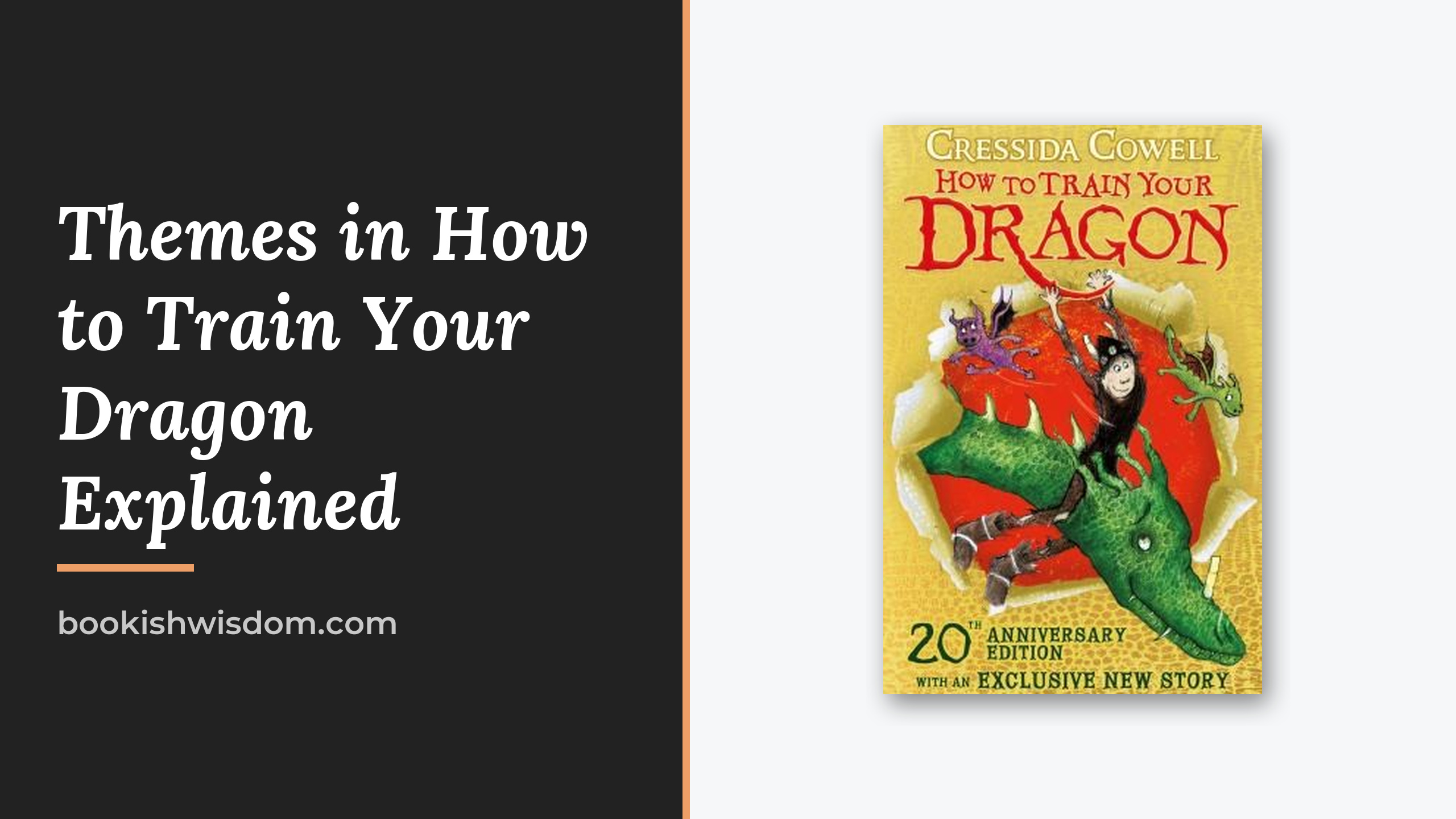
Hiccup Horrendous Haddock the Third is the small, ordinary son of the chief of the Hairy Hooligan tribe on the island of Berk. To become a full member of the tribe, every boy must catch and train a dragon. Hiccup ends up with Toothless, a tiny, stubborn and disobedient dragon. While the others train their dragons by shouting, Hiccup learns to speak Dragonese, and when two giant sea dragons threaten Berk, his brains matter more than muscle.
Check price of How to Train Your Dragon on Amazon
The Main Themes in How to Train Your Dragon
1. Courage and heroism
Hiccup is not big, loud or strong, so nobody expects him to be a hero. Cowell shows that real heroism comes from thinking, kindness and doing the right thing when it is frightening.
Question to consider: Where in How to Train Your Dragon does courage and heroism matter most to the characters, and what does Cressida Cowell want readers to think about it?
2. Communication and understanding
Hiccup learns to talk to dragons instead of yelling at them. The story shows that understanding others, even very different creatures, works better than force.
Question to consider: Where in How to Train Your Dragon does communication and understanding matter most to the characters, and what does Cressida Cowell want readers to think about it?
3. Fitting in
Hiccup feels he does not belong among the tough Hooligans. The book celebrates being different and suggests that the people who do not fit in often see what others miss.
Question to consider: Where in How to Train Your Dragon does fitting in matter most to the characters, and what does Cressida Cowell want readers to think about it?
4. Fathers and expectations
Stoick the Vast expects his son to be a typical Viking. Their relationship explores how parents' expectations can weigh on children, and how both can learn to respect each other.
Question to consider: Where in How to Train Your Dragon does fathers and expectations matter most to the characters, and what does Cressida Cowell want readers to think about it?
5. Intelligence over strength
Hiccup defeats huge dragons with clever plans. The book repeatedly shows that brains are more valuable than muscle.
Question to consider: Where in How to Train Your Dragon does intelligence over strength matter most to the characters, and what does Cressida Cowell want readers to think about it?
Symbols and Motifs
- Toothless. The tiny dragon represents friendship and stubborn individuality.
- Dragonese. The dragon language stands for understanding and empathy.
- The Green Death. The giant sea dragon symbolises threats that force brave thinking.
- Hiccup's helmet. It represents the Viking identity he must grow into in his own way.
How the Themes Connect
Fitting in is Hiccup's first problem, and his father's expectations make it worse. Communication becomes his special skill, and intelligence over strength proves its worth when Berk is threatened. In the end, Cowell suggests that courage is about using your own gifts, not copying someone else's.
How to Write About the Themes of How to Train Your Dragon
If you are writing an essay or preparing for class, these steps help:
- Pick one theme. A focused argument is stronger than a list of everything.
- Find evidence in the text. Point to specific scenes, characters and choices rather than general impressions.
- Explain, don't just describe. After each example, say what it shows about the theme.
- Connect to the ending. Ask how the final chapters resolve or complicate the theme.
- Consider other readings. A fair essay acknowledges that readers can disagree.
Discussion Questions
- Which of the themes above feels most relevant to your own life, and why?
- Do the characters in How to Train Your Dragon handle courage and heroism well or badly?
- How does the title relate to the themes of the book?
- Would the story change if it were set in a different time or place?
- What does Cressida Cowell leave unresolved, and why might that be?
Books With Similar Themes
- Wings of Fire by Tui T. Sutherland
- Howl's Moving Castle by Diana Wynne Jones
Related: How to Train Your Dragon by Cressida Cowell: Summary and Key Takeaways · 15 Books Like How to Train Your Dragon You’ll Love
Frequently Asked Questions
What is the main theme of How to Train Your Dragon?
The central theme is courage and heroism, supported by communication and understanding and fitting in.
How many themes does How to Train Your Dragon have?
This guide covers 5 main themes, but readers may find others.
Who wrote How to Train Your Dragon?
How to Train Your Dragon was written by Cressida Cowell and first published in 2003.
Is How to Train Your Dragon a good book for studying themes?
Yes. Its themes are clear enough to follow and rich enough to support essays and group discussion.
What should I read after How to Train Your Dragon?
Try Wings of Fire by Tui T. Sutherland or Howl's Moving Castle by Diana Wynne Jones.