
Disclosure: As an Amazon Associate, Bookish Wisdom earns from qualifying purchases. This doesn't change our picks or your price.
Spoiler warning: this analysis discusses the whole book, including the ending of Little Red Riding Hood.
Quick answer: The main themes in Little Red Riding Hood by Charles Perrault and the Brothers Grimm are innocence and danger, obedience and warnings, deception, growing up and rescue and survival. Each is explained below with what it means, how it develops in the story and questions you can use for study or discussion.
Quick facts
- Book: Little Red Riding Hood by Charles Perrault and the Brothers Grimm
- First published: 1697
- Main themes: innocence and danger, obedience and warnings, deception, growing up and rescue and survival
Table of Contents
About Little Red Riding Hood
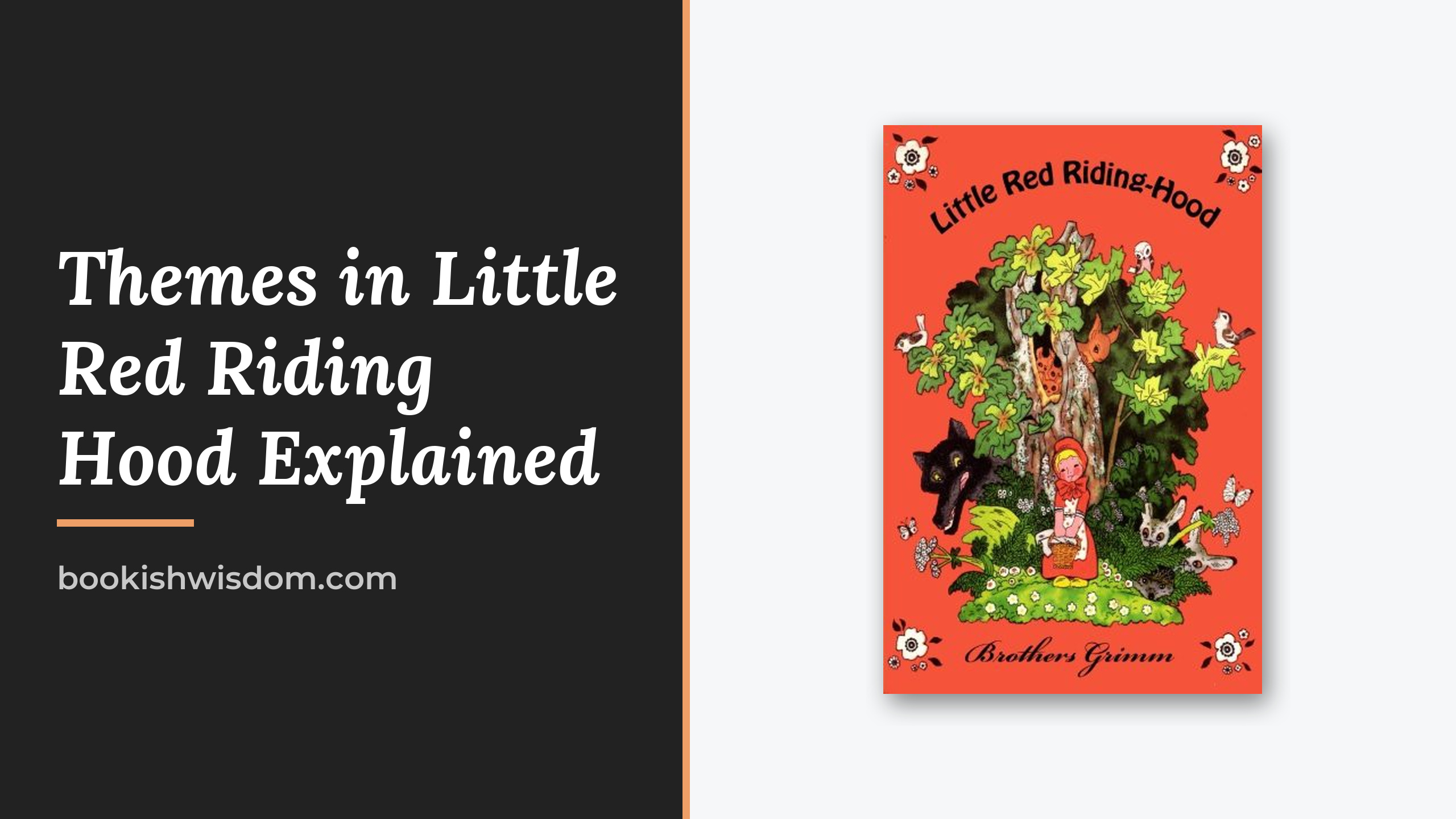
A young girl in a red hood sets out through the woods to bring food to her sick grandmother. On the way she meets a wolf, who tricks her into telling him where she is going. The wolf hurries ahead, swallows the grandmother and waits in her bed. When the girl arrives, she notices strange things about her grandmother's eyes, ears and teeth. In Perrault's version the wolf wins, while in the Grimms' version a huntsman saves them both.
Check price of Little Red Riding Hood on Amazon
The Main Themes in Little Red Riding Hood
1. Innocence and danger
Little Red is trusting and naive, and she does not recognise danger when it speaks politely. The story warns children that the world can be risky and that not everyone is kind.
Question to consider: Where in Little Red Riding Hood does innocence and danger matter most to the characters, and what does Charles Perrault and the Brothers Grimm want readers to think about it?
2. Obedience and warnings
In many versions she is told to stay on the path. Her decision to stray shows the consequences of ignoring advice, a lesson that has made the tale a classic warning.
Question to consider: Where in Little Red Riding Hood does obedience and warnings matter most to the characters, and what does Charles Perrault and the Brothers Grimm want readers to think about it?
3. Deception
The wolf succeeds through tricks and disguise rather than strength. The tale shows how predators often pretend to be friendly and familiar.
Question to consider: Where in Little Red Riding Hood does deception matter most to the characters, and what does Charles Perrault and the Brothers Grimm want readers to think about it?
4. Growing up
Many readers see the journey through the woods as a step toward adulthood. The girl must learn to judge people and situations for herself.
Question to consider: Where in Little Red Riding Hood does growing up matter most to the characters, and what does Charles Perrault and the Brothers Grimm want readers to think about it?
5. Rescue and survival
In the Grimms' version, the huntsman cuts the wolf open and saves them. This ending offers hope that mistakes can be survived and lessons learned.
Question to consider: Where in Little Red Riding Hood does rescue and survival matter most to the characters, and what does Charles Perrault and the Brothers Grimm want readers to think about it?
Symbols and Motifs
- The red hood. It represents innocence, youth and visibility.
- The wolf. It stands for predators and hidden danger.
- The forest path. It represents safety, rules and the risk of straying.
- The grandmother's house. It symbolises home and safety turned into a trap.
How the Themes Connect
Innocence makes Little Red vulnerable, and deception lets the wolf take advantage of it. The warnings she ignores connect to growing up, since learning to judge danger is part of becoming an adult. The rescue in some versions adds hope, showing that survival is possible even after mistakes.
How to Write About the Themes of Little Red Riding Hood
If you are writing an essay or preparing for class, these steps help:
- Pick one theme. A focused argument is stronger than a list of everything.
- Find evidence in the text. Point to specific scenes, characters and choices rather than general impressions.
- Explain, don't just describe. After each example, say what it shows about the theme.
- Connect to the ending. Ask how the final chapters resolve or complicate the theme.
- Consider other readings. A fair essay acknowledges that readers can disagree.
Discussion Questions
- Which of the themes above feels most relevant to your own life, and why?
- Do the characters in Little Red Riding Hood handle innocence and danger well or badly?
- How does the title relate to the themes of the book?
- Would the story change if it were set in a different time or place?
- What does Charles Perrault and the Brothers Grimm leave unresolved, and why might that be?
Books With Similar Themes
- Snow White by Brothers Grimm
- Jack and the Beanstalk by Joseph Jacobs
Related: Little Red Riding Hood by Charles Perrault and the Brothers Grimm: Summary and Key Takeaways · Little Red Riding Hood Ending Explained
Frequently Asked Questions
What is the main theme of Little Red Riding Hood?
The central theme is innocence and danger, supported by obedience and warnings and deception.
How many themes does Little Red Riding Hood have?
This guide covers 5 main themes, but readers may find others.
Who wrote Little Red Riding Hood?
Little Red Riding Hood was written by Charles Perrault and the Brothers Grimm and first published in 1697.
Is Little Red Riding Hood a good book for studying themes?
Yes. Its themes are clear enough to follow and rich enough to support essays and group discussion.
What should I read after Little Red Riding Hood?
Try Snow White by Brothers Grimm or Jack and the Beanstalk by Joseph Jacobs.