
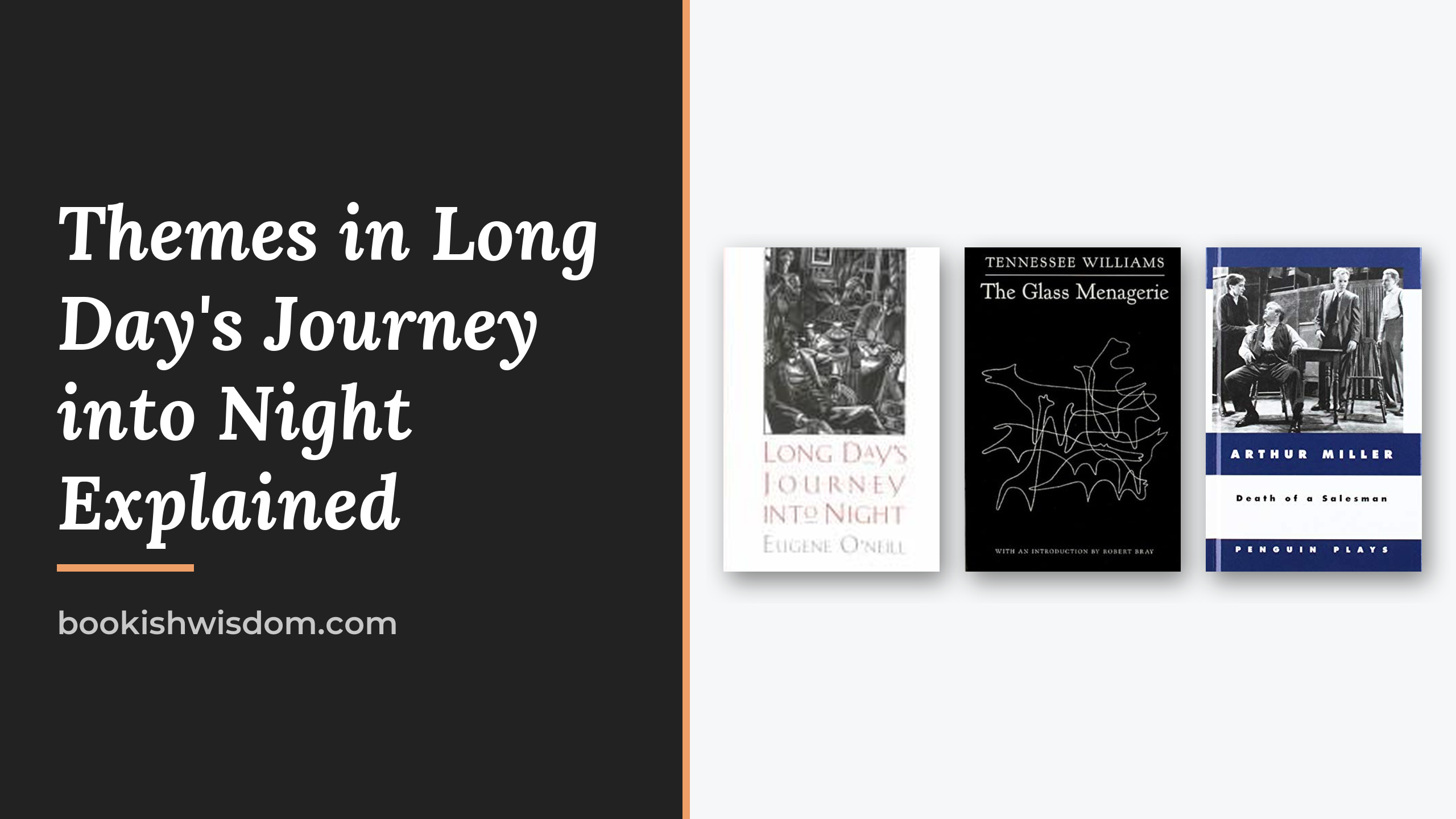
Disclosure: As an Amazon Associate, Bookish Wisdom earns from qualifying purchases. This doesn't change our picks or your price.
Spoiler warning: this analysis discusses the whole book, including the ending of Long Day's Journey into Night.
Quick answer: The main themes in Long Day's Journey into Night by Eugene O'Neill are addiction, family love and blame, the past, denial and money and fear. Each is explained below with what it means, how it develops in the story and questions you can use for study or discussion.
Quick facts
- Book: Long Day's Journey into Night by Eugene O'Neill
- First published: 1956
- Main themes: addiction, family love and blame, the past, denial and money and fear
Table of Contents
About Long Day's Journey into Night
Over one long August day in 1912, the Tyrone family gathers at their summer home on the Connecticut coast. James, the father, is a once-great actor who wasted his talent on one popular role and is stingy with money. Mary, the mother, has recently returned from treatment for morphine addiction, and the men watch her anxiously. Jamie, the elder son, drinks heavily and resents his father, while Edmund, the younger son, is ill with what turns out to be tuberculosis. As morning turns to night and fog rolls in from the sea, the family's love, blame and long-buried secrets come out.
Check price of Long Day's Journey into Night on Amazon
The Main Themes in Long Day's Journey into Night
1. Addiction
Mary's morphine addiction and the men's heavy drinking trap the family in a cycle of hope and disappointment. O'Neill shows addiction as an illness that affects everyone around the addict, not just the person using.
Question to consider: Where in Long Day's Journey into Night does addiction matter most to the characters, and what does Eugene O'Neill want readers to think about it?
2. Family love and blame
The Tyrones love each other deeply but constantly blame each other for their failures. Each accusation is followed by an apology, and the pattern repeats all day.
Question to consider: Where in Long Day's Journey into Night does family love and blame matter most to the characters, and what does Eugene O'Neill want readers to think about it?
3. The past
Mary longs for her girlhood and the dreams she gave up to marry James. The past shapes every conversation, and no one can escape it.
Question to consider: Where in Long Day's Journey into Night does the past matter most to the characters, and what does Eugene O'Neill want readers to think about it?
4. Denial
Characters refuse to face the truth, especially about Mary's relapse and Edmund's illness. Denial keeps them from getting help.
Question to consider: Where in Long Day's Journey into Night does denial matter most to the characters, and what does Eugene O'Neill want readers to think about it?
5. Money and fear
James's fear of poverty, rooted in his hungry childhood, makes him stingy. His choice of a cheap doctor for Mary may have caused her addiction, and he hesitates to pay for Edmund's care.
Question to consider: Where in Long Day's Journey into Night does money and fear matter most to the characters, and what does Eugene O'Neill want readers to think about it?
Symbols and Motifs
- The fog. Represents confusion, isolation and the family's wish to hide from reality.
- The foghorn. Symbolizes a warning that no one heeds and the loneliness of the night.
- The wedding dress. Mary's old wedding gown, which she carries in the final scene, shows her longing for a lost past.
- The house. The summer home, never a real home to Mary, represents the family's trap.
How the Themes Connect
The themes connect through the family's inability to escape their past. Addiction, love, blame and denial bind them together, and the day's journey into night mirrors their slide into despair.
How to Write About the Themes of Long Day's Journey into Night
If you are writing an essay or preparing for class, these steps help:
- Pick one theme. A focused argument is stronger than a list of everything.
- Find evidence in the text. Point to specific scenes, characters and choices rather than general impressions.
- Explain, don't just describe. After each example, say what it shows about the theme.
- Connect to the ending. Ask how the final chapters resolve or complicate the theme.
- Consider other readings. A fair essay acknowledges that readers can disagree.
Discussion Questions
- Which of the themes above feels most relevant to your own life, and why?
- Do the characters in Long Day's Journey into Night handle addiction well or badly?
- How does the title relate to the themes of the book?
- Would the story change if it were set in a different time or place?
- What does Eugene O'Neill leave unresolved, and why might that be?
Books With Similar Themes
-
The Glass Menagerie by Tennessee Williams
-
Death of a Salesman by Arthur Miller
Related: The Glass Menagerie by Tennessee Williams: Summary and Key Takeaways · Death of a Salesman by Arthur Miller: Summary and Key Takeaways
Frequently Asked Questions
What is the main theme of Long Day's Journey into Night?
The central theme is addiction, supported by family love and blame and the past.
How many themes does Long Day's Journey into Night have?
This guide covers 5 main themes, but readers may find others.
Who wrote Long Day's Journey into Night?
Long Day's Journey into Night was written by Eugene O'Neill and first published in 1956.
Is Long Day's Journey into Night a good book for studying themes?
Yes. Its themes are clear enough to follow and rich enough to support essays and group discussion.
What should I read after Long Day's Journey into Night?
Try The Glass Menagerie by Tennessee Williams or Death of a Salesman by Arthur Miller.