
Disclosure: As an Amazon Associate, Bookish Wisdom earns from qualifying purchases. This doesn't change our picks or your price.
Spoiler warning: this analysis discusses the whole book, including the ending of Norwegian Wood.
Quick answer: The main themes in Norwegian Wood by Haruki Murakami are grief and loss, love and choice, mental illness, growing up and loneliness and connection. Each is explained below with what it means, how it develops in the story and questions you can use for study or discussion.
Quick facts
- Book: Norwegian Wood by Haruki Murakami
- First published: 1987
- Main themes: grief and loss, love and choice, mental illness, growing up and loneliness and connection
Table of Contents
About Norwegian Wood
At thirty-seven, Toru Watanabe hears an orchestral version of the Beatles song 'Norwegian Wood' as his plane lands in Hamburg, and is overwhelmed by memories of his student days in Tokyo in the late 1960s. When he was seventeen, his best friend, Kizuki, killed himself without explanation. A year later in Tokyo, Toru meets Kizuki's former girlfriend, Naoko, and the two grow close through long, silent walks across the city. Naoko is fragile and withdraws to a sanatorium in the mountains near Kyoto, where Toru visits her and her older roommate, Reiko, a former music teacher. Back in Tokyo, he meets Midori, a lively, funny and outspoken classmate who is caring for her dying father. Toru is torn between his loyalty to Naoko and his growing love for Midori, as student protests rage around them.

Check price of Norwegian Wood on Amazon
The Main Themes in Norwegian Wood
1. Grief and loss
Kizuki's death haunts both Toru and Naoko, binding them together in sorrow. Murakami shows how grief can trap people in the past and make it hard to live fully.
Question to consider: Where in Norwegian Wood does grief and loss matter most to the characters, and what does Haruki Murakami want readers to think about it?
2. Love and choice
Toru loves Naoko out of loyalty and shared pain, and Midori for her energy and honesty. The novel explores how love can pull a person in two directions.
Question to consider: Where in Norwegian Wood does love and choice matter most to the characters, and what does Haruki Murakami want readers to think about it?
3. Mental illness
Naoko's struggles are portrayed with sympathy and sadness. The sanatorium offers rest, but not a cure, and her fate deeply affects Toru.
Question to consider: Where in Norwegian Wood does mental illness matter most to the characters, and what does Haruki Murakami want readers to think about it?
4. Growing up
Toru moves from adolescent confusion toward adult responsibility, learning that he must choose how to live.
Question to consider: Where in Norwegian Wood does growing up matter most to the characters, and what does Haruki Murakami want readers to think about it?
5. Loneliness and connection
Nearly every character is lonely, and small moments of connection, such as shared meals and songs, become precious.
Question to consider: Where in Norwegian Wood does loneliness and connection matter most to the characters, and what does Haruki Murakami want readers to think about it?
Symbols and Motifs
- The song 'Norwegian Wood'. The Beatles song represents memory, Naoko and the sadness of the past.
- The sanatorium. Ami Hostel represents retreat from the world and the search for healing.
- The field well. Naoko's story of a hidden well in a meadow represents hidden dangers and the darkness beneath ordinary life.
- The letters. Toru and Naoko's letters represent the fragile connection between them.
How the Themes Connect
The themes connect through Toru's memories of grief, love and loneliness. He must leave the past behind to choose life and love in the present. Norwegian Wood is Murakami's most realistic novel, without the magical elements of his other books, and it made him a superstar in Japan, selling millions of copies. It was filmed in 2010 by Tran Anh Hung. Murakami said he wrote it partly as a challenge to himself to write a straightforward love story.
How to Write About the Themes of Norwegian Wood
If you are writing an essay or preparing for class, these steps help:
- Pick one theme. A focused argument is stronger than a list of everything.
- Find evidence in the text. Point to specific scenes, characters and choices rather than general impressions.
- Explain, don't just describe. After each example, say what it shows about the theme.
- Connect to the ending. Ask how the final chapters resolve or complicate the theme.
- Consider other readings. A fair essay acknowledges that readers can disagree.
Discussion Questions
- Which of the themes above feels most relevant to your own life, and why?
- Do the characters in Norwegian Wood handle grief and loss well or badly?
- How does the title relate to the themes of the book?
- Would the story change if it were set in a different time or place?
- What does Haruki Murakami leave unresolved, and why might that be?
Books With Similar Themes
- Kafka on the Shore by Haruki Murakami
-

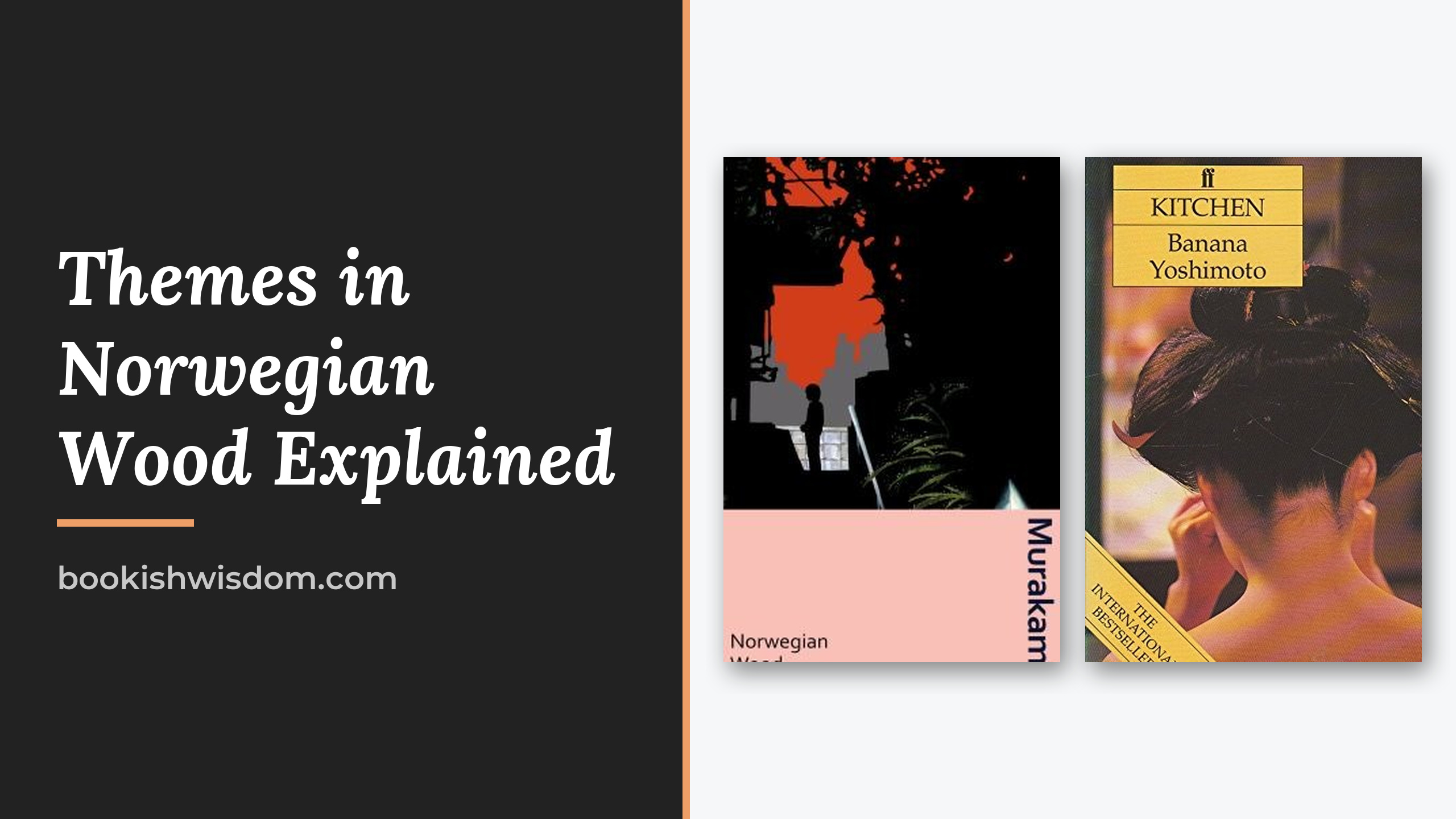
Kitchen by Banana Yoshimoto
Related: Norwegian Wood by Haruki Murakami: Summary and Key Takeaways · Norwegian Wood Ending Explained
Frequently Asked Questions
What is the main theme of Norwegian Wood?
The central theme is grief and loss, supported by love and choice and mental illness.
How many themes does Norwegian Wood have?
This guide covers 5 main themes, but readers may find others.
Who wrote Norwegian Wood?
Norwegian Wood was written by Haruki Murakami and first published in 1987.
Is Norwegian Wood a good book for studying themes?
Yes. Its themes are clear enough to follow and rich enough to support essays and group discussion.
What should I read after Norwegian Wood?
Try Kafka on the Shore by Haruki Murakami or Kitchen by Banana Yoshimoto.