
Disclosure: As an Amazon Associate, Bookish Wisdom earns from qualifying purchases. This doesn't change our picks or your price.
Spoiler warning: this analysis discusses the whole book, including the ending of Rebecca.
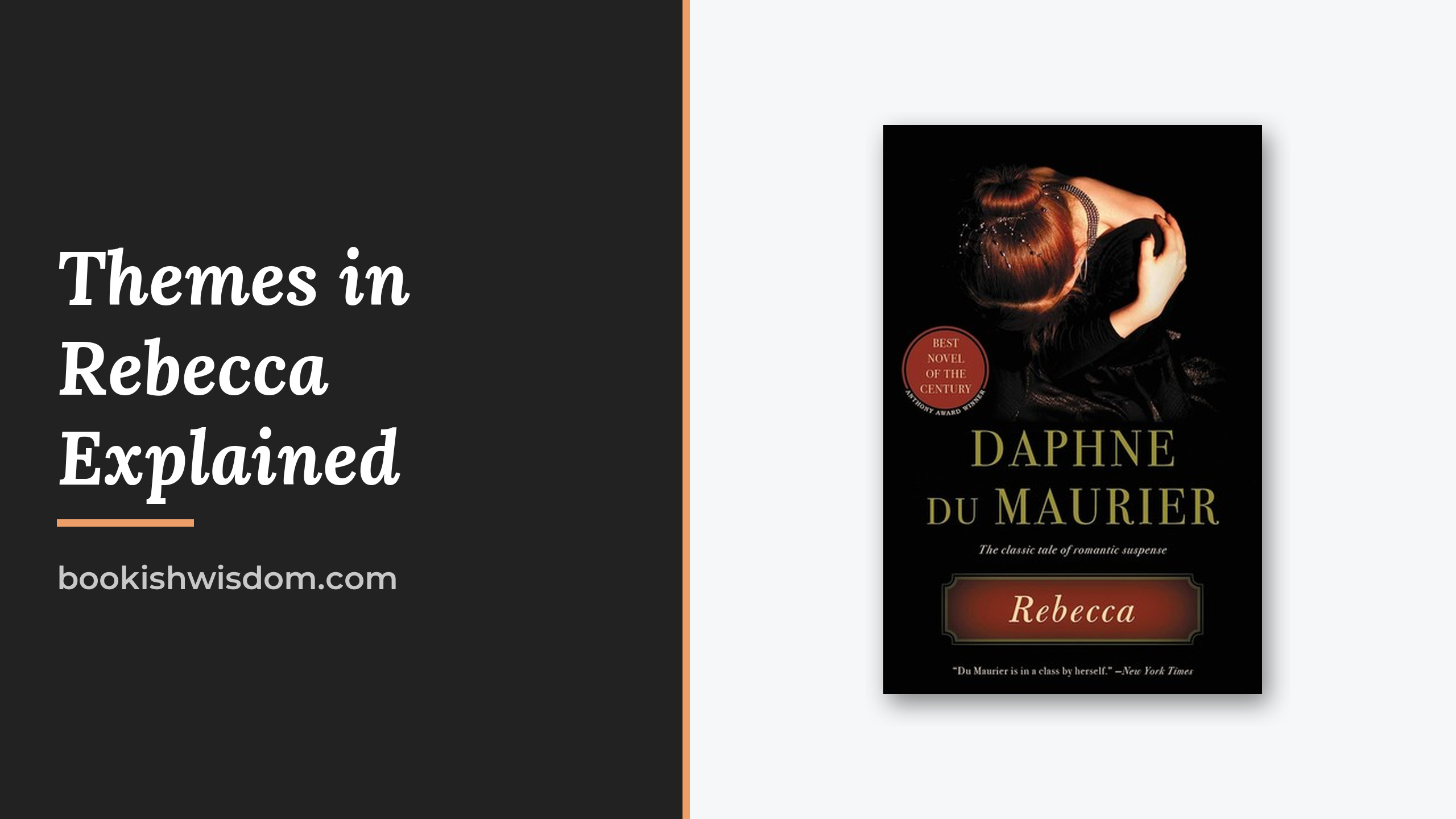
Quick answer: The main themes in Rebecca by Daphne du Maurier are jealousy and insecurity, identity, the past, power and class and truth and appearances. Each is explained below with what it means, how it develops in the story and questions you can use for study or discussion.
Quick facts
- Book: Rebecca by Daphne du Maurier
- First published: 1938
- Main themes: jealousy and insecurity, identity, the past, power and class and truth and appearances
Table of Contents
About Rebecca
A shy, young, unnamed narrator working as a companion in Monte Carlo meets the wealthy widower Maxim de Winter. After a quick romance, they marry and return to his grand estate, Manderley, in Cornwall. There the new Mrs de Winter feels haunted by the memory of Maxim's first wife, Rebecca, who seemed perfect and beautiful. The sinister housekeeper, Mrs Danvers, remains devoted to Rebecca and torments the narrator. Then a discovery reveals the shocking truth about Rebecca's death.
Check price of Rebecca on Amazon
The Main Themes in Rebecca
1. Jealousy and insecurity
The narrator constantly compares herself to Rebecca. Du Maurier shows how insecurity can consume a person and distort reality.
Question to consider: Where in Rebecca does jealousy and insecurity matter most to the characters, and what does Daphne du Maurier want readers to think about it?
2. Identity
The narrator is never named, and she feels erased by Rebecca's memory. The novel explores the struggle to define oneself.
Question to consider: Where in Rebecca does identity matter most to the characters, and what does Daphne du Maurier want readers to think about it?
3. The past
Rebecca's presence haunts Manderley. The novel shows how the past controls the present.
Question to consider: Where in Rebecca does the past matter most to the characters, and what does Daphne du Maurier want readers to think about it?
4. Power and class
The narrator is poor and out of place at Manderley. Class shapes her sense of inferiority.
Question to consider: Where in Rebecca does power and class matter most to the characters, and what does Daphne du Maurier want readers to think about it?
5. Truth and appearances
Rebecca was not what she seemed.
Question to consider: Where in Rebecca does truth and appearances matter most to the characters, and what does Daphne du Maurier want readers to think about it?
Symbols and Motifs
- Manderley. It represents the past and Rebecca's power.
- Mrs Danvers. She symbolises obsession and loyalty to the past.
- The boathouse. It stands for secrets.
- The fire. It represents the end of the past.
How the Themes Connect
Jealousy and insecurity define the narrator, while identity shows how Rebecca's shadow erases her. The past haunts Manderley, power and class deepen the narrator's inferiority and truth and appearances lead to the shocking revelation. The famous opening line, “Last night I dreamt I went to Manderley again,” sets a haunting tone that lasts to the end.
How to Write About the Themes of Rebecca
If you are writing an essay or preparing for class, these steps help:
- Pick one theme. A focused argument is stronger than a list of everything.
- Find evidence in the text. Point to specific scenes, characters and choices rather than general impressions.
- Explain, don't just describe. After each example, say what it shows about the theme.
- Connect to the ending. Ask how the final chapters resolve or complicate the theme.
- Consider other readings. A fair essay acknowledges that readers can disagree.
Discussion Questions
- Which of the themes above feels most relevant to your own life, and why?
- Do the characters in Rebecca handle jealousy and insecurity well or badly?
- How does the title relate to the themes of the book?
- Would the story change if it were set in a different time or place?
- What does Daphne du Maurier leave unresolved, and why might that be?
Books With Similar Themes
- The Woman in White by Wilkie Collins
- We Have Always Lived in the Castle by Shirley Jackson
Related: Rebecca by Daphne du Maurier: Summary and Key Takeaways · Rebecca Ending Explained
Frequently Asked Questions
What is the main theme of Rebecca?
The central theme is jealousy and insecurity, supported by identity and the past.
How many themes does Rebecca have?
This guide covers 5 main themes, but readers may find others.
Who wrote Rebecca?
Rebecca was written by Daphne du Maurier and first published in 1938.
Is Rebecca a good book for studying themes?
Yes. Its themes are clear enough to follow and rich enough to support essays and group discussion.
What should I read after Rebecca?
Try The Woman in White by Wilkie Collins or We Have Always Lived in the Castle by Shirley Jackson.