
Disclosure: As an Amazon Associate, Bookish Wisdom earns from qualifying purchases. This doesn't change our picks or your price.
Spoiler warning: this analysis discusses the whole book, including the ending of Slaughterhouse-Five.
Quick answer: The main themes in Slaughterhouse-Five by Kurt Vonnegut are the horror and absurdity of war, time and fate, trauma, death and free will. Each is explained below with what it means, how it develops in the story and questions you can use for study or discussion.
Quick facts
- Book: Slaughterhouse-Five by Kurt Vonnegut
- First published: 1969
- Main themes: the horror and absurdity of war, time and fate, trauma, death and free will
Table of Contents
About Slaughterhouse-Five
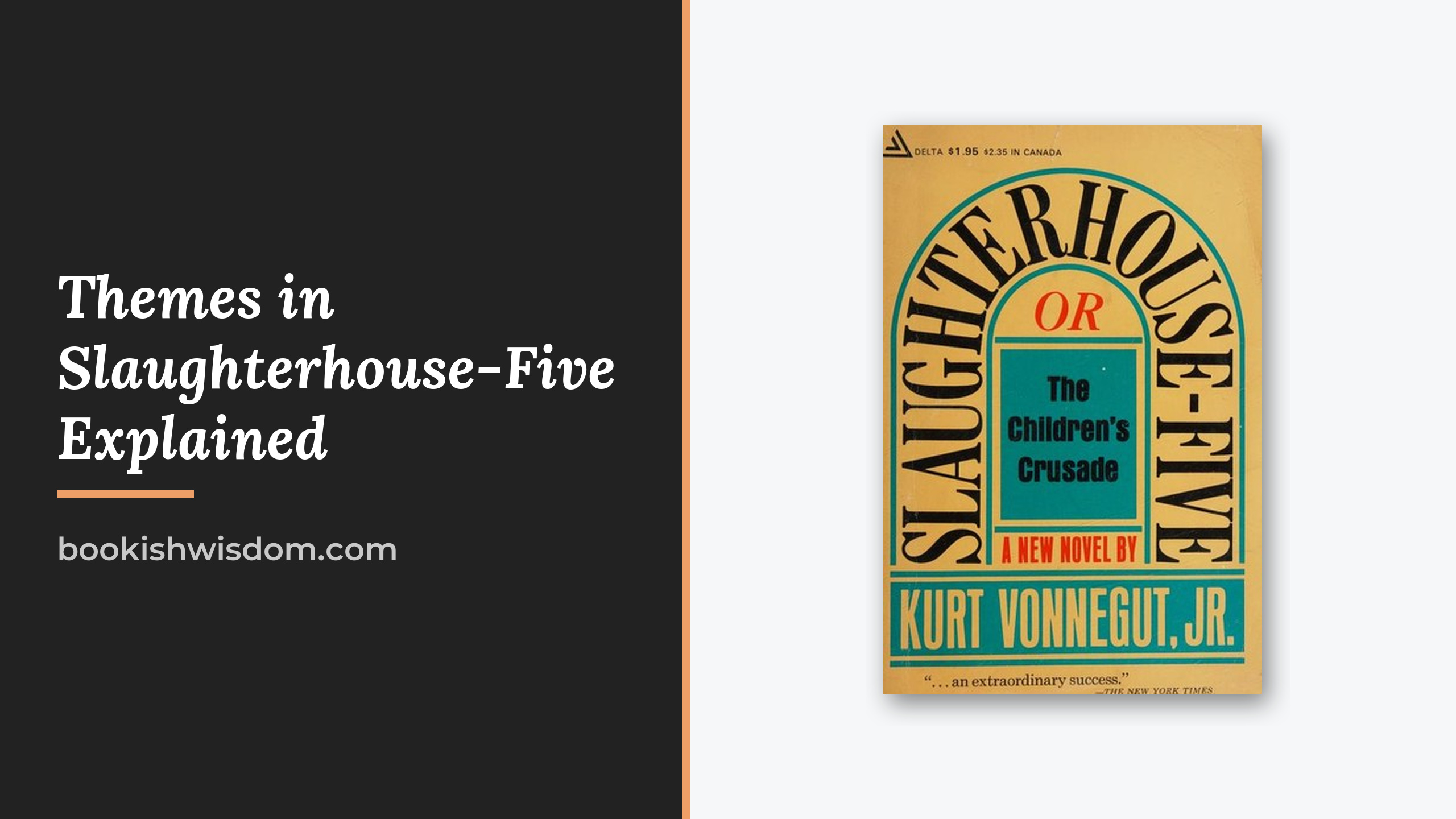
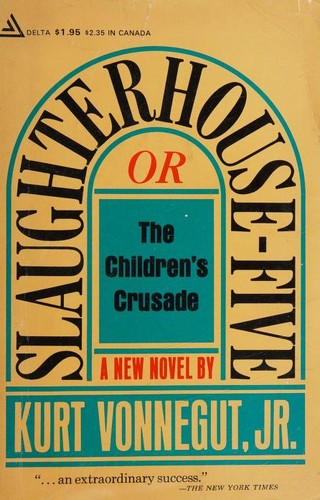
Billy Pilgrim, an awkward American soldier, is captured by the Germans in World War II and held as a prisoner of war in Dresden, where he survives the Allied firebombing of the city in February 1945 by hiding in an underground meat locker called Slaughterhouse-Five. After the war, Billy becomes a successful optometrist, but he has become “unstuck in time,” jumping randomly between moments of his life, including his abduction by aliens from the planet Tralfamadore, who see all of time at once. Vonnegut, who survived Dresden himself, wrote the novel as an anti-war statement.
Check price of Slaughterhouse-Five on Amazon
The Main Themes in Slaughterhouse-Five
1. The horror and absurdity of war
Vonnegut shows war as senseless and absurd. The destruction of Dresden is the novel's centre, and the dark humour makes the horror even more powerful.
Question to consider: Where in Slaughterhouse-Five does the horror and absurdity of war matter most to the characters, and what does Kurt Vonnegut want readers to think about it?
2. Time and fate
The Tralfamadorians believe all moments exist forever and nothing can be changed. The novel asks whether people have free will. Billy believes he can see his whole life at once.
Question to consider: Where in Slaughterhouse-Five does time and fate matter most to the characters, and what does Kurt Vonnegut want readers to think about it?
3. Trauma
Many readers see Billy's time travel as a sign of war trauma. His time-jumping may be a way of escaping painful memories.
Question to consider: Where in Slaughterhouse-Five does trauma matter most to the characters, and what does Kurt Vonnegut want readers to think about it?
4. Death
The phrase “So it goes” follows every death. The phrase appears more than a hundred times.
Question to consider: Where in Slaughterhouse-Five does death matter most to the characters, and what does Kurt Vonnegut want readers to think about it?
5. Free will
Billy accepts fate passively. His acceptance makes readers wonder whether he is wise or broken.
Question to consider: Where in Slaughterhouse-Five does free will matter most to the characters, and what does Kurt Vonnegut want readers to think about it?
Symbols and Motifs
- “So it goes”. It represents acceptance of death.
- The slaughterhouse. It symbolises survival amid destruction.
- Tralfamadore. It stands for escape.
- The bird's “Poo-tee-weet”. It represents the inability to explain war.
How the Themes Connect
The horror and absurdity of war, time and fate, trauma, death and free will shape the novel. Vonnegut calls it a “failure” because no book can explain a massacre, yet it remains one of the great anti-war novels. Its mix of science fiction and history makes it unforgettable.
How to Write About the Themes of Slaughterhouse-Five
If you are writing an essay or preparing for class, these steps help:
- Pick one theme. A focused argument is stronger than a list of everything.
- Find evidence in the text. Point to specific scenes, characters and choices rather than general impressions.
- Explain, don't just describe. After each example, say what it shows about the theme.
- Connect to the ending. Ask how the final chapters resolve or complicate the theme.
- Consider other readings. A fair essay acknowledges that readers can disagree.
Discussion Questions
- Which of the themes above feels most relevant to your own life, and why?
- Do the characters in Slaughterhouse-Five handle the horror and absurdity of war well or badly?
- How does the title relate to the themes of the book?
- Would the story change if it were set in a different time or place?
- What does Kurt Vonnegut leave unresolved, and why might that be?
Books With Similar Themes
- Catch-22 by Joseph Heller
- The Things They Carried by Tim O'Brien
Related: Slaughterhouse-Five by Kurt Vonnegut: Summary and Key Takeaways · Slaughterhouse-Five Ending Explained
Frequently Asked Questions
What is the main theme of Slaughterhouse-Five?
The central theme is the horror and absurdity of war, supported by time and fate and trauma.
How many themes does Slaughterhouse-Five have?
This guide covers 5 main themes, but readers may find others.
Who wrote Slaughterhouse-Five?
Slaughterhouse-Five was written by Kurt Vonnegut and first published in 1969.
Is Slaughterhouse-Five a good book for studying themes?
Yes. Its themes are clear enough to follow and rich enough to support essays and group discussion.
What should I read after Slaughterhouse-Five?
Try Catch-22 by Joseph Heller or The Things They Carried by Tim O'Brien.