
Disclosure: As an Amazon Associate, Bookish Wisdom earns from qualifying purchases. This doesn't change our picks or your price.
Spoiler warning: this analysis discusses the whole book, including the ending of The Adventures of Tom Sawyer.
Quick answer: The main themes in The Adventures of Tom Sawyer by Mark Twain are childhood freedom and adventure, moral growth, social hypocrisy, superstition and fear and courage. Each is explained below with what it means, how it develops in the story and questions you can use for study or discussion.
Quick facts
- Book: The Adventures of Tom Sawyer by Mark Twain
- First published: 1876
- Main themes: childhood freedom and adventure, moral growth, social hypocrisy, superstition and fear and courage
Table of Contents
About The Adventures of Tom Sawyer
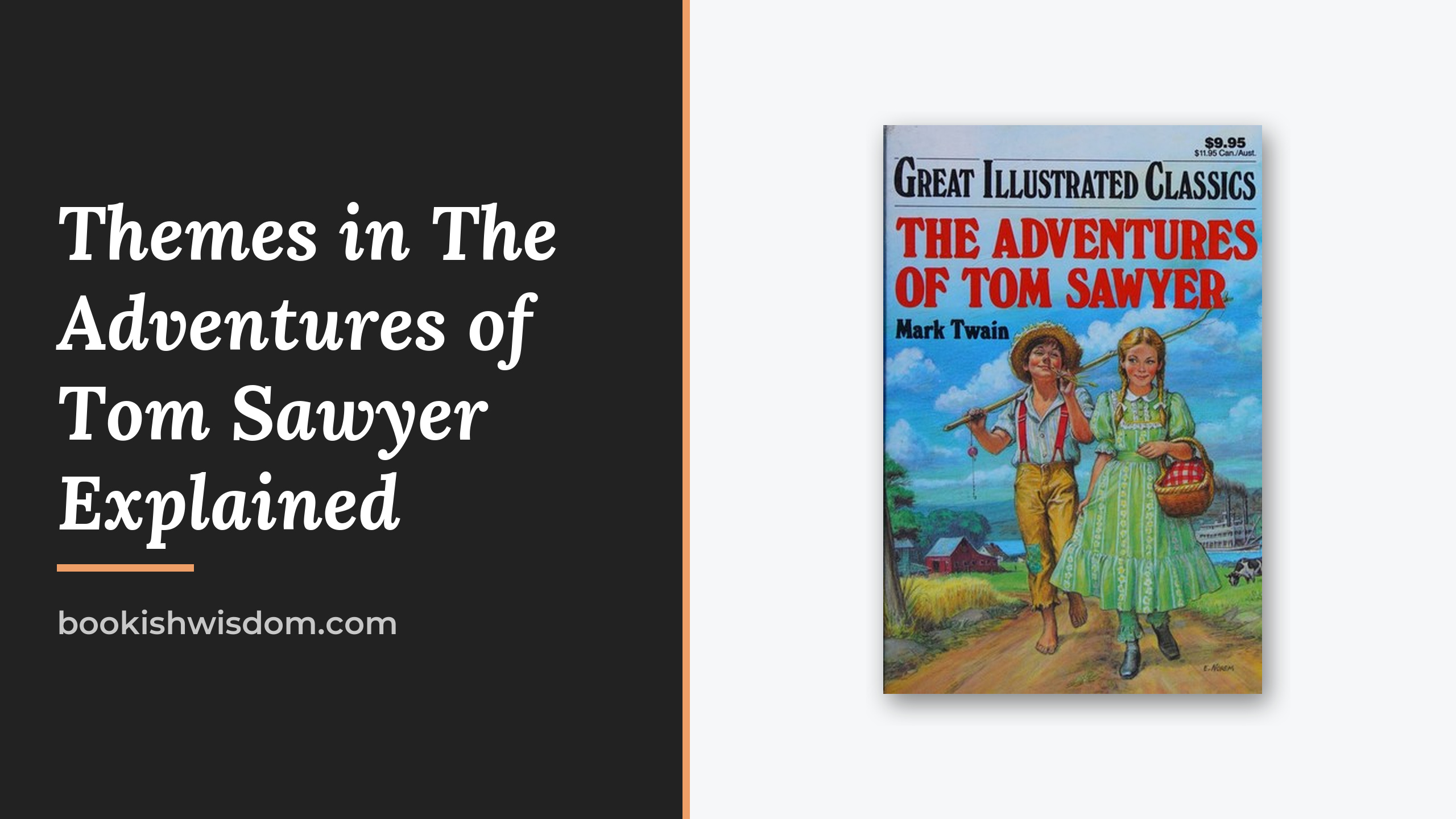
Tom Sawyer lives with his Aunt Polly in the Mississippi River town of St. Petersburg. He tricks friends into whitewashing a fence, runs away to an island with Huck Finn and Joe Harper, and witnesses a murder in the graveyard. When an innocent man is accused, Tom must find the courage to tell the truth.
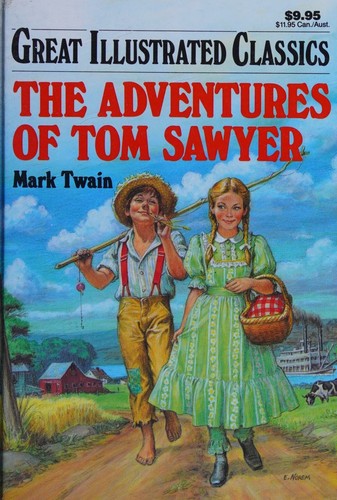
Check price of The Adventures of Tom Sawyer on Amazon
The Main Themes in The Adventures of Tom Sawyer
1. Childhood freedom and adventure
Tom treats life as a game of pirates and robbers. Twain celebrates the energy of boyhood while hinting that the adult world will soon close in on it.
Question to consider: Where in The Adventures of Tom Sawyer does childhood freedom and adventure matter most to the characters, and what does Mark Twain want readers to think about it?
2. Moral growth
Tom starts as a schemer but learns to act responsibly. Testifying for Muff Potter and protecting Becky in the cave show his conscience growing.
Question to consider: Where in The Adventures of Tom Sawyer does moral growth matter most to the characters, and what does Mark Twain want readers to think about it?
3. Social hypocrisy
Adults in St. Petersburg talk about virtue but act on gossip and appearances. Twain mocks this gap with sharp humour throughout.
Question to consider: Where in The Adventures of Tom Sawyer does social hypocrisy matter most to the characters, and what does Mark Twain want readers to think about it?
4. Superstition
Warts, charms and dead cats fill the boys' world. Superstition shows how children make sense of danger, and Twain treats it with affection and gentle satire.
Question to consider: Where in The Adventures of Tom Sawyer does superstition matter most to the characters, and what does Mark Twain want readers to think about it?
5. Fear and courage
Injun Joe brings real menace. Tom's fear tests his bravery, and courage here means doing the right thing despite danger.
Question to consider: Where in The Adventures of Tom Sawyer does fear and courage matter most to the characters, and what does Mark Twain want readers to think about it?
Symbols and Motifs
- The whitewashed fence. How perception turns work into a prize.
- The cave. Danger, maturity and Tom's leadership.
- Jackson's Island. Freedom away from adult rules.
- The treasure. The boys' dreams of adventure made real.
How the Themes Connect
Freedom and adventure make up Tom's world, but fear forces him to grow. Twain's satire of hypocrisy shows the adult values Tom must learn to see through, while superstition reminds us he is still a child moving toward responsibility.
How to Write About the Themes of The Adventures of Tom Sawyer
If you are writing an essay or preparing for class, these steps help:
- Pick one theme. A focused argument is stronger than a list of everything.
- Find evidence in the text. Point to specific scenes, characters and choices rather than general impressions.
- Explain, don't just describe. After each example, say what it shows about the theme.
- Connect to the ending. Ask how the final chapters resolve or complicate the theme.
- Consider other readings. A fair essay acknowledges that readers can disagree.
Discussion Questions
- Which of the themes above feels most relevant to your own life, and why?
- Do the characters in The Adventures of Tom Sawyer handle childhood freedom and adventure well or badly?
- How does the title relate to the themes of the book?
- Would the story change if it were set in a different time or place?
- What does Mark Twain leave unresolved, and why might that be?
Books With Similar Themes
- Adventures of Huckleberry Finn by Mark Twain
- Treasure Island by Robert Louis Stevenson
Related: The Adventures of Tom Sawyer by Mark Twain: Summary and Key Takeaways · Adventures of Huckleberry Finn by Mark Twain: Summary and Key Takeaways
Frequently Asked Questions
What is the main theme of The Adventures of Tom Sawyer?
The central theme is childhood freedom and adventure, supported by moral growth and social hypocrisy.
How many themes does The Adventures of Tom Sawyer have?
This guide covers 5 main themes, but readers may find others.
Who wrote The Adventures of Tom Sawyer?
The Adventures of Tom Sawyer was written by Mark Twain and first published in 1876.
Is The Adventures of Tom Sawyer a good book for studying themes?
Yes. Its themes are clear enough to follow and rich enough to support essays and group discussion.
What should I read after The Adventures of Tom Sawyer?
Try Adventures of Huckleberry Finn by Mark Twain or Treasure Island by Robert Louis Stevenson.