
Disclosure: As an Amazon Associate, Bookish Wisdom earns from qualifying purchases. This doesn't change our picks or your price.
Spoiler warning: this analysis discusses the whole book, including the ending of The Age of Innocence.
Quick answer: The main themes in The Age of Innocence by Edith Wharton are social rules and conformity, love and duty, innocence, freedom and regret. Each is explained below with what it means, how it develops in the story and questions you can use for study or discussion.
Quick facts
- Book: The Age of Innocence by Edith Wharton
- First published: 1920
- Main themes: social rules and conformity, love and duty, innocence, freedom and regret
Table of Contents
About The Age of Innocence
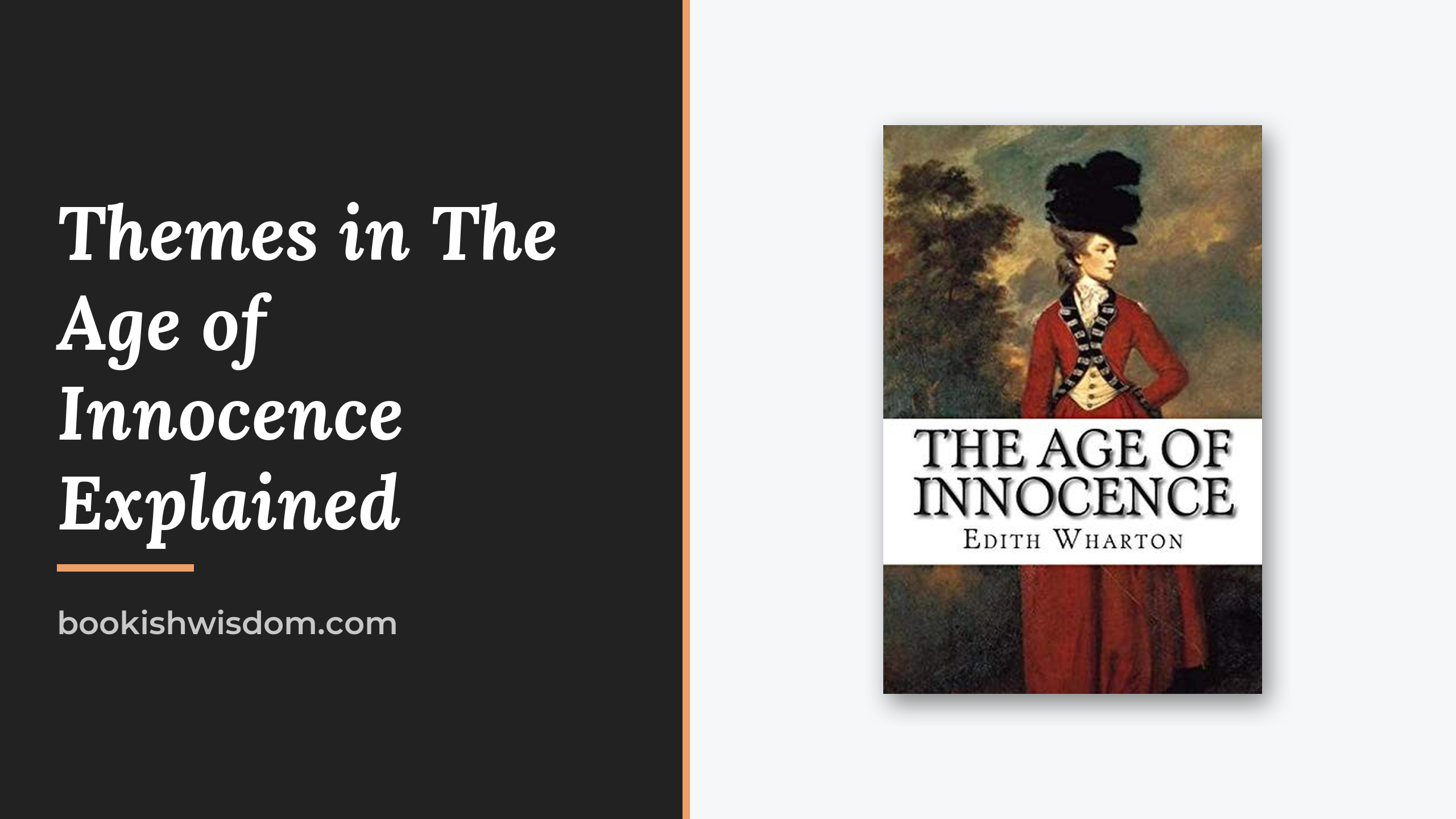
In 1870s New York high society, Newland Archer, a young lawyer from a respectable family, is engaged to the sweet, conventional May Welland. Then May's cousin, Countess Ellen Olenska, returns from Europe after leaving her abusive Polish husband. Ellen is unconventional, honest and independent, and society disapproves. Newland is drawn to her, and they fall in love. But family pressure, social rules and May's quiet strategy keep them apart. Wharton won the Pulitzer Prize for the novel, the first woman to do so.
Check price of The Age of Innocence on Amazon
The Main Themes in The Age of Innocence
1. Social rules and conformity
Old New York enforces strict rules. Wharton shows how society crushes individual desire.
Question to consider: Where in The Age of Innocence does social rules and conformity matter most to the characters, and what does Edith Wharton want readers to think about it?
2. Love and duty
Newland must choose between love and duty. He marries May.
Question to consider: Where in The Age of Innocence does love and duty matter most to the characters, and what does Edith Wharton want readers to think about it?
3. Innocence
May seems innocent but is shrewd. Her pregnancy announcement traps him.
Question to consider: Where in The Age of Innocence does innocence matter most to the characters, and what does Edith Wharton want readers to think about it?
4. Freedom
Ellen represents freedom. She lives in Paris.
Question to consider: Where in The Age of Innocence does freedom matter most to the characters, and what does Edith Wharton want readers to think about it?
5. Regret
Newland regrets his choice. Years later, he refuses to see Ellen.
Question to consider: Where in The Age of Innocence does regret matter most to the characters, and what does Edith Wharton want readers to think about it?
Symbols and Motifs
- The flowers. Newland sends May lilies-of-the-valley and Ellen yellow roses.
- The opera. It represents social performance.
- Ellen's house. It symbolises difference.
- The bench. It stands for missed chances.
How the Themes Connect
Social rules, love and duty, innocence, freedom and regret shape the novel. Wharton's elegant, ironic novel exposes the cost of conformity. Its ending, as Newland sits outside Ellen's Paris apartment and chooses not to go up, is one of literature's most poignant.
How to Write About the Themes of The Age of Innocence
If you are writing an essay or preparing for class, these steps help:
- Pick one theme. A focused argument is stronger than a list of everything.
- Find evidence in the text. Point to specific scenes, characters and choices rather than general impressions.
- Explain, don't just describe. After each example, say what it shows about the theme.
- Connect to the ending. Ask how the final chapters resolve or complicate the theme.
- Consider other readings. A fair essay acknowledges that readers can disagree.
Discussion Questions
- Which of the themes above feels most relevant to your own life, and why?
- Do the characters in The Age of Innocence handle social rules and conformity well or badly?
- How does the title relate to the themes of the book?
- Would the story change if it were set in a different time or place?
- What does Edith Wharton leave unresolved, and why might that be?
Books With Similar Themes
- The House of Mirth by Edith Wharton
- Ethan Frome by Edith Wharton
Related: The Age of Innocence by Edith Wharton: Summary and Key Takeaways · The Age of Innocence Ending Explained
Frequently Asked Questions
What is the main theme of The Age of Innocence?
The central theme is social rules and conformity, supported by love and duty and innocence.
How many themes does The Age of Innocence have?
This guide covers 5 main themes, but readers may find others.
Who wrote The Age of Innocence?
The Age of Innocence was written by Edith Wharton and first published in 1920.
Is The Age of Innocence a good book for studying themes?
Yes. Its themes are clear enough to follow and rich enough to support essays and group discussion.
What should I read after The Age of Innocence?
Try The House of Mirth by Edith Wharton or Ethan Frome by Edith Wharton.