
Disclosure: As an Amazon Associate, Bookish Wisdom earns from qualifying purchases. This doesn't change our picks or your price.
Spoiler warning: this analysis discusses the whole book, including the ending of The Borrowers.
Quick answer: The main themes in The Borrowers by Mary Norton are being small in a big world, curiosity and independence, fear and prejudice, home and displacement and friendship across difference. Each is explained below with what it means, how it develops in the story and questions you can use for study or discussion.
Quick facts
- Book: The Borrowers by Mary Norton
- First published: 1952
- Main themes: being small in a big world, curiosity and independence, fear and prejudice, home and displacement and friendship across difference
Table of Contents
About The Borrowers
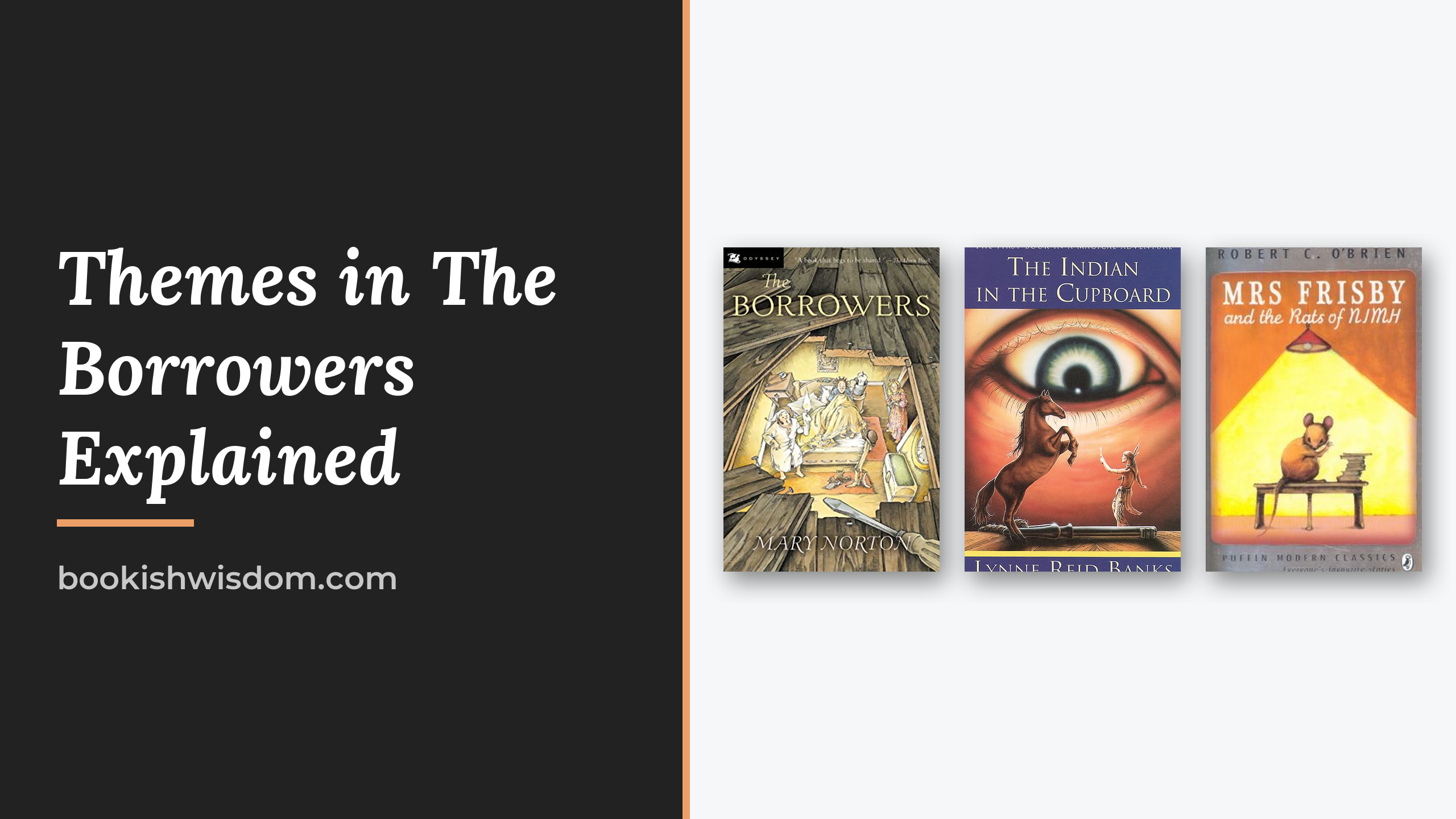
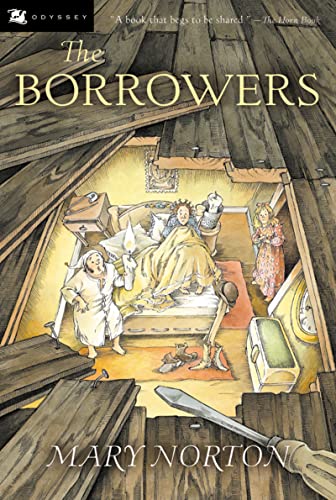
Pod, Homily and their daughter Arrietty Clock are Borrowers, tiny people a few inches tall who live under the kitchen floor of an old English country house. They survive by 'borrowing' small things from the humans upstairs: safety pins, thimbles, postage stamps and crumbs. Borrowers must never be seen. But curious, adventurous Arrietty befriends a lonely boy staying in the house, who brings them gifts, until the housekeeper, Mrs. Driver, discovers them and calls in a rat-catcher. The family must flee into the unknown.
Check price of The Borrowers on Amazon
The Main Themes in The Borrowers
1. Being small in a big world
The Borrowers survive in a world built for giants. Norton shows how resourcefulness lets the powerless thrive, and readers see ordinary objects with new eyes.
Question to consider: Where in The Borrowers does being small in a big world matter most to the characters, and what does Mary Norton want readers to think about it?
2. Curiosity and independence
Arrietty longs to see the outside world and breaks rules to explore. Her curiosity brings both danger and growth, like many young people pushing against protective parents.
Question to consider: Where in The Borrowers does curiosity and independence matter most to the characters, and what does Mary Norton want readers to think about it?
3. Fear and prejudice
Humans and Borrowers each fear the other. Mrs. Driver sees the family as vermin, showing how fear of the unknown can lead to cruelty.
Question to consider: Where in The Borrowers does fear and prejudice matter most to the characters, and what does Mary Norton want readers to think about it?
4. Home and displacement
The Borrowers' cozy home is suddenly lost. The ending, with the family forced to flee, echoes the experiences of refugees, which Norton knew from the war years.
Question to consider: Where in The Borrowers does home and displacement matter most to the characters, and what does Mary Norton want readers to think about it?
5. Friendship across difference
The boy and Arrietty form a fragile friendship despite their difference in size. It shows that kindness can cross great divides.
Question to consider: Where in The Borrowers does friendship across difference matter most to the characters, and what does Mary Norton want readers to think about it?
Symbols and Motifs
- Borrowed objects. Thimbles, stamps and pins symbolize creativity and survival.
- The grating. The kitchen grating, through which Arrietty sees the sky, represents her longing for freedom.
- The dollhouse furniture. The boy's gifts show both kindness and the danger of being noticed.
- The rat-catcher. He symbolizes human hostility toward the unfamiliar.
How the Themes Connect
The themes connect through Arrietty's growing understanding of the world beyond the floorboards. Her curiosity leads to friendship, but also exposes the family to human fear and forces them from their home. The novel won the Carnegie Medal and began a series of five books. It also inspired the Studio Ghibli film Arrietty in 2010. The story is framed as a tale told by Mrs. May, who heard it from her brother, so readers can never be sure it is true, which adds a gentle mystery to its themes of seeing and believing.
How to Write About the Themes of The Borrowers
If you are writing an essay or preparing for class, these steps help:
- Pick one theme. A focused argument is stronger than a list of everything.
- Find evidence in the text. Point to specific scenes, characters and choices rather than general impressions.
- Explain, don't just describe. After each example, say what it shows about the theme.
- Connect to the ending. Ask how the final chapters resolve or complicate the theme.
- Consider other readings. A fair essay acknowledges that readers can disagree.
Discussion Questions
- Which of the themes above feels most relevant to your own life, and why?
- Do the characters in The Borrowers handle being small in a big world well or badly?
- How does the title relate to the themes of the book?
- Would the story change if it were set in a different time or place?
- What does Mary Norton leave unresolved, and why might that be?
Books With Similar Themes
-
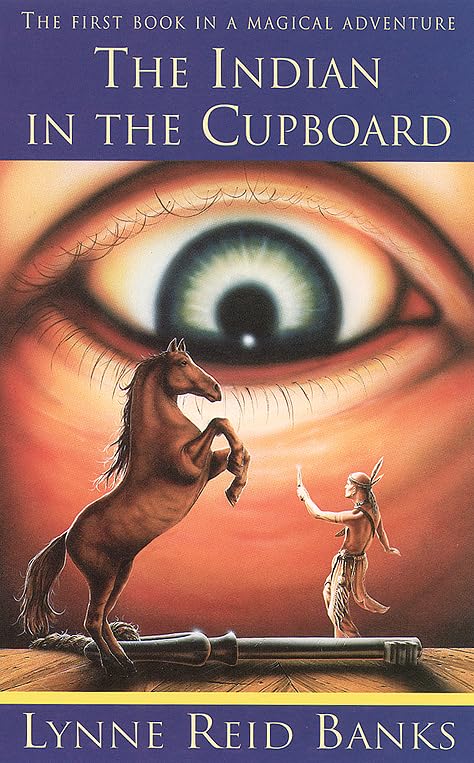
The Indian in the Cupboard by Lynne Reid Banks
-
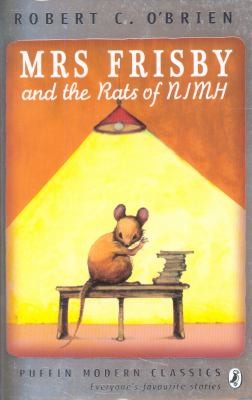
Mrs. Frisby and the Rats of NIMH by Robert C. O'Brien
Related: The Borrowers by Mary Norton: Summary and Key Takeaways · The Borrowers Characters: A Complete Guide
Frequently Asked Questions
What is the main theme of The Borrowers?
The central theme is being small in a big world, supported by curiosity and independence and fear and prejudice.
How many themes does The Borrowers have?
This guide covers 5 main themes, but readers may find others.
Who wrote The Borrowers?
The Borrowers was written by Mary Norton and first published in 1952.
Is The Borrowers a good book for studying themes?
Yes. Its themes are clear enough to follow and rich enough to support essays and group discussion.
What should I read after The Borrowers?
Try The Indian in the Cupboard by Lynne Reid Banks or Mrs. Frisby and the Rats of NIMH by Robert C. O'Brien.