
Disclosure: As an Amazon Associate, Bookish Wisdom earns from qualifying purchases. This doesn't change our picks or your price.
Spoiler warning: this analysis discusses the whole book, including the ending of The Immortal Life of Henrietta Lacks.
Quick answer: The main themes in The Immortal Life of Henrietta Lacks by Rebecca Skloot are medical ethics and consent, race and inequality, science and progress, family and memory and identity. Each is explained below with what it means, how it develops in the story and questions you can use for study or discussion.
Quick facts
- Book: The Immortal Life of Henrietta Lacks by Rebecca Skloot
- First published: 2010
- Main themes: medical ethics and consent, race and inequality, science and progress, family and memory and identity
Table of Contents
About The Immortal Life of Henrietta Lacks
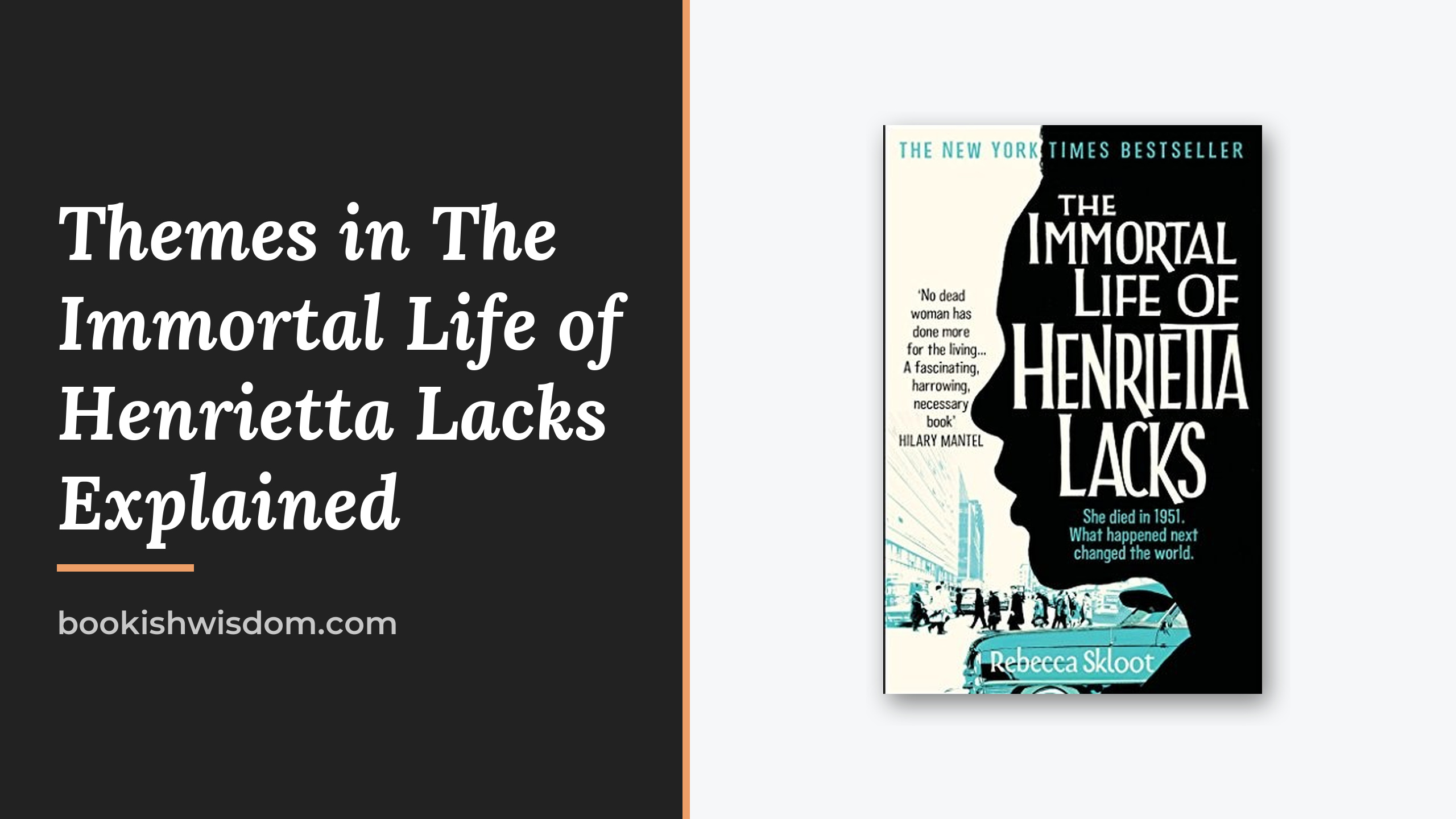
In 1951, Henrietta Lacks, a young Black mother of five, was treated for cervical cancer at Johns Hopkins Hospital. Without her knowledge or consent, doctors took cells from her tumour. Her cells, known as HeLa, became the first human cells to grow indefinitely in a lab and led to major medical breakthroughs, including the polio vaccine. Yet her family did not know for decades and received nothing. Skloot tells the story of Henrietta, her cells and her family.

Check price of The Immortal Life of Henrietta Lacks on Amazon
The Main Themes in The Immortal Life of Henrietta Lacks
1. Medical ethics and consent
Henrietta's cells were taken without permission. The book raises questions about consent, ownership and the rights of patients.
Question to consider: Where in The Immortal Life of Henrietta Lacks does medical ethics and consent matter most to the characters, and what does Rebecca Skloot want readers to think about it?
2. Race and inequality
Henrietta was a poor Black woman treated in a segregated hospital. Skloot shows how racism shaped medicine.
Question to consider: Where in The Immortal Life of Henrietta Lacks does race and inequality matter most to the characters, and what does Rebecca Skloot want readers to think about it?
3. Science and progress
HeLa cells led to vaccines and cures. The book shows the incredible benefits of science.
Question to consider: Where in The Immortal Life of Henrietta Lacks does science and progress matter most to the characters, and what does Rebecca Skloot want readers to think about it?
4. Family
Henrietta's children, especially Deborah, struggled to understand what happened. The book centres their pain.
Question to consider: Where in The Immortal Life of Henrietta Lacks does family matter most to the characters, and what does Rebecca Skloot want readers to think about it?
5. Memory and identity
The book restores Henrietta's identity.
Question to consider: Where in The Immortal Life of Henrietta Lacks does memory and identity matter most to the characters, and what does Rebecca Skloot want readers to think about it?
Symbols and Motifs
- HeLa cells. They represent immortality and exploitation.
- Henrietta's photo. It symbolises identity.
- Johns Hopkins. It stands for medicine and power.
- Deborah's search. It represents the need to know.
How the Themes Connect
Medical ethics and consent are the book's central questions, while race and inequality explain how Henrietta was treated. Science and progress show the benefits of her cells, and family shows the cost. Memory and identity tie it together, giving Henrietta back her name and her story.
How to Write About the Themes of The Immortal Life of Henrietta Lacks
If you are writing an essay or preparing for class, these steps help:
- Pick one theme. A focused argument is stronger than a list of everything.
- Find evidence in the text. Point to specific scenes, characters and choices rather than general impressions.
- Explain, don't just describe. After each example, say what it shows about the theme.
- Connect to the ending. Ask how the final chapters resolve or complicate the theme.
- Consider other readings. A fair essay acknowledges that readers can disagree.
Discussion Questions
- Which of the themes above feels most relevant to your own life, and why?
- Do the characters in The Immortal Life of Henrietta Lacks handle medical ethics and consent well or badly?
- How does the title relate to the themes of the book?
- Would the story change if it were set in a different time or place?
- What does Rebecca Skloot leave unresolved, and why might that be?
Books With Similar Themes
- Hidden Figures by Margot Lee Shetterly
- Everything Is Tuberculosis by John Green
Related: The Immortal Life of Henrietta Lacks by Rebecca Skloot: Summary and Key Takeaways · 15 Books Like The Immortal Life of Henrietta Lacks You’ll Love
Frequently Asked Questions
What is the main theme of The Immortal Life of Henrietta Lacks?
The central theme is medical ethics and consent, supported by race and inequality and science and progress.
How many themes does The Immortal Life of Henrietta Lacks have?
This guide covers 5 main themes, but readers may find others.
Who wrote The Immortal Life of Henrietta Lacks?
The Immortal Life of Henrietta Lacks was written by Rebecca Skloot and first published in 2010.
Is The Immortal Life of Henrietta Lacks a good book for studying themes?
Yes. Its themes are clear enough to follow and rich enough to support essays and group discussion.
What should I read after The Immortal Life of Henrietta Lacks?
Try Hidden Figures by Margot Lee Shetterly or Everything Is Tuberculosis by John Green.