
Disclosure: As an Amazon Associate, Bookish Wisdom earns from qualifying purchases. This doesn't change our picks or your price.
Spoiler warning: this analysis discusses the whole book, including the ending of Villette.
Quick answer: The main themes in Villette by Charlotte Bronte are isolation and loneliness, repression, independence, surveillance and love and disappointment. Each is explained below with what it means, how it develops in the story and questions you can use for study or discussion.
Quick facts
- Book: Villette by Charlotte Bronte
- First published: 1853
- Main themes: isolation and loneliness, repression, independence, surveillance and love and disappointment
Table of Contents
About Villette
After losing her family in an unexplained disaster, Lucy Snowe, a reserved and poor young Englishwoman, travels alone to the fictional city of Villette in a French-speaking kingdom modeled on Belgium. She becomes a teacher at Madame Beck's girls' school, where she is watched constantly. Lucy falls in love with the handsome doctor Graham Bretton, who sees her only as a friend, then slowly forms a deep bond with the fiery teacher Paul Emanuel. The novel ends ambiguously as he sails away and a storm rises.
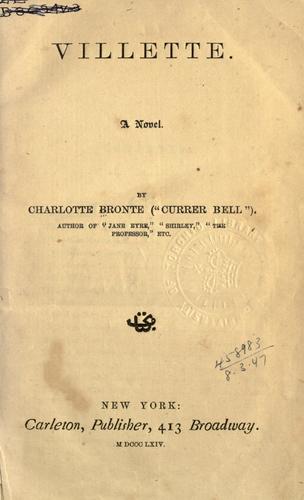
Check price of Villette on Amazon
The Main Themes in Villette
1. Isolation and loneliness
Lucy is alone in a foreign country and hides her feelings. Bronte paints a powerful picture of loneliness. Lucy has no family and no home to return to, and Bronte lets readers feel how silence and solitude shape her.
Question to consider: Where in Villette does isolation and loneliness matter most to the characters, and what does Charlotte Bronte want readers to think about it?
2. Repression
Lucy suppresses her emotions to survive. Her calm surface hides intense inner life. She often tells readers only part of the truth, even hiding that she recognizes Graham, so we must read between the lines.
Question to consider: Where in Villette does repression matter most to the characters, and what does Charlotte Bronte want readers to think about it?
3. Independence
Lucy builds a life through work. By the end she runs her own school. Her final independence is hard-won, because she earns it through years of quiet labor.
Question to consider: Where in Villette does independence matter most to the characters, and what does Charlotte Bronte want readers to think about it?
4. Surveillance
Madame Beck spies on everyone. Lucy feels constantly watched. Even Paul Emanuel searches her desk, yet his snooping becomes a sign of care rather than control.
Question to consider: Where in Villette does surveillance matter most to the characters, and what does Charlotte Bronte want readers to think about it?
5. Love and disappointment
Lucy loves Graham, who does not return her feelings, and finds love with Paul too late. The ending leaves readers to decide Paul's fate, which Bronte deliberately refused to spell out.
Question to consider: Where in Villette does love and disappointment matter most to the characters, and what does Charlotte Bronte want readers to think about it?
Symbols and Motifs
- The ghostly figure. A mysterious figure in the garden symbolizes Lucy's repressed feelings.
- The storm. The final storm suggests loss and uncertainty.
- Letters. Graham's letters, which Lucy buries, stand for hopes she must let go.
- Madame Beck's school. Represents control and surveillance.
How the Themes Connect
The themes connect through Lucy's isolation and repression. She survives loneliness by working and hiding her feelings, finds love late and loses it to uncertainty. Bronte drew on her own experience as a student and teacher in Brussels, where she fell in love with her married teacher, Constantin Heger. Many critics consider Villette her masterpiece because of Lucy's complex, unreliable narration. Lucy's guarded voice makes the novel unusually modern, and many readers find her one of the most relatable heroines in Victorian fiction.
How to Write About the Themes of Villette
If you are writing an essay or preparing for class, these steps help:
- Pick one theme. A focused argument is stronger than a list of everything.
- Find evidence in the text. Point to specific scenes, characters and choices rather than general impressions.
- Explain, don't just describe. After each example, say what it shows about the theme.
- Connect to the ending. Ask how the final chapters resolve or complicate the theme.
- Consider other readings. A fair essay acknowledges that readers can disagree.
Discussion Questions
- Which of the themes above feels most relevant to your own life, and why?
- Do the characters in Villette handle isolation and loneliness well or badly?
- How does the title relate to the themes of the book?
- Would the story change if it were set in a different time or place?
- What does Charlotte Bronte leave unresolved, and why might that be?
Books With Similar Themes
-

Shirley by Charlotte Bronte
- The Tenant of Wildfell Hall by Anne Bronte
Related: Villette by Charlotte Bronte: Summary and Key Takeaways · 15 Books Like Villette You’ll Love
Frequently Asked Questions
What is the main theme of Villette?
The central theme is isolation and loneliness, supported by repression and independence.
How many themes does Villette have?
This guide covers 5 main themes, but readers may find others.
Who wrote Villette?
Villette was written by Charlotte Bronte and first published in 1853.
Is Villette a good book for studying themes?
Yes. Its themes are clear enough to follow and rich enough to support essays and group discussion.
What should I read after Villette?
Try Shirley by Charlotte Bronte or The Tenant of Wildfell Hall by Anne Bronte.