
Disclosure: As an Amazon Associate, Bookish Wisdom earns from qualifying purchases. This doesn’t change our picks or your price.
TL;DR: In Tiny Habits: The Small Changes That Change Everything, Stanford behavior scientist BJ Fogg argues that lasting change comes from starting incredibly small, not from willpower. Attach a tiny new behavior to an existing routine, make it easy and celebrate immediately so your brain wires it in. Over time, tiny habits grow naturally.
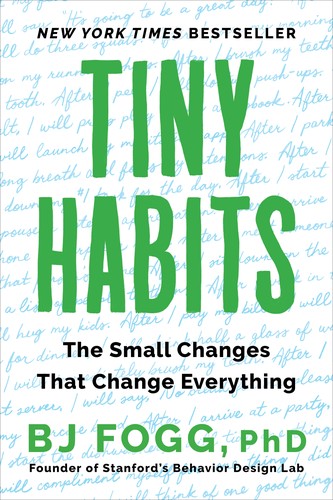
BJ Fogg founded the Behavior Design Lab at Stanford University and has spent decades studying how behavior works. After coaching tens of thousands of people through his free Tiny Habits program, he published this book in 2019. It offers a simple, science-based method for building good habits and breaking bad ones without relying on motivation. Here’s a complete summary of the key ideas and how to use them.
Table of Contents
Tiny Habits at a Glance
| Detail | Info |
|---|---|
| Author | BJ Fogg, PhD, founder of the Stanford Behavior Design Lab |
| Published | 2019 |
| Genre | Psychology / habits / self-help |
| Core model | B = MAP (Behavior = Motivation + Ability + Prompt) |
| Best for | Anyone who has struggled to stick with new habits |
What Is Tiny Habits About?
Fogg argues that most people fail at habits because they start too big and depend on motivation, which naturally rises and falls. Instead, he recommends making new behaviors so small they’re almost impossible to skip, connecting them to things you already do and using positive emotions to help them stick.
Key Ideas From the Book
The Fogg Behavior Model: B = MAP
A behavior happens when three things come together at the same moment: Motivation (the desire to do it), Ability (how easy it is) and a Prompt (something that reminds you to do it). If a behavior isn’t happening, Fogg suggests checking the prompt first, then making the behavior easier, and only then working on motivation.
Start Tiny
Shrink the new habit to its smallest version, like flossing one tooth, doing two push-ups or reading one sentence. Tiny behaviors are easy to do even on bad days, and they often grow on their own.
Find an Anchor
Attach the new habit to an existing routine, called an anchor. Fogg’s recipe is: “After I [existing routine], I will [new tiny behavior].” For example: “After I pour my morning coffee, I will write one line in my journal.”
Celebrate to Wire It In
Immediately after doing the tiny behavior, celebrate with a small positive feeling, such as a fist pump, a smile or saying “Nice!” Fogg calls this feeling “Shine.” He argues that emotions, not repetition alone, are what create habits.
Matching Yourself With the Right Behaviors
Fogg recommends brainstorming many possible behaviors that support a goal, then choosing ones you want to do and can do. He calls this finding “golden behaviors.”
Untangling Bad Habits
To break bad habits, Fogg suggests removing or avoiding prompts, making the behavior harder, and reducing motivation for it. For stubborn habits, he recommends gradually scaling back rather than quitting all at once.
5 Key Takeaways From Tiny Habits
- Don’t rely on motivation. Design habits that work even when you don’t feel like it.
- Make it tiny. Start so small it feels almost silly.
- Use an anchor. Tie new habits to routines you already have.
- Celebrate immediately. Positive emotions help habits stick.
- Be kind to yourself. Change is easier when you feel good about yourself, not guilty.
Ideas Worth Remembering
- Feeling good, not repetition alone, is what creates habits. (paraphrased)
- If you want a habit to grow, plant it small. (paraphrased)
- When a behavior isn’t happening, change the design rather than blaming yourself. (paraphrased)
Who Should Read Tiny Habits?
It’s ideal for anyone who has given up on habits before, busy parents, people managing stress or health goals, and readers who found Atomic Habits helpful and want a more hands-on method. Fogg includes worksheets and exercises throughout.
What to Read Next
- Atomic Habits by James Clear on building good habits and breaking bad ones.
- The Power of Habit by Charles Duhigg on the habit loop.
- Mini Habits by Stephen Guise on starting with very small goals.
Related: The 5 AM Club summary and best books for organizing your life.
Frequently Asked Questions
What is the Tiny Habits method?
The Tiny Habits method involves choosing a very small behavior, attaching it to an existing routine (an anchor) and celebrating right after doing it so the habit becomes automatic.
What does B=MAP mean?
B=MAP is BJ Fogg’s behavior model: a Behavior happens when Motivation, Ability and a Prompt come together at the same moment.
What is the difference between Tiny Habits and Atomic Habits?
Both focus on small changes. Tiny Habits emphasizes the B=MAP model and celebration to create positive emotions, while Atomic Habits focuses on identity, systems and the four laws of behavior change.