
Disclosure: As an Amazon Associate, Bookish Wisdom earns from qualifying purchases. This doesn't change our picks or your price.
TL;DR: Sixteen-year-old Aza Holmes tries to help her friend Daisy solve the disappearance of a billionaire, but the real story is Aza's own mind. She is trapped in a spiral of intrusive thoughts. The novel is about love, friendship and living with a mental illness that does not simply go away.
Table of Contents
Turtles All the Way Down at a Glance
| Author | John Green |
| First published | 2017 |
| Type | Young adult realistic fiction |
| Best for | readers who want an honest story about anxiety and OCD |
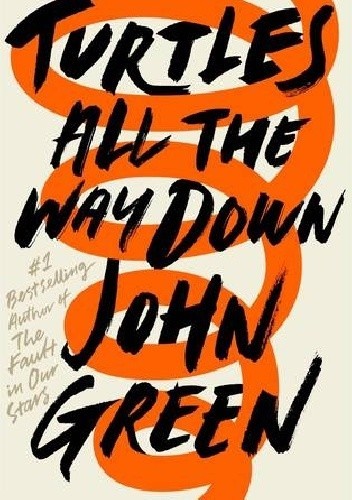
Turtles All the Way Down is a novel by John Green, first published in 2017. John Green has said he wrote it partly from his own experience with obsessive-compulsive disorder. Below you will find a part-by-part summary, five key takeaways, a few ideas worth remembering and a note on who will enjoy it most. The part-by-part section gives away the plot, including the ending, so skip it if you have not read the book yet.
Content note: Deals with anxiety, OCD, compulsions and thoughts of self-harm. If you or someone you know needs help, call or text 988 in the US.
What Happens, Part by Part (Contains Spoilers)
A missing billionaire
Russell Pickett, a wealthy man, has vanished while facing a police investigation, and there is a reward for finding him. Aza's friend Daisy convinces her to look into it, partly because Aza once knew his son, Davis, as a child.
Aza and Davis
Aza reconnects with Davis Pickett and they begin to fall for each other. Aza loves Davis, but she struggles with kissing and closeness because of a fear of germs, and the fear controls her.
The spiral
Aza's thoughts turn in circles. She worries about the bacteria in her body, opens a wound on her finger over and over, and drinks hand sanitizer. These scenes show how OCD makes a person act against her own wishes.
Daisy and friendship
Daisy writes fan fiction and is outspoken, and she becomes frustrated with Aza when she feels Aza is unable to see beyond herself. The two friends hurt each other, and then try to forgive each other.
Pickett's fate
The mystery resolves in a quiet way, and the book makes clear the mystery is not the heart of the story. Aza learns more about her own limits and where help may come from.
An open ending
The novel does not offer a cure. Aza keeps living with her illness, supported by treatment and by the people who love her, and the end is hopeful but honest.
5 Key Takeaways
- Mental illness is not a character flaw, and recovery is not a straight line.
- A mystery can serve as a backdrop for a deeper story about an inner struggle.
- Friends can hurt each other while trying to help, and repair takes honesty.
- Love does not fix illness, but it can make it easier to face.
- Seeking treatment is a sign of strength.
Ideas Worth Remembering
These are paraphrased, not direct quotes:
- The idea that we cannot choose our thoughts runs through the whole book.
- You are not your illness.
- Loving someone with a mental illness can be hard, and it can also be worth it.
Who Should Read Turtles All the Way Down?
Read it if you like thoughtful young adult fiction, enjoy John Green's voice, or want a realistic look at anxiety and obsessive-compulsive disorder. It can be difficult for readers whose own symptoms are close to Aza's.
Questions to Think About After Reading
These prompts work for solo reading, a book club or a classroom discussion of Turtles All the Way Down:
- Which character did you understand best, and what did the author do to make you feel that way?
- Which scene would you change, and what would that do to the ending?
- What does the book say about its main theme that you agree or disagree with?
How to Use This Summary
Use this page as a quick reference before a book club meeting, an exam, or a decision about whether Turtles All the Way Down is worth your time. The takeaways are written to stand on their own. If a point interests you, go back to the book for the author's full argument, examples and style, which no short summary can carry.
A Note on Accuracy and Spoilers
This summary is based on the published text of Turtles All the Way Down, not on any film, series or stage adaptation, which often change the story. Details are kept at the level of the main events so that nothing is invented. Editions differ slightly in length and wording, so page numbers and small details may vary from your copy.
Should You Read the Book?
If you plan to read it, set aside a few evenings and read the opening chapters before you decide. A summary tells you what happens, but the voice and pacing are what make a novel work or not.
Check price of Turtles All the Way Down on Amazon
What to Read Next
- The Fault in Our Stars by John Green: Green's best-known novel
- The Perks of Being a Wallflower by Stephen Chbosky: a teen novel about mental health and friendship
- All the Bright Places by Jennifer Niven: a young adult novel about two teens and mental health
Related: 15 Books Like Turtles All the Way Down You’ll Love · Paper Towns by John Green: Summary and Key Takeaways
Frequently Asked Questions
Is Turtles All the Way Down about OCD?
Yes. Aza lives with obsessive-compulsive disorder and anxiety, and the story shows how it shapes her thoughts and choices.
Where does the title come from?
It refers to the idea of an infinite regress, which echoes the way Aza's thoughts spiral.
Is it based on the author's life?
The author has said his own OCD informed the book, but the story is fiction.
What age is it for?
It is usually read by teens 14 and up and by adults.
Is Turtles All the Way Down worth reading?
It depends on what you want. The book is best for readers who want an honest story about anxiety and OCD. If that describes you, it is likely a good fit. If not, the titles under What to Read Next may suit you better.
Can this summary replace reading Turtles All the Way Down?
No. A summary covers the main events and ideas, but it cannot carry the author's voice, detail or pacing. Use it to decide whether to read the book, to refresh your memory or to prepare for a discussion.