
Disclosure: As an Amazon Associate, Bookish Wisdom earns from qualifying purchases. This doesn't change our picks or your price.
Quick answer: A standard book has three main parts: front matter, such as the title page, copyright page and table of contents; the main text in chapters; and back matter, such as acknowledgments and an author bio. Common trade paperback sizes are 5.5 by 8.5 inches and 6 by 9 inches, while manuscripts sent to agents use a separate standard format with double spacing and 12-point font.
Table of Contents
Key Facts
| Item | Detail |
|---|---|
| Main parts | Front matter, body, back matter |
| Common paperback sizes | 5.5 x 8.5 in and 6 x 9 in |
| Mass-market size | About 4.25 x 6.87 in |
| Manuscript format | Double-spaced, 12-point font, one-inch margins |
| Typical body font size | About 10-12 points in print |
The Standard Parts and Sizes of a Book
1. Front matter
Usually includes a half title, title page, copyright page, dedication and table of contents, sometimes followed by a foreword or preface.
2. The body
The main text, divided into chapters or parts, often with a prologue or epilogue.
3. Back matter
Acknowledgments, an author bio, notes, a bibliography or an index for nonfiction.
4. Trim size
Trade paperbacks are commonly 5.5 by 8.5 inches or 6 by 9 inches, while mass-market paperbacks are smaller.
5. Interior layout
Books use serif fonts, justified text, headers or footers and consistent chapter openings.
6. Manuscript format
Before publication, writers submit double-spaced manuscripts with one-inch margins, which publishers then lay out.
Common Formatting Mistakes
- Using manuscript format for print. Print books need a designed layout.
- Skipping the copyright page. It is standard.
- Choosing an odd trim size. Standard sizes are cheaper to print.
- Tiny margins. Leave room near the spine.
- Inconsistent chapter openings. Keep layouts uniform.
Building a Writing Habit That Lasts
Most books are finished by people who write regularly, not by people who wait for inspiration. Pick a time you can protect, even if it is only twenty minutes, and treat it like an appointment. Keep a running document of ideas so you never start from a blank page. Set a small, measurable goal, such as three hundred words a session, and track it. When you get stuck, skip ahead to a scene or section you are excited about and come back later. Finally, separate drafting from editing: write the rough version first, and fix it afterward, because trying to do both at once slows most writers down.
It also helps to know who the book is for. Write a one-sentence description of your reader and keep it beside your desk. Every time you are unsure about a scene, a word or a chapter, ask whether it serves that reader. This simple check keeps a draft focused and makes later editing much easier.
Finally, ask for feedback early. A trusted reader, writing group or teacher can spot problems you are too close to see, and fixing them in an early draft is much easier than in a finished one.
Keep every draft. Saving old versions lets you experiment freely, because you can always go back if a change does not work.
Most importantly, enjoy the process. Writing a book is a long project, and the writers who finish are usually the ones who find something to love in the daily work.
Reading widely in the form you are writing is one of the best teachers. Notice how other writers open, structure and end their work, and borrow techniques that suit your own voice.
Helpful Books and Resources
-
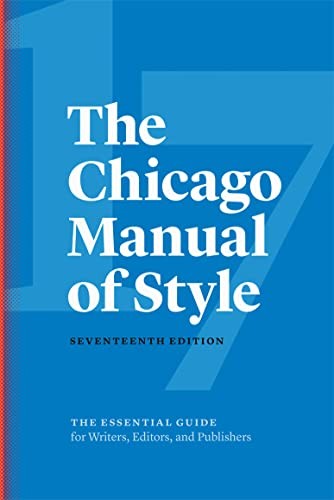
The Chicago Manual of Style by University of Chicago Press
-
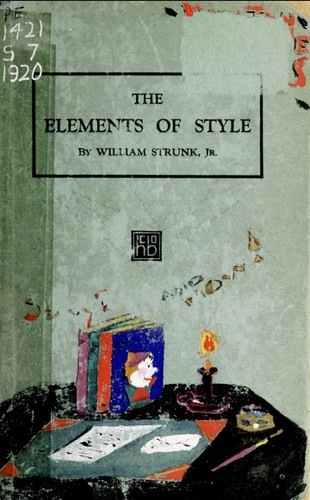
The Elements of Style by William Strunk Jr. and E. B. White
-
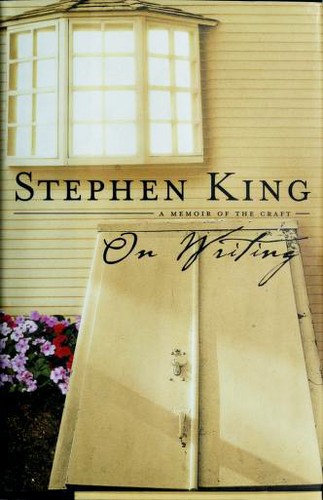
On Writing by Stephen King
Related: On Writing by Stephen King: Summary and Key Takeaways · Battle Of The Books Standard List 4-6 Grade Printable
Frequently Asked Questions
What is the standard format of a book?
Front matter, body and back matter.
What is the most common book size?
6 by 9 inches and 5.5 by 8.5 inches are common.
What is front matter?
Pages before the main text, like the title page.
What is back matter?
Pages after the main text, like acknowledgments.
What font size do books use?
About 10 to 12 points.
Do manuscripts use the same format?
No. Manuscripts use double spacing.
What is a trim size?
The final page size of a printed book.
What goes on the copyright page?
Copyright notice, publisher details and ISBN.
Do e-books have trim sizes?
No. Text reflows on screens.
What tools format books?
Atticus and Vellum are popular.