
Disclosure: As an Amazon Associate, Bookish Wisdom earns from qualifying purchases. This doesn’t change our picks or your price.
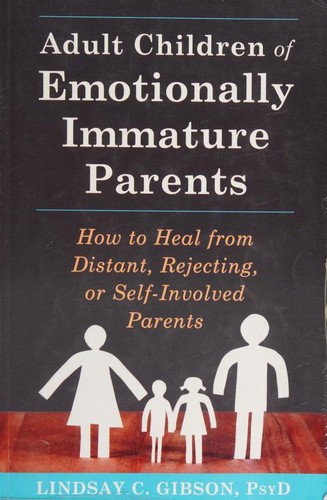
TL;DR: Adult Children of Emotionally Immature Parents: How to Heal from Distant, Rejecting, or Self-Involved Parents by Lindsay C. Gibson explains how growing up with parents who were self-absorbed, dismissive or emotionally unavailable can leave lasting marks. Gibson describes four parent types, shows how children adapt, and offers steps for recognizing the pattern, setting boundaries and building healthier relationships.
Some people grew up with parents who provided food, shelter and school fees but little emotional connection. They felt lonely, unheard or responsible for their parents’ moods, and they may carry those feelings into adulthood without knowing why. Clinical psychologist Lindsay Gibson wrote Adult Children of Emotionally Immature Parents in 2015 to name the experience and offer a path to healing. The book became popular online with readers who said it explained their childhoods. It’s compassionate and practical, with self-assessments and exercises. Here’s a summary of its main ideas. This is educational and not a replacement for therapy.
Table of Contents
Adult Children of Emotionally Immature Parents at a Glance
| Detail | Info |
|---|---|
| Author | Lindsay C. Gibson |
| Published | 2015 |
| Genre | Psychology, family, self-help |
| Core idea | Emotionally immature parents leave children lonely; recognizing the pattern is the path to healing |
| Structure | Chapters on parent types, effects, recovery and relating to your parents |
| Best for | Adults who feel emotionally neglected or responsible for their parents’ feelings |
What Is Adult Children of Emotionally Immature Parents About?
Gibson describes emotionally immature parents as people who are unable to provide emotional safety and attunement. They tend to be self-involved, have low empathy, avoid vulnerability and react defensively to feedback. They may be charming and responsible in some ways, yet children feel that their feelings are not welcome.
She contrasts these traits with emotionally mature parents, who are empathic, respect boundaries, take responsibility and can repair after conflict. The book uses this contrast to help readers recognize what was missing.
Key Ideas, Part by Part
The Four Types of Emotionally Immature Parents
Gibson identifies four types, though a parent may combine them. Emotional parents are driven by feelings, swinging between anger and anxiety, and may make their children walk on eggshells. Driven parents are perfectionists who push constantly, praise achievement over connection and cannot slow down. Passive parents avoid conflict, step aside while the other parent is harsh and offer warmth but little protection. Rejecting parents are cold, irritable and uninterested in closeness, often treating children as burdens.
Children respond by developing coping roles. Gibson suggests that internalizers, who look inward and take responsibility, tend to become anxious and self-critical, whereas externalizers, who act outward, may become impulsive or controlling. Both responses are attempts to cope with unreliable parents.
How Childhood Shapes Adult Life
The book explains how emotional neglect can lead to loneliness, difficulty trusting one’s feelings, guilt about setting limits and a tendency to take care of others at the expense of oneself. Many adult children develop a role self, a persona built to please or fit in, and lose touch with their true self.
Gibson also talks about the fantasy of a better parent. Many adult children hold on to the hope that their parent will finally understand them, which can lead to repeated disappointment. Recognizing that the parent may be unable to change is painful but freeing.
Healing: Seeing Clearly and Setting Boundaries
Healing starts with understanding. Gibson recommends noticing patterns, validating your own feelings and learning to trust your reactions. She includes questionnaires to help readers identify the type of parent they had and their own coping style.
She then offers strategies for relating to parents differently. These include keeping conversations short and light, choosing topics carefully, limiting time together and not expecting deep emotional exchange. She calls this a kind of emotional detachment, not coldness, and says that setting limits can reduce resentment. She also suggests telling the truth about your needs when it feels safe, while expecting that the parent may still react defensively.
Building Healthier Relationships
The later chapters encourage readers to seek emotionally mature people, learn to ask for what they need and develop a relationship with themselves. Gibson describes qualities to look for, such as empathy, respect and the willingness to repair, and warns against recreating childhood patterns.
The book ends with a message of hope: by naming your experience, you can begin to build a life that honors your true self.
6 Key Takeaways From Adult Children of Emotionally Immature Parents
- Emotional neglect is real. Lack of connection can affect you even without overt abuse.
- There are four parent types. Emotional, driven, passive and rejecting.
- Roles help children cope. Adult patterns often began as survival strategies.
- Stop waiting for change. Accepting limits can bring peace.
- Set emotional boundaries. Protect your energy in difficult relationships.
- Seek emotionally mature people. Look for empathy and mutual respect.
Ideas Worth Remembering
- Your feelings are valid even if your parents dismissed them. (paraphrased)
- You are not responsible for a parent’s emotional state. (paraphrased)
- Healing involves grief for what you did not receive. (paraphrased)
- Boundaries are a form of self-respect. (paraphrased)
How to Apply Adult Children of Emotionally Immature Parents in Real Life
- Identify the parent type. Use the book’s checklists to name the pattern.
- Keep visits short. Plan limited, structured time with a difficult parent.
- Validate your feelings. Write down what you felt and needed as a child.
- Practice saying no. Start with low-stakes situations.
- Find support. Consider therapy or a support group.
Criticisms and Limits
Critics note that the book can feel one-sided, since it focuses on the effect on children and offers little on the pressures parents faced, such as their own childhoods or circumstances. Some readers worry that labeling parents may increase estrangement, and cultural differences in family expectations are not much explored. The four-type model is a simplification, and the book is not a substitute for therapy.
Still, many find it validating. Use it as a tool for understanding and to build compassion for yourself, while keeping in mind that families are complex.
Adult Children of Emotionally Immature Parents in One Minute
Emotionally immature parents can be emotional, driven, passive or rejecting, leaving children lonely and uncertain. Children adapt as internalizers or externalizers and build a role self. Healing involves seeing the pattern, grieving what was missing, setting emotional boundaries, giving up the fantasy of a perfect parent and choosing emotionally mature relationships.
Signs of Emotional Immaturity
Traits can include being easily upset by criticism, making everything about themselves, dismissing others’ feelings, using guilt to control, avoiding responsibility and struggling to apologize. A parent may also overshare adult problems with a child or rely on the child for support. Noticing these traits in hindsight can be both relieving and sad. The goal is not to blame, but to understand.
Talking With Your Parents
Gibson advises caution about confronting parents with the hope of getting an apology. A parent who lacks empathy may become defensive. If you do raise concerns, keep your expectations modest and be ready to protect yourself. Many readers find it more helpful to change how they respond than to try to change the parent. Therapy can offer a space to practice conversations before having them.
When to Seek Professional Help
If childhood experiences included abuse, or if you struggle with depression, anxiety or relationship difficulties, a licensed therapist can offer tailored support. Trauma-informed therapists can help with grief, boundaries and self-compassion. In the US, you can call or text 988 if you feel unsafe or in crisis. Reading the book can be emotional, so go at your own pace.
A Short Self-Check
Gibson offers questionnaires, but you can start with a few questions. Did you feel safe sharing feelings with your parents? Were you expected to manage their moods? Did they listen without turning the conversation to themselves? Do you find it hard to ask for help now? Do you feel guilty when you set limits? Your answers do not prove anything on their own, but they can point to patterns worth exploring with a trusted friend or therapist.
Grief and Self-Parenting
Healing often involves sadness for the closeness you wanted but did not get. Gibson encourages readers to allow that grief, then to offer themselves what a caring parent would: attention, comfort and encouragement. Practical steps include checking in with your feelings during the day, speaking kindly to yourself and keeping small promises. Over time, these habits help you build the inner security that may have been missing in childhood.
Relationships Beyond Family
Growing up with an emotionally unavailable parent can affect friendships and romance. You might be drawn to people who need rescuing, avoid conflict or feel uneasy when someone is truly attentive. Noticing these tendencies helps you choose differently. Look for people who listen, respect your limits and are willing to repair after disagreements. Building these relationships takes time, and each small step toward mutual care counts.
Who Should Read Adult Children of Emotionally Immature Parents?
Read it if you feel emotionally lonely in your family, take too much responsibility for others’ feelings or want to understand a difficult parent. It’s best for readers ready for an honest look at family patterns. For a related topic on boundaries, pair it with Codependent No More.
What to Read Next
- Codependent No More by Melody Beattie a classic on boundaries and caretaking
- The Body Keeps the Score by Bessel van der Kolk how trauma shapes the body and mind
- Running on Empty by Jonice Webb about childhood emotional neglect
Related: Codependent No More summary and key takeaways and Attached summary and key takeaways.
Frequently Asked Questions
What is the main idea of this book?
That emotionally immature parents leave lasting effects, and recognizing the pattern helps adult children heal and set boundaries.
What are the four types of emotionally immature parents?
Emotional, driven, passive and rejecting.
What is the role self?
A persona created to please or adapt, which can hide the true self.
Can I fix my relationship with my parents?
You can change how you engage, though the parent may not change.
Is the book a replacement for therapy?
No, it is educational; therapy can offer personalized help.