

Disclosure: As an Amazon Associate, Bookish Wisdom earns from qualifying purchases. This doesn’t change our picks or your price.
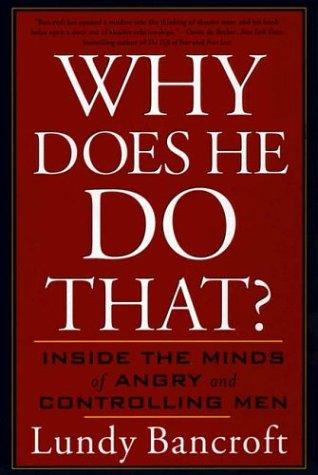
TL;DR: Why Does He Do That? Inside the Minds of Angry and Controlling Men by Lundy Bancroft explains abusive behavior in intimate relationships, drawing on the author’s years of working with abusive men. Bancroft argues that abuse comes from entitlement and a desire for control, not from anger problems, stress or a troubled past, and he offers guidance for recognizing it and staying safe.
Many people who experience abuse ask why a partner who can be charming and kind also behaves in cruel and controlling ways. Lundy Bancroft spent about fifteen years counseling abusive men in group programs and wrote Why Does He Do That? in 2002 to share what he learned. The book is widely recommended by domestic violence advocates and counselors. It is direct and sometimes hard to read. Here’s a summary of its main ideas. If you are in danger, in the US call the National Domestic Violence Hotline at 1-800-799-7233, text START to 88788 or visit thehotline.org, and call 911 in an emergency.
Table of Contents
Why Does He Do That? at a Glance
| Detail | Info |
|---|---|
| Author | Lundy Bancroft |
| Published | 2002 |
| Genre | Relationships, psychology, domestic abuse |
| Core idea | Abuse is driven by attitudes of entitlement and control, not by loss of temper |
| Structure | Chapters on myths, abuser types, the abusive mind and leaving safely |
| Best for | People in or recovering from abusive relationships, their friends and professionals |
What Is Why Does He Do That? About?
Bancroft observes that abusive men often seem like two different people: one charming and generous in public, the other harsh and controlling at home. He argues that this is not a split personality but a pattern: the man behaves as he does because he chooses to, and because it works.
He challenges common explanations, such as that abuse results from anger problems, alcohol, childhood trauma or stress. While these factors may play a role in some cases, the core issue, he says, is an attitude that a partner exists to serve him, and that he has a right to control her.
Key Ideas, Part by Part
Myths and the Abuser’s Mindset
Bancroft debunks myths such as the idea that abusers lose control. He notes that many stay calm enough to choose where to hit or when to stop, and that they are often careful to avoid harming others. Another myth is that the abuser is a victim of his past. While some have painful histories, most people with troubled pasts do not abuse.
Instead, he describes core beliefs that drive abuse: a sense of entitlement, a need for control, a tendency to disrespect partners and a habit of denying responsibility. Abusers may also use charm, confusion or manipulation to maintain power.
Types of Abusive Men
Bancroft describes several types, which are not rigid boxes. Mr. Right insists that he is always correct and corrects his partner constantly. The Demand Man expects attention and service, becoming angry when his needs are not met. The Drill Sergeant imposes strict rules, and the Water Torturer wears a partner down through constant criticism. Mr. Sensitive uses his emotions to manipulate, and the Player lives a double life.
Others include the Rambo, who uses intimidation, the Victim, who blames everyone else, and the Terrorist, who uses fear and violence. Many men combine styles. The categories help readers see patterns and understand that control takes many forms.
Warning Signs and the Cycle
Bancroft lists early warning signs, such as jealousy, controlling behavior, disrespect, rapid involvement, volatility and putting a partner down. He cautions that charm and apologies are often part of a cycle of tension, abuse and reconciliation.
He emphasizes that abusive behavior includes verbal, emotional, financial, sexual and physical abuse, and that psychological abuse can be as damaging as physical violence. He also discusses how abusers may turn children or friends against a partner.
Leaving, Safety and Change
The final chapters address how to leave safely. Bancroft advises making a safety plan, seeking help from advocates and keeping in mind that leaving can be a dangerous time. He explains that abusers rarely change without long-term, accountable programs and honest self-examination.
He also discusses the role of the community: friends and family can support a survivor by listening, believing and avoiding blame. The book ends on a note of hope for those who are healing, while being realistic about how hard change is.
6 Key Takeaways From Why Does He Do That?
- Abuse is about control. It stems from entitlement, not lost temper.
- Charm can mask abuse. Public behavior does not prove private behavior.
- Myths hide the truth. Alcohol, stress and anger do not explain abuse.
- Know the warning signs. Jealousy, disrespect and control are red flags.
- Plan for safety. Leaving can be dangerous, so seek help.
- Change is hard. Real change needs accountability and time.
Ideas Worth Remembering
- You are not to blame for someone else’s abuse. (paraphrased)
- Abuse is a pattern, not a mistake. (paraphrased)
- Emotional abuse is real abuse. (paraphrased)
- Support from trained advocates can save lives. (paraphrased)
How to Apply Why Does He Do That? in Real Life
- Learn the signs. Read the warning signs and note which fit.
- Talk to an advocate. Call a domestic violence hotline for confidential advice.
- Make a safety plan. Gather documents and a bag in a safe place.
- Confide in someone. Tell a trusted friend, relative or counselor.
- Document incidents. Keep a private, secure record.
Criticisms and Limits
Critics note that the book is based on the author’s clinical experience with men in abuse programs, not on large-scale research, and that it generalizes from a particular group. It focuses on male perpetrators and female victims, which leaves out other dynamics. Some readers find the tone harsh, and the claim that abusers rarely change can feel discouraging. Mental health and addiction can also play roles that the book does not fully explore.
Despite those limits, advocates widely recommend the book for its clear explanation of control and its practical guidance. It’s best used with professional support.
Why Does He Do That? in One Minute
Abuse comes from attitudes of entitlement and control, not from anger, alcohol or stress. Abusive men can be charming in public, and often follow a cycle of tension, abuse and reconciliation. Learn the warning signs and types, make a safety plan and rely on trained advocates. Leaving can be a dangerous time, and change is rare without accountability.
Supporting Someone You Love
If a friend or family member is in an abusive relationship, listen without judgment and believe them. Avoid ultimatums or criticism of their partner, which can push them away. Offer practical help, like a place to stay or a ride, and share hotline information. Respect their pace, since leaving is a process. Stay in touch even if they return to the relationship.
Note on Language and Scope
The book is written mainly about men who abuse women in heterosexual relationships, based on the author’s experience. Abuse also happens in same-sex relationships and with women as abusers, and men can be survivors too. The patterns of control and entitlement described apply broadly, and resources exist for all survivors. Advocates and hotlines can help with any situation.
Resources
In the US, the National Domestic Violence Hotline is available at 1-800-799-7233, by text (START to 88788) or online chat at thehotline.org. In the UK, the National Domestic Abuse Helpline can be reached at 0808 2000 247. Other countries have similar services. A local domestic violence program can help with safety planning, legal options and shelter. If you are in immediate danger, call your local emergency number.
Questions Survivors Often Ask
Many people wonder whether they imagined the problem, whether the partner will change or whether they are partly to blame. Bancroft’s answer is that you did not cause the abuse, and that your instincts about being unsafe or controlled deserve attention. Talking with a trained advocate can help you sort out options, including staying safely, leaving or seeking legal protection. You do not have to decide everything at once.
Warning Signs in Early Dating
Some patterns that appear early include moving very fast, wanting to know your whereabouts all the time, criticizing your friends or family, acting jealous and calling it love, putting you down in public or blaming you for their anger. A single sign does not prove abuse, but a pattern is a reason for caution. Trust your discomfort, talk to someone outside the relationship and take things slowly.
Who Should Read Why Does He Do That??
Read it if you suspect that you or someone you know is in an abusive relationship, if you work with survivors or if you want to understand patterns of control. It can be intense. Take breaks, and read when you have support. For related topics, see Codependent No More and Hold Me Tight, though those aren’t a substitute for safety planning.
What to Read Next
- The Body Keeps the Score by Bessel van der Kolk how trauma affects the body and mind
- Should I Stay or Should I Go? by Ramani Durvasula a guide for people in relationships with narcissistic partners
- Adult Children of Emotionally Immature Parents by Lindsay C. Gibson healing from emotionally neglectful families
Related: Adult Children of Emotionally Immature Parents summary and key takeaways and The Body Keeps the Score summary and key takeaways.
Frequently Asked Questions
What is the main idea of Why Does He Do That?
That abuse comes from entitlement and a desire for control, not from anger, stress or a troubled past.
Who wrote the book?
Lundy Bancroft, who counseled abusive men for about fifteen years.
What are the types of abusive men?
Examples include Mr. Right, the Demand Man, the Drill Sergeant, the Water Torturer and others.
Can abusers change?
Rarely, and only with long-term accountability and honest effort.
Where can I get help?
In the US, call 1-800-799-7233 or text START to 88788; call 911 in an emergency.