
Disclosure: As an Amazon Associate, Bookish Wisdom earns from qualifying purchases. This doesn’t change our picks or your price.
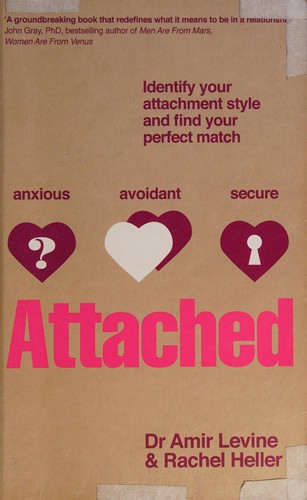
TL;DR: Attached by Amir Levine and Rachel Heller applies attachment theory to adult relationships. It describes three styles, secure, anxious and avoidant, explains how they affect dating and marriage, and shows how understanding your style and your partner’s can help you communicate and choose healthier relationships.
Attached appeared in 2010 and has become a favorite of readers who want to understand why they behave the way they do in love. The authors, psychiatrist Amir Levine and psychologist Rachel Heller, draw on decades of research that began with John Bowlby and Mary Ainsworth’s work on infants and extended to adult couples through the studies of Cindy Hazan and Phillip Shaver. The book is written in plain language, with quizzes, stories and tips. Here’s a summary of its main ideas. Attachment styles are patterns, not diagnoses.
Table of Contents
Attached at a Glance
| Detail | Info |
|---|---|
| Authors | Amir Levine and Rachel S.F. Heller |
| Published | 2010 |
| Genre | Psychology, relationships |
| Core idea | Adult relationships are shaped by attachment styles |
| Structure | Explanation of styles, relationship dynamics and advice |
| Best for | Singles and couples who want to understand patterns in love |
What Is Attached About?
Attachment theory proposes that humans have an innate need to form close bonds, and that early experiences with caregivers shape how we relate to others as adults. The authors describe three main styles. Secure people are comfortable with intimacy and independence. Anxious people crave closeness and worry about rejection. Avoidant people value independence and tend to feel uncomfortable with too much closeness.
They say roughly half of people are secure, about a fifth are anxious and about a quarter are avoidant, with a small group showing both anxious and avoidant traits. Styles are not fixed, and they can shift depending on the partner and life experiences.
Key Ideas, Part by Part
The Three Attachment Styles
Anxious people tend to be preoccupied with the relationship, to read hidden meanings in small signals and to feel unsettled when a partner is distant. They may engage in protest behavior, such as repeated calls or testing, when they feel threatened. Avoidant people use deactivating strategies, such as focusing on a partner’s flaws or keeping options open, to maintain independence. Secure people communicate openly and handle conflict without panic.
The authors stress that none of these styles is bad. They are adaptive responses to earlier experiences, and understanding them can reduce shame.
The Anxious-Avoidant Trap
One of the book’s most discussed ideas is the anxious-avoidant trap, in which an anxious person and an avoidant person form a pair that triggers each other’s worst fears. The anxious partner seeks closeness, the avoidant partner pulls away, and the anxious partner pursues harder, which makes the avoidant withdraw more. The cycle can be painful and exhausting.
Levine and Heller suggest that people recognize this pattern and consider whether the relationship is meeting their needs. They also encourage partners to talk about it and explore therapy if needed.
Finding a Secure Partner
The authors recommend dating with attention to how someone treats you over time. Secure partners are consistent, respond to your needs and are comfortable with commitment. They advise anxious people to be wary of excitement that comes from uncertainty and to value calm, reliable behavior. Avoidant people are encouraged to notice when they pull away and to name it.
The book includes advice for choosing partners, gauging early signs and recognizing red flags, and for building relationships in which both people feel safe.
Communicating Effectively
The final part focuses on communication. The authors encourage expressing needs clearly, without blame or protest behaviors. They suggest using direct statements, such as I need more reassurance after a stressful day, rather than hints or accusations. They also encourage listening to a partner’s responses and staying open to compromise.
They argue that secure relationships provide a safe base from which each person can explore the world. Even people with insecure styles can move toward more secure patterns through supportive relationships, self-awareness and, when helpful, therapy.
7 Key Takeaways From Attached
- Know your style. Understanding your attachment pattern clarifies your reactions.
- Know your partner’s style. Different styles have different needs.
- Styles can change. Experience and effort can increase security.
- Avoid the anxious-avoidant trap. Notice patterns that trigger each other’s fears.
- Choose consistency. Reliable behavior matters more than intense chemistry.
- Say what you need. Direct, calm communication beats protest behaviors.
- Seek support. Therapy can help change deep patterns.
Ideas Worth Remembering
- Needing closeness is a natural human need, not a weakness. (paraphrased)
- Intense excitement is not the same as a healthy connection. (paraphrased)
- Secure relationships give each person a safe base for growing. (paraphrased)
- Understanding your pattern is the first step toward changing it. (paraphrased)
How to Apply Attached in Real Life
- Take a quiz with care. Use the book’s questionnaires as starting points, not as labels.
- Name your needs. Practice stating what you need calmly and directly.
- Watch behavior over time. Notice whether a partner is consistent and responsive.
- Pause before protesting. When anxious, take a breath before texting or confronting.
- Consider therapy. A therapist can help if patterns repeat across relationships.
Criticisms and Limits
Critics note that Attached simplifies attachment theory and may encourage people to see their partners through labels. Some say its categories are too rigid, and that it gives more advice to anxious readers than to avoidant ones. Others point out that the book assumes monogamous, heterosexual-style dynamics in many examples, though its ideas apply more widely.
Therapists also warn that attachment style is just one factor in relationship success, alongside values, communication and circumstances. The book is best used as a lens, not a final verdict.
The Research Behind the Book
Attachment theory began with John Bowlby, a British psychiatrist, who studied how infants bond to caregivers, and with Mary Ainsworth, whose Strange Situation experiment classified infants as secure, anxious or avoidant. In the 1980s, researchers Cindy Hazan and Phillip Shaver showed that similar patterns appear in adult romantic relationships. Later studies have refined the models, suggesting dimensions of anxiety and avoidance rather than strict categories. Levine and Heller present these findings in a simple form, which has made them popular but also led to oversimplifications.
Cautions About Labels
Many readers enjoy using attachment styles as a language for discussing relationships, but experts caution against treating them as fixed identities or as excuses. Styles can vary by relationship and over time, and context, culture and trauma all matter. Online quizzes may not be accurate. A good approach is to use the ideas to build empathy and awareness, not to diagnose your partner. If you or a partner feel distressed or unsafe in a relationship, seek professional support.
Applying the Book to Friendships and Family
Although Attached focuses on romantic partners, the ideas apply to friendships, parenting and work. A friend who disappears for weeks may have an avoidant style, while one who needs frequent reassurance may be anxious. Parents can use attachment ideas to offer a secure base for children, with consistent, responsive care. Many readers say that recognizing these patterns in themselves and others made them more patient and compassionate.
Discussion Questions
To get more out of the book, ask: Which style do you recognize in yourself, and how did you develop it? How have you seen the anxious-avoidant pattern in your relationships or in others? What would feel like secure behavior to you? How could you ask for what you need? What are the benefits and limits of using labels? Discussing with a trusted friend or therapist can help you turn ideas into change.
Dating Tips by Attachment Style
The authors offer different suggestions depending on style. If you tend to be anxious, notice when you’re drawn to unpredictable partners, practice self-soothing, and look for people who are consistent and caring. If you tend to be avoidant, notice when you feel the urge to pull away, try to stay present for a few extra minutes and share small feelings. If you’re secure, remain open and patient with partners who are working on their patterns. Everyone benefits from clear communication and from partners who respond with kindness.
Attachment in Long-Term Relationships
In marriages and long-term partnerships, attachment patterns show up in conflicts about space, reassurance and commitment. Partners may find that one wants to talk while the other needs time alone. The book suggests building routines of connection, such as daily check-ins and rituals of reunion, and agreeing on how to handle disagreements. Couples therapists trained in emotionally focused therapy use attachment ideas to help partners understand each other’s fears and respond with comfort instead of criticism.
Self-Check Questions
To reflect on your own patterns, ask yourself: When a partner doesn’t respond for a day, what do I think and feel? When someone gets close, do I feel comforted or crowded? How do I act when I’m hurt, do I protest, withdraw or talk? What did I learn about closeness as a child? What would feel like a safe, steady relationship? Write down your honest answers, and consider talking them over with a friend, a counselor or your partner. These questions often reveal patterns that no quiz can show.
Attached in One Minute
Adults tend to bond in secure, anxious or avoidant ways, and these patterns influence how we date and argue. Learn your style and your partner’s, notice protest behaviors and distancing, choose consistent partners and ask directly for what you need. Styles can shift with supportive relationships, and a therapist can help with deeper patterns.
Who Should Read Attached?
Read it if you often feel anxious or distant in relationships, if you find yourself in repeating patterns or if you want a friendly introduction to attachment theory. It’s popular with singles and couples and works well for therapists who want to share concepts with clients. If you want more depth, move on to books like Hold Me Tight or Wired for Love.
What to Read Next
- Hold Me Tight by Sue Johnson an emotionally focused approach to couples therapy
- Wired for Love by Stan Tatkin a brain-based guide to couples
- Set Boundaries, Find Peace by Nedra Glover Tawwab practical help with boundaries
Related: books like Attached and Nonviolent Communication summary and key takeaways.
Frequently Asked Questions
What is the main idea of Attached?
That adult relationships are shaped by attachment styles, and that understanding yours helps you communicate and choose partners.
What are the attachment styles?
Secure, anxious and avoidant, with a small group who are both anxious and avoidant.
Can attachment style change?
Yes. Supportive relationships and self-awareness, sometimes with therapy, can increase security.
Is Attached scientifically accurate?
It’s based on real research but simplifies it, so treat it as a starting point.
What should I read after Attached?
Try Hold Me Tight or Wired for Love.