
Disclosure: As an Amazon Associate, Bookish Wisdom earns from qualifying purchases. This doesn’t change our picks or your price.
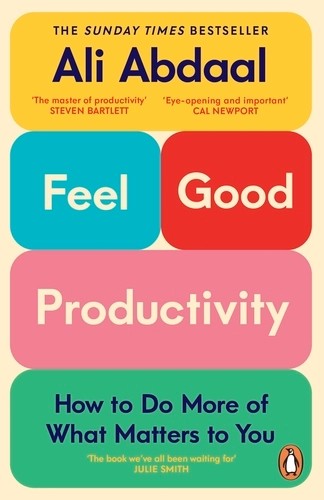
TL;DR: Feel-Good Productivity by Ali Abdaal argues that the best way to get things done is to feel good, not to force yourself. Drawing on psychology and his own experience as a doctor-turned-YouTuber, Abdaal presents a framework to energize your work, unblock what holds you back and sustain your efforts without burning out.
Feel-Good Productivity, published in 2023, is the debut book by Ali Abdaal, a former doctor who became one of the most popular productivity creators on YouTube. Instead of discipline and hustle, he argues that positive emotions, such as playfulness, curiosity and connection, are the real engines of productivity. The book mixes research from psychology with stories from his own life and from other people, and it’s written in a friendly, conversational voice. Here’s a summary of the main ideas.
Table of Contents
Feel-Good Productivity at a Glance
| Detail | Info |
|---|---|
| Author | Ali Abdaal |
| Published | 2023 |
| Genre | Productivity, self-help |
| Core idea | Positive emotions drive sustainable productivity |
| Structure | Three parts: energize, unblock and sustain |
| Best for | Readers who find traditional productivity advice stressful |
What Is Feel-Good Productivity About?
Abdaal begins by describing his earlier approach, in which he treated productivity as a grind and measured himself by hours. After burning out, he looked for ways to work that felt better and found that research supports the idea that positive emotions broaden attention, creativity and persistence. The book builds on the idea that if you feel good, you will do more of what matters, and that you should work with your emotions rather than against them.
He organizes the book into three parts, each addressing a key challenge: finding energy, removing blocks and avoiding burnout. Each part includes practical tools that readers can try.
Key Ideas, Part by Part
Part One: Energize
The first part is about generating positive energy. Abdaal explores ideas such as play, power and people. Play means bringing a sense of fun and curiosity to tasks, for example by turning chores into games or experimenting with new approaches. Power refers to a sense of agency and confidence, which can come from small wins and knowing your why. People means using social connections, such as working alongside others, sharing goals and giving or receiving support.
The aim is to replace dread with energy by designing your work to feel more rewarding.
Part Two: Unblock
The second part addresses what stops us from starting or finishing, including uncertainty, fear and lack of curiosity. Abdaal suggests that many productivity problems are emotional rather than logistical: we avoid tasks because they feel unclear or scary. He recommends breaking big tasks into small experiments, reducing uncertainty through planning and treating failure as feedback.
He also describes ways to build courage in small steps and to approach problems with curiosity, asking what you can learn rather than whether you’re good enough.
Part Three: Sustain
The final part is about maintaining your efforts without burning out. Abdaal discusses conserving energy by saying no to extra demands, recharging with sleep, exercise and downtime and building consistent habits that don’t depend on motivation. He argues that rest isn’t the opposite of productivity but a part of it.
He closes by encouraging readers to design a life that feels meaningful and sustainable, and to experiment with the ideas gradually.
7 Key Takeaways From Feel-Good Productivity
- Feel good first. Positive emotions improve focus, creativity and persistence.
- Make work playful. Turn tasks into experiments or games.
- Build power. Small wins and clear reasons build confidence.
- Use people. Social support makes tasks easier.
- Remove blocks. Address uncertainty and fear instead of forcing yourself.
- Protect your energy. Say no and rest to avoid burnout.
- Be consistent. Sustainable habits beat bursts of intensity.
Ideas Worth Remembering
- Feeling good tends to come before doing well, not after. (paraphrased)
- Many procrastination problems are emotional problems in disguise. (paraphrased)
- Rest is part of productive work. (paraphrased)
- Experiments make progress feel lighter and more informative. (paraphrased)
How to Apply Feel-Good Productivity in Real Life
- Gamify a boring task. Set a timer, add music or give yourself a small reward.
- Work with others. Study or work alongside a friend, in person or online.
- Shrink the task. Break a dreaded project into the smallest possible first step.
- Name the fear. Write down what you’re avoiding and what’s the worst that could happen.
- Schedule rest. Plan breaks, sleep and fun into your week.
Criticisms and Limits
Reviewers note that Feel-Good Productivity is easy to read but may feel familiar to those who’ve read other productivity books, and that its claims about emotions and performance sometimes rely on simplified research. Critics also say that the advice to feel good can sound privileged for people whose jobs are stressful or unstable.
Even so, many readers appreciate the book’s warm tone and its permission to enjoy work and rest. It works best as a set of experiments to try rather than a rigid system.
About Ali Abdaal
Ali Abdaal grew up in the United Kingdom, studied medicine at Cambridge and worked as a junior doctor before leaving to pursue content creation full time. His YouTube channel shares study techniques, productivity advice and book reviews, and has millions of subscribers. He also runs online courses and a podcast, and his earlier writing included a popular newsletter. Feel-Good Productivity is his first book. Knowing his background helps explain the friendly, example-rich style, and also why the book often draws on student and creator life.
How the Book Differs From Traditional Productivity Guides
Many productivity books, such as Getting Things Done and Deep Work, focus on systems and focus. Abdaal’s approach starts with emotion, arguing that systems fail if they make you miserable. In this way it’s closer to books like Four Thousand Weeks and Drive, which look at motivation and meaning. Readers who feel burned out by rigid routines often appreciate his emphasis on enjoyment, while readers who prefer clear rules may want to combine it with a more structured method.
Criticisms and Cautions
Some critics find the book too optimistic or note that its advice may suit people with flexible jobs more than those in high-pressure or low-autonomy roles. Others say its examples are drawn largely from academic and creative settings, and that some research cited is preliminary. The lessons can still be adapted: even small changes, such as adding a bit of playfulness to a routine task, can make work feel lighter. As with any self-help book, take what works for you.
Discussion Questions
To reflect on the book, consider: Which tasks drain you, and how could you make them more playful? Who could you work with to make a task easier? What fear or uncertainty lies behind something you’ve been avoiding? How do you currently recharge, and is it enough? What small experiment could you try this week? Sharing your answers with a friend or colleague can build accountability and bring new ideas.
The Science Behind Feeling Good
Abdaal draws on research from positive psychology, including Barbara Fredrickson’s broaden-and-build theory, which suggests that positive emotions widen attention and build resources such as skills and relationships over time. Studies on self-determination theory show that autonomy, competence and relatedness support motivation, and research on procrastination suggests that it’s often about managing negative feelings, not poor time management. These ideas appear throughout the book, and they give a research basis for the claim that enjoying your work is not a luxury but a strategy.
A Sample Feel-Good Day
Here’s how someone might apply the book’s ideas. In the morning, they choose one important task and make it playful, perhaps by working in a cafe with a favorite playlist. Midday, they schedule a call with a friend to co-work and share progress. In the afternoon, they tackle a dreaded email by breaking it into a five-minute first step and naming what they’re afraid of. In the evening they take a walk, switch off notifications and note one thing that went well. Small touches like these make the day more energizing.
Quick Tools You Can Try Today
Some simple techniques from this style of productivity are easy to start. Add a reward to a boring task, like listening to a podcast while folding laundry. Work beside someone, in person or online, for accountability. Turn big goals into experiments with a short time limit, such as try this for two weeks and see what happens. When you’re stuck, ask what feeling is behind the delay, then address it. Schedule recovery as seriously as work. Try one tool at a time for a week and see which fits your life.
Pairing the Book With Other Reads
Feel-Good Productivity pairs well with books that take a human view of work. Four Thousand Weeks reminds us to accept limits, Atomic Habits helps build routines, and Drive explains why autonomy and purpose motivate. For deeper focus, add Deep Work. For stress and rest, read Burnout by Emily and Amelia Nagoski. Reading two or three of these together can give you a complete toolkit: Abdaal for energy, Clear for habits and Newport for focus, with enough variety to keep you interested.
Feel-Good Productivity in One Minute
Productivity works better when it feels good. Energize work with play, a sense of power and people; unblock it by reducing uncertainty and fear and staying curious; and sustain it by protecting energy, resting and being consistent. Try one small experiment at a time and keep what makes your work lighter and more rewarding.
Who Should Read Feel-Good Productivity?
Read it if traditional productivity advice leaves you stressed, if you’re a student, creator or professional looking for a friendlier approach, or if you’ve tried to force discipline and burned out. It’s also a good starting point for readers new to productivity books. If you prefer deep dives or strict methods, pair it with Deep Work or Getting Things Done.
What to Read Next
- Four Thousand Weeks by Oliver Burkeman a thoughtful look at time and limits
- Atomic Habits by James Clear a practical guide to building habits
- Drive by Daniel H. Pink what motivates us beyond rewards
Related: Four Thousand Weeks summary and key takeaways and books like Deep Work.
Frequently Asked Questions
What is the main idea of Feel-Good Productivity?
That positive emotions fuel sustainable productivity, so you should design your work to feel energizing rather than relying on willpower.
Who is Ali Abdaal?
A former doctor from the UK who became a popular YouTuber and author focused on productivity and study skills.
What are the three parts of the book?
Energize, unblock and sustain.
Is Feel-Good Productivity worth reading?
Many readers find it friendly and useful, especially if they find strict systems stressful.
What should I read after Feel-Good Productivity?
Try Four Thousand Weeks, Atomic Habits or Deep Work.