
Disclosure: As an Amazon Associate, Bookish Wisdom earns from qualifying purchases. This doesn't change our picks or your price.
TL;DR: In a future World State, people are bred in hatcheries, sorted into castes and kept happy with constant pleasure and a drug called soma. When Bernard Marx brings John, a man raised outside the system, into this world, John's horror exposes the price of comfort without freedom.
Table of Contents
Brave New World at a Glance
| Author | Aldous Huxley |
| First published | 1932 |
| Type | Dystopian novel |
| Best for | readers who want a classic dystopia about pleasure, control and what makes us human |
Brave New World is a dystopian novel by Aldous Huxley, first published in 1932. Instead of ruling by fear, its government rules by giving people everything they want, so they never think to ask for more. Below you will find a part-by-part summary, five key takeaways, ideas worth remembering and a note on who will enjoy it.
Content note: Includes drug use, sexual content and suicide.
What Happens, Part by Part (Contains Spoilers)
The World State
The novel opens at the Central London Hatchery, where babies are grown in bottles and conditioned into five castes, from the clever Alphas to the simple Epsilons. Children are trained in their sleep to love their place. Adults work, consume, take soma and have casual sex, and the motto is “Community, Identity, Stability”. Families, art and deep feelings have been abolished.
Bernard and Lenina
Bernard Marx is an Alpha who feels like an outsider because he is small and unhappy. He takes Lenina Crowne, a popular worker at the Hatchery, on a holiday to a Savage Reservation in New Mexico, where people still live in old ways. There they meet Linda, a woman from the World State who was left behind years before, and her son John.
John in London
Bernard brings John and Linda back to London, where John becomes a celebrity called “the Savage”. John has learned about life from an old copy of Shakespeare, and he is shocked by a world without love, suffering or meaning. He falls for Lenina but is disgusted when she offers him casual sex.
The conversation with Mustapha Mond
After Linda dies in a hospital, John tries to start a rebellion by throwing away the workers' soma. He is arrested and meets Mustapha Mond, one of the World Controllers. Mond explains that the state gave up art, science and truth to buy stability and happiness. John insists on his “right to be unhappy”.
The ending
John retreats to an old lighthouse in the countryside to live alone and punish himself for his desires. Reporters and crowds find him and treat him like a spectacle. In a final wild scene, he gives in to the crowd's frenzy, and the next day, overcome with shame, he takes his own life.
5 Key Takeaways
- A society can control people through pleasure and comfort, not just through fear.
- Technology and conditioning can be used to erase individuality.
- Stability may come at the cost of art, truth and real relationships.
- John's suffering shows that meaning often comes from struggle and choice.
- Huxley warns against trading freedom for convenience without noticing.
Ideas Worth Remembering
These are paraphrased, not direct quotes:
- Comfort without freedom is a kind of prison.
- A life without pain may also be a life without meaning.
- People can be controlled by what they love, not only by what they fear.
Who Should Read Brave New World?
Read Brave New World if you are interested in dystopias, technology and the question of what makes a good life. It pairs perfectly with 1984. Older teens and adults will get the most from it.
Questions to Think About After Reading
These prompts work for solo reading, a book club or a classroom discussion of Brave New World:
- Would you choose the World State's happiness over John's freedom?
- Which parts of the World State feel familiar today?
- Why does Mustapha Mond believe stability is worth the cost?
How to Use This Summary
Use this page as a quick reference before a book club meeting, an exam, or a decision about whether Brave New World is worth your time. The takeaways are written to stand on their own. If a point interests you, go back to the book for the author's full story, characters and style, which no short summary can replace.
A Note on Accuracy and Spoilers
This summary is based on the published text of Brave New World, not on any film, series or stage adaptation, which often change the story. Details are kept at the level of the main events so that nothing is invented. Editions differ slightly in length and wording, so page numbers and small details may vary between copies.
Should You Read the Book?
If the summary caught your interest, read the opening chapters before you decide. A summary tells you what happens, but the voice and pacing are what make a book work or not.
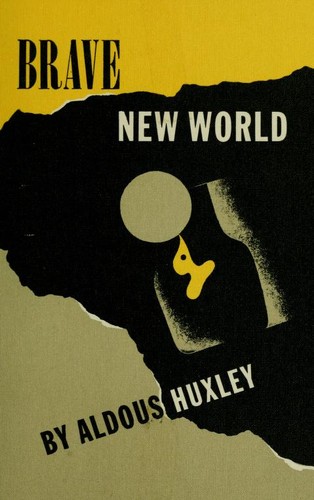
Check price of Brave New World on Amazon
What to Read Next
- 1984 by George Orwell: the great dystopia of fear and surveillance
- Fahrenheit 451 by Ray Bradbury: a future where books are burned
- Never Let Me Go by Kazuo Ishiguro: a quiet novel about people engineered for a purpose
Related: 15 Books Like Brave New World You’ll Love · What Age Is Brave New World Appropriate For? A Parent’s Guide
Frequently Asked Questions
What is Brave New World about?
A future society keeps people happy through engineering, conditioning and drugs, until an outsider challenges it.
What is soma?
A drug that gives instant happiness and calm without side effects.
Who is John the Savage?
A man raised on a reservation who is brought into the World State.
What does the title mean?
It comes from Miranda's line in Shakespeare's The Tempest.
How is it different from 1984?
1984 imagines control through fear; Brave New World imagines control through pleasure.
How does Brave New World end?
John, unable to escape the crowds, takes his own life.
Is Brave New World worth reading?
It depends on what you want. The book is best for readers who want a classic dystopia about pleasure, control and what makes us human. If that describes you, it is likely a good fit. If not, the titles under What to Read Next may suit you better.