
Disclosure: As an Amazon Associate, Bookish Wisdom earns from qualifying purchases. This doesn't change our picks or your price.
TL;DR: Rodion Raskolnikov, a poor former student in St. Petersburg, convinces himself that extraordinary people may break moral laws. He murders a pawnbroker and her sister, then is tormented by guilt and fever. Pursued by a clever investigator and supported by the gentle Sonya, he finally confesses and begins a new life in Siberia.
Table of Contents
Crime and Punishment at a Glance
| Author | Fyodor Dostoevsky |
| First published | 1866 |
| Type | Novel |
| Best for | readers who want a gripping psychological classic about guilt and redemption |
Crime and Punishment is a novel by Fyodor Dostoevsky, first published in 1866. It reads like a thriller but explores deep questions about morality, poverty and the mind of a killer. Below you will find a part-by-part summary, five key takeaways, ideas worth remembering and a note on who will enjoy it.
Content note: Includes murder and suicide.
Main Characters
- Rodion Raskolnikov: A poor former student who commits murder to test a theory.
- Sonya Marmeladova: A young woman forced into prostitution to support her family.
- Porfiry Petrovich: The clever investigator who suspects Raskolnikov.
- Razumikhin: Raskolnikov's loyal friend.
- Svidrigailov: A sinister man who pursues Raskolnikov's sister.
What Happens, Part by Part (Contains Spoilers)
The theory
Raskolnikov is a starving ex-student living in a tiny room. He believes that great men, like Napoleon, have the right to break laws for a higher purpose. He decides to test his theory by killing Alyona Ivanovna, a cruel pawnbroker. He also kills her sister Lizaveta, who walks in unexpectedly.
Fever and guilt
Raskolnikov falls into a feverish illness. He hides the stolen items without using them. He meets Marmeladov, a drunken clerk, and his daughter Sonya, who has become a prostitute to feed her family. When Marmeladov dies, Raskolnikov gives the family money.
Porfiry
The investigator Porfiry Petrovich has read Raskolnikov's article about extraordinary men and suspects him. Without evidence, he plays psychological games, hoping Raskolnikov will crack. Raskolnikov's mother and sister Dunya arrive, and his friend Razumikhin falls for Dunya.
Sonya and Svidrigailov
Raskolnikov confesses to Sonya, who urges him to admit his crime and accept punishment. Meanwhile, the menacing Svidrigailov, who once pursued Dunya, overhears the confession. After Dunya rejects him for good, Svidrigailov takes his own life.
The ending
Raskolnikov confesses at the police station. He is sentenced to eight years of hard labor in Siberia. Sonya follows him there. At first he feels no remorse, but slowly he realizes that he loves her, and the novel hints that he will be renewed through her love.
5 Key Takeaways
- Theories that justify harm can destroy those who hold them.
- Guilt can be its own punishment.
- Poverty can push people to desperate acts.
- Compassion and love can lead to renewal.
- Confession can be the first step toward change.
Ideas Worth Remembering
These are paraphrased, not direct quotes:
- No theory justifies taking a life.
- The mind punishes what the law has not yet found.
- Love can bring a person back to life.
Who Should Read Crime and Punishment?
Read Crime and Punishment if you want a gripping, deep classic about the mind of a killer. It is long and intense, best for older teens and adults.
Questions to Think About After Reading
These prompts work for solo reading, a book club or a classroom discussion of Crime and Punishment:
- Why does Raskolnikov commit the murder?
- What role does Sonya play in his change?
- Is Porfiry a hero or a manipulator?
How to Use This Summary
Use this page as a quick reference before a book club meeting, an exam, or a decision about whether Crime and Punishment is worth your time. The takeaways are written to stand on their own. If a point interests you, go back to the book for the author's full story, characters and style, which no short summary can replace.
A Note on Accuracy and Spoilers
This summary is based on the published text of Crime and Punishment, not on any film, series or stage adaptation, which often change the story. Details are kept at the level of the main events so that nothing is invented. Editions differ slightly in length and wording, so page numbers and small details may vary between copies.
Should You Read the Book?
If the summary caught your interest, read the opening chapters before you decide. A summary tells you what happens, but the voice and pacing are what make a book work or not.
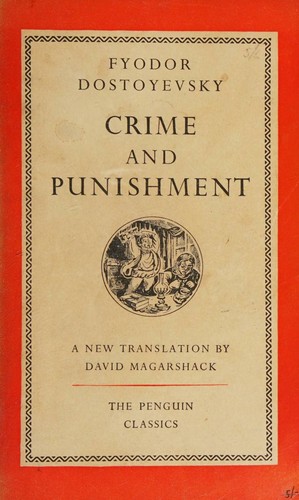
Check price of Crime and Punishment on Amazon
What to Read Next
- The Brothers Karamazov by Fyodor Dostoevsky: Dostoevsky's masterpiece
- Notes from Underground by Fyodor Dostoevsky: a short Dostoevsky novel
- The Stranger by Albert Camus: another killer and his trial
Related: 15 Books Like Crime and Punishment You’ll Love
Frequently Asked Questions
What is Crime and Punishment about?
A poor student commits murder and struggles with guilt until he confesses.
Who is Porfiry Petrovich?
The investigator who suspects Raskolnikov.
Who is Sonya?
A compassionate young woman who urges Raskolnikov to confess.
What is Raskolnikov's theory?
That extraordinary people may break moral laws for a higher purpose.
How does it end?
Raskolnikov is sent to Siberia, where Sonya's love begins to change him.
Which translation is best?
Pevear and Volokhonsky, and Oliver Ready, are popular.
How long is it?
Around 500 to 600 pages.
Is it hard to read?
It is long but suspenseful.
Who are the main characters in Crime and Punishment?
The main characters are Rodion Raskolnikov, Sonya Marmeladova, Porfiry Petrovich, Razumikhin and Svidrigailov. Rodion Raskolnikov: A poor former student who commits murder to test a theory. Sonya Marmeladova: A young woman forced into prostitution to support her family. Porfiry Petrovich: The clever investigator who suspects Raskolnikov.
Is Crime and Punishment worth reading?
It depends on what you want. The book is best for readers who want a gripping psychological classic about guilt and redemption. If that describes you, it is likely a good fit. If not, the titles under What to Read Next may suit you better.