
Disclosure: As an Amazon Associate, Bookish Wisdom earns from qualifying purchases. This doesn’t change our picks or your price.
TL;DR: Educated is Tara Westover’s memoir of growing up in a survivalist family in rural Idaho, never attending school, and teaching herself enough to get into college at 17. She went on to earn a PhD from Cambridge. The book is about how education changes who you are, and what it costs when it pulls you away from family.
Educated was one of the most talked-about books of 2018 and spent years on bestseller lists. It’s a true story that reads like a novel: a girl working in her father’s scrapyard, a household that distrusted doctors and the government, frightening accidents, and a brother whose violence the family refused to acknowledge. But at its heart, the book asks a question anyone can relate to: what happens when the person you’re becoming no longer fits the family you came from? Here’s a complete summary and the key lessons.
Table of Contents
Educated at a Glance
| Detail | Info |
|---|---|
| Author | Tara Westover |
| Published | 2018 |
| Genre | Memoir |
| Setting | Rural Idaho, Brigham Young University, Cambridge and Harvard |
| Structure | Three parts, told in roughly chronological order |
| Best for | Readers who love true stories about resilience, family and self-discovery |
What Is Educated About?
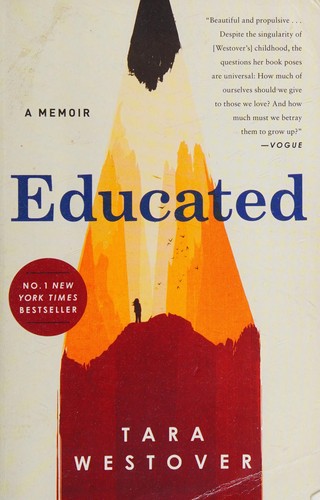
Tara Westover was the youngest of seven children raised near a mountain in rural Idaho. Her father was deeply suspicious of public schools, hospitals and the government, and believed the world might end at any time. Tara didn’t have a birth certificate until she was nine and never set foot in a classroom. Instead, she worked in her father’s junkyard and helped her mother, an herbalist and midwife. After an older brother left for college, Tara began studying on her own, passed the ACT and was admitted to Brigham Young University at 17. From there her education took her to Cambridge and Harvard, and further away from the world she grew up in.
Key Ideas, Part by Part
Part One: Childhood on the Mountain
The first part describes Tara’s childhood: stockpiling supplies for the end of the world, dangerous work in the scrapyard, serious car accidents and injuries treated at home with herbal remedies. It also introduces her brother Shawn, whose behavior becomes increasingly violent and controlling. Tara’s sense of normal is shaped entirely by her family, so she doesn’t yet see these events as unusual.
Part Two: Leaving for College
At BYU, Tara is shocked by how little she knows. In one painful moment she asks what the Holocaust is, not realizing it was a real historical event. She struggles academically and socially, but professors notice her potential. She learns history, gains new language for what she experienced at home and eventually wins a scholarship to study at Cambridge.
Part Three: Cambridge and the Cost of Change
As Tara’s education deepens, so does the conflict with her family. When she speaks up about her brother’s abuse, some family members turn against her and question her memory. She earns a PhD in history but faces a painful choice between loyalty to her family and loyalty to her own understanding of the truth.
5 Key Takeaways From Educated
- Education is more than school. For Westover, learning wasn’t just facts; it was gaining the ability to see her life from new perspectives.
- You can outgrow the story you were given. The beliefs we inherit can be questioned, even when that’s uncomfortable.
- Memory is fragile. Westover notes where family members remember events differently, showing how hard it is to know exactly what happened.
- Loyalty can hide harm. Families sometimes protect a member who causes pain, and speaking up has a cost.
- Self-invention takes courage. Becoming a new version of yourself can mean grieving the relationships you lose along the way.
Ideas Worth Remembering
- The person you become through learning may be someone your family doesn’t recognize, and that can be both freeing and heartbreaking. (paraphrased)
- Having a voice means trusting your own perception, even when people you love tell you that you’re wrong. (paraphrased)
- Gratitude for where you came from and honesty about its harms can exist at the same time. (paraphrased)
Who Should Read Educated?
Read it if you enjoy memoirs like The Glass Castle or Hillbilly Elegy, if you’re a first-generation college student, or if you’ve ever felt caught between your family’s expectations and your own path. Be aware that the book includes descriptions of physical and emotional abuse and serious injuries.
What to Read Next
- The Glass Castle by Jeannette Walls for another unforgettable story of an unconventional childhood.
- Born a Crime by Trevor Noah for a funny, moving memoir about growing up against the odds.
- Becoming by Michelle Obama for a story of education, identity and finding your voice.
Related: best nonfiction books to read in your 20s and summaries of the best self-help books ever written.
Frequently Asked Questions
Is Educated a true story?
Yes. Educated is a memoir based on Tara Westover’s own life. She notes in the book where her memories differ from those of family members.
Did Tara Westover go to school?
No. She never attended school as a child. She taught herself enough to pass the ACT, entered Brigham Young University at 17 and later earned a PhD in history from Cambridge.
What is the main message of Educated?
The main message is that education can transform how you see yourself and the world, but that growth can strain or break relationships with people who don’t want you to change.