
Disclosure: As an Amazon Associate, Bookish Wisdom earns from qualifying purchases. This doesn’t change our picks or your price.
TL;DR: The Whole-Brain Child explains how a child’s developing brain works and offers 12 practical strategies to help kids handle big emotions. The key idea is integration: helping different parts of the brain work together, logical and emotional, upstairs and downstairs. Everyday struggles become chances to help children grow calmer, wiser and more resilient.
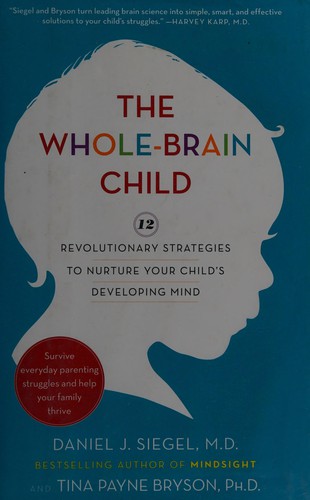
Published in 2011, The Whole-Brain Child: 12 Revolutionary Strategies to Nurture Your Child’s Developing Mind was written by psychiatrist Daniel J. Siegel and parenting expert and psychotherapist Tina Payne Bryson. It translates neuroscience into simple, parent-friendly language, with cartoons showing what to do instead of common reactions, and a handy refrigerator sheet summarizing the strategies by age.
Table of Contents
The Whole-Brain Child at a Glance
| Detail | Info |
|---|---|
| Authors | Daniel J. Siegel, MD, and Tina Payne Bryson, PhD |
| Published | 2011 |
| Genre | Parenting / child development / neuroscience |
| Structure | Chapters on types of brain integration, each with strategies, examples and age guidance |
| Best for | Parents of children from toddlers to about age 12, teachers and caregivers |
What Is The Whole-Brain Child About?
Siegel and Bryson argue that much of children’s challenging behavior happens because their brains are still developing, particularly the parts responsible for planning, empathy and self-control. Instead of seeing meltdowns only as problems to manage, parents can treat them as opportunities to build brain integration, which leads to better emotional regulation over time.
Key Concepts
Integration
An integrated brain is one where different parts work together smoothly, like a river flowing between the banks of chaos and rigidity. When a child is out of balance, they drift toward one bank or the other: explosive chaos or stubborn rigidity.
Left Brain and Right Brain
The authors simplify brain science into a useful metaphor: the left side is associated with logic, language and order, the right side with emotions, images and body sensations. Children, especially young ones, are often right-brain dominant, which is why logic alone rarely calms a tantrum.
Upstairs and Downstairs Brain
The downstairs brain handles basic functions and strong reactions like fight, flight or freeze. The upstairs brain, which keeps developing into the mid-twenties, handles decision-making, empathy and self-control. During a meltdown, the downstairs brain takes over.
The Hand Model of the Brain
Siegel’s hand model shows the brain using your fist: your thumb folded in represents the emotional middle brain, and your fingers wrapped over it represent the upstairs brain. When the fingers lift up, you’ve flipped your lid, and the upstairs brain is no longer in control.
The 12 Strategies
- Connect and redirect: Connect emotionally with the right brain first, then use logic to redirect.
- Name it to tame it: Help children tell the story of upsetting experiences to make sense of them.
- Engage, don’t enrage: Appeal to the upstairs brain with questions and choices instead of commands.
- Use it or lose it: Exercise the upstairs brain through decision-making and empathy games.
- Move it or lose it: Use physical movement to help children regain balance.
- Use the remote of the mind: Let kids pause, rewind and fast-forward through difficult memories as they retell them.
- Remember to remember: Help children practice recalling everyday events.
- Let the clouds of emotion roll by: Teach kids that feelings are temporary states, not permanent traits.
- SIFT: Help kids pay attention to their Sensations, Images, Feelings and Thoughts.
- Exercise mindsight: Teach children to calm themselves and choose how to respond.
- Increase the family fun factor: Build connection through playful shared experiences.
- Connect through conflict: Teach kids to see others’ perspectives and repair relationships after arguments.
5 Key Takeaways From The Whole-Brain Child
- Behavior reflects brain development. Meltdowns often mean the upstairs brain is offline.
- Connect before you correct. Emotional connection makes logic possible.
- Help kids tell their stories. Naming feelings tames them.
- Feelings pass. Teach children that emotions come and go.
- Everyday moments build the brain. Ordinary struggles are opportunities for growth.
Ideas Worth Remembering
- Connect first, then redirect. (paraphrased)
- Name it to tame it. (Siegel and Bryson)
- Survive and thrive: hard moments are also chances to help kids grow. (paraphrased)
Who Should Read The Whole-Brain Child?
It’s ideal for parents of toddlers through preteens, grandparents, teachers, therapists and childcare workers. Its short chapters and age-specific tips make it easy to use right away. Readers who loved it often continue with the authors’ follow-up, No-Drama Discipline.
What to Read Next
- No-Drama Discipline by Daniel J. Siegel and Tina Payne Bryson on calm, connected discipline.
- How to Talk So Kids Will Listen by Adele Faber and Elaine Mazlish on respectful communication.
- The Explosive Child by Ross W. Greene on collaborative problem-solving.
Related: How to Talk So Kids Will Listen summary and best social emotional books for elementary school.
Frequently Asked Questions
What are the 12 strategies in The Whole-Brain Child?
Connect and redirect; name it to tame it; engage, don’t enrage; use it or lose it; move it or lose it; use the remote of the mind; remember to remember; let the clouds of emotion roll by; SIFT; exercise mindsight; increase the family fun factor; and connect through conflict.
What is the upstairs and downstairs brain?
The downstairs brain handles basic functions and strong emotional reactions, while the upstairs brain handles planning, empathy and self-control. The upstairs brain keeps developing into a person’s mid-twenties.
What age is The Whole-Brain Child for?
The strategies are designed for children from about toddler age up to around 12, with specific tips for different age groups.