
Disclosure: As an Amazon Associate, Bookish Wisdom earns from qualifying purchases. This doesn’t change our picks or your price.
TL;DR: How to Talk So Kids Will Listen and Listen So Kids Will Talk gives parents practical, respectful words for everyday struggles. Adele Faber and Elaine Mazlish show how to acknowledge children’s feelings, invite cooperation without nagging, replace punishment with problem-solving, encourage independence and praise in ways that build real self-esteem.
First published in 1980 and updated several times since, How to Talk So Kids Will Listen and Listen So Kids Will Talk has sold millions of copies and remains one of the most recommended parenting books ever. Faber and Mazlish developed their ideas in parenting workshops inspired by child psychologist Haim Ginott. The book is famous for its cartoons showing what not to say and what to say instead, plus exercises and real stories from parents.
Table of Contents
How to Talk So Kids Will Listen at a Glance
| Detail | Info |
|---|---|
| Authors | Adele Faber and Elaine Mazlish |
| Published | 1980 (updated editions since) |
| Genre | Parenting / communication |
| Structure | Chapters on feelings, cooperation, alternatives to punishment, autonomy, praise and freeing children from roles |
| Best for | Parents of toddlers through teens, teachers and caregivers |
Key Ideas, Chapter by Chapter
Helping Children Deal With Their Feelings
When children are upset, parents often deny, dismiss or lecture (you’re not really hungry; don’t be silly). Faber and Mazlish suggest four skills instead: listen with full attention; acknowledge feelings with a word like oh or I see; give the feeling a name (that sounds frustrating); and give children their wishes in fantasy (I wish I could make the rain stop for you). Children who feel understood calm down faster and become more willing to solve problems.
Engaging Cooperation
Instead of blaming, threatening or giving orders, try five skills: describe what you see (there’s a wet towel on the bed), give information (wet towels make the blanket damp), say it with a word (the towel!), talk about your feelings (I don’t like sleeping in a damp bed) and write a note.
Alternatives to Punishment
The authors argue that punishment can lead to resentment and revenge rather than learning. Alternatives include pointing out a way to be helpful, expressing strong disapproval without attacking character, stating your expectations, showing the child how to make amends, offering a choice, taking action and letting the child experience consequences. For ongoing problems, they describe a problem-solving process: talk about the child’s feelings and needs, share yours, brainstorm solutions together, decide which ones you both like and follow through.
Encouraging Autonomy
To help children become independent, let them make choices, show respect for their struggles, don’t ask too many questions, don’t rush to answer every question, encourage them to use sources outside the home, and don’t take away their hope.
Praise
Evaluative praise like great job or you’re so smart can make children anxious or doubtful. Descriptive praise works better: describe what you see (you put all the blocks back on the shelf), describe what you feel, and sum up the behavior in a word (that’s what I call organized).
Freeing Children From Playing Roles
Labels like the shy one or the troublemaker can become self-fulfilling. Parents can help by looking for chances to show children a new picture of themselves, putting them in situations where they can see themselves differently, and modeling the behavior they hope to see.
5 Key Takeaways From How to Talk So Kids Will Listen
- Acknowledge feelings first. Kids cooperate when they feel heard.
- Describe, don’t blame. Neutral descriptions invite cooperation.
- Problem-solve instead of punishing. Involve children in finding solutions.
- Support independence. Let kids make choices and struggle a little.
- Praise descriptively. Describe effort and results instead of judging.
Ideas Worth Remembering
- When children feel right, they behave right. (paraphrased)
- All feelings can be accepted; certain actions must be limited. (paraphrased)
- Describe what you see rather than evaluating it. (paraphrased)
Who Should Read How to Talk So Kids Will Listen?
It’s ideal for parents of children from toddlers to teens, as well as teachers, grandparents and caregivers. The authors’ related books include How to Talk So Little Kids Will Listen (by Joanna Faber and Julie King) and How to Talk So Teens Will Listen and Listen So Teens Will Talk.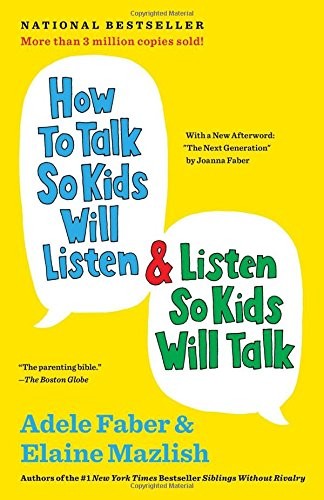
What to Read Next
- The Whole-Brain Child by Daniel J. Siegel and Tina Payne Bryson on the brain science behind kids’ behavior.
- Siblings Without Rivalry by Adele Faber and Elaine Mazlish on sibling conflict.
- Nonviolent Communication by Marshall B. Rosenberg on empathic communication.
Related: Nonviolent Communication summary and best books for parenting a child with ADHD.
Frequently Asked Questions
What is the main idea of How to Talk So Kids Will Listen?
The main idea is that respectful communication, especially acknowledging feelings, describing problems and solving them together, makes children more cooperative and confident than nagging, threats or punishment.
What are the skills for engaging cooperation?
Describe what you see, give information, say it with a word, talk about your feelings and write a note.
What age is How to Talk So Kids Will Listen for?
The techniques work for children from about age 2 through the teen years, with examples spanning many ages. Companion books focus specifically on little kids and teens.