
Disclosure: As an Amazon Associate, Bookish Wisdom earns from qualifying purchases. This doesn’t change our picks or your price.
TL;DR: In The Coddling of the American Mind, Greg Lukianoff and Jonathan Haidt argue that well-intended efforts to protect young people have backfired. Three great untruths, about fragility, emotional reasoning and us-versus-them thinking, have spread through parenting, schools and campuses, contributing to anxiety and polarization. The fix is to prepare kids for the road, not the road for the kids.
Published in 2018, The Coddling of the American Mind: How Good Intentions and Bad Ideas Are Setting Up a Generation for Failure grew out of a widely read 2015 cover story the authors wrote for The Atlantic. Lukianoff is a First Amendment lawyer and president of the Foundation for Individual Rights and Expression (FIRE). Haidt is a social psychologist at NYU and later wrote The Anxious Generation.
Table of Contents
The Coddling of the American Mind at a Glance
| Detail | Info |
|---|---|
| Authors | Greg Lukianoff and Jonathan Haidt |
| Published | 2018 |
| Genre | Psychology / education / culture |
| Structure | Four parts: three bad ideas, bad ideas in action, how did we get here, and wising up |
| Best for | Parents, teachers, college staff, students and anyone interested in campus culture |
The Three Great Untruths
1. The Untruth of Fragility: What Doesn’t Kill You Makes You Weaker
Humans, especially children, are antifragile: they need challenges and stressors to grow stronger, much like the immune system needs exposure to germs. The authors argue that shielding young people from discomfort and differing ideas leaves them less able to cope.
2. The Untruth of Emotional Reasoning: Always Trust Your Feelings
Feelings are real but not always accurate guides to reality. Drawing on cognitive behavioral therapy (CBT), the authors describe common cognitive distortions, like catastrophizing and mind reading, and argue that institutions sometimes encourage these distortions rather than teaching young people to question them.
3. The Untruth of Us Versus Them: Life Is a Battle Between Good People and Evil People
Humans naturally form tribes. The authors argue that some campus culture amplifies tribal thinking, dividing people into oppressors and victims, which fuels call-out culture and makes dialogue harder.
Bad Ideas in Action
The authors describe campus incidents in the mid-2010s involving speaker disinvitations, protests that turned confrontational, and debates over trigger warnings and microaggressions. They argue these reflect the three untruths and a culture they call safetyism, where safety, including emotional safety, becomes a sacred value that can’t be traded off against other important things.
How Did We Get Here? The Six Threads
- Rising political polarization and cross-party hostility.
- Rising teen anxiety and depression, which they connect partly to smartphones and social media.
- Paranoid parenting, driven by exaggerated fears of rare dangers.
- The decline of free play and unsupervised time.
- The growth of campus bureaucracy, which encourages protecting students from discomfort.
- A rising passion for justice combined with changing ideas about what justice requires.
Wising Up
The authors recommend letting kids have more independence and free play, teaching CBT-style skills for questioning distorted thoughts, encouraging intellectual humility, and having schools and colleges commit to free inquiry and viewpoint diversity, such as by adopting principles like the University of Chicago’s statement on free expression.
5 Key Takeaways From The Coddling of the American Mind
- Kids are antifragile. They need manageable challenges to grow strong.
- Feelings aren’t facts. Teach young people to examine their thoughts.
- Avoid us-versus-them thinking. Look for common humanity.
- Overprotection has costs. Safetyism can increase anxiety and fragility.
- Prepare the child for the road. Build skills rather than removing every obstacle.
Ideas Worth Remembering
- Prepare the child for the road, not the road for the child. (folk saying cited by the authors)
- Discomfort is often a sign of growth, not harm. (paraphrased)
- The line between good and evil runs through every human heart, not between groups. (paraphrased from Aleksandr Solzhenitsyn, as cited by the authors)
What Do Critics Say?
Critics argue the book overstates campus problems based on a small number of high-profile incidents and underplays real harms faced by marginalized students. Others feel it was ahead of its time, and its discussion of teen mental health anticipated Haidt’s later work. Readers across the political spectrum find its CBT-based advice useful.
Who Should Read The Coddling of the American Mind?
It’s valuable for parents, K-12 teachers, college faculty and administrators, and students. Parents of young children will especially appreciate its advice on independence and free play.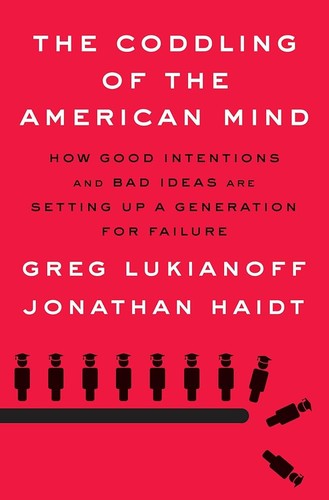
What to Read Next
- The Anxious Generation by Jonathan Haidt on smartphones and teen mental health.
- Free-Range Kids by Lenore Skenazy on raising independent children.
- Antifragile by Nassim Nicholas Taleb on things that gain from stress.
Related: The Anxious Generation summary and best books on logic and critical thinking.
Frequently Asked Questions
What are the three great untruths?
The untruth of fragility (what doesn’t kill you makes you weaker), the untruth of emotional reasoning (always trust your feelings), and the untruth of us versus them (life is a battle between good people and evil people).
What is safetyism?
Safetyism is a culture in which safety, including emotional safety, becomes a sacred value that people won’t trade off against other practical or moral concerns.
Is The Coddling of the American Mind only about college?
No. While it discusses campus culture, it also covers parenting, childhood independence, free play, teen mental health and how to teach young people resilience.