
Disclosure: As an Amazon Associate, Bookish Wisdom earns from qualifying purchases. This doesn’t change our picks or your price.
TL;DR: In Mindset, Stanford psychologist Carol Dweck explains that people tend to hold one of two beliefs about ability. A fixed mindset sees talent as set in stone; a growth mindset sees it as something you can develop through effort, strategy and help. Your mindset shapes how you handle challenges, failure and feedback.
Mindset: The New Psychology of Success is one of the most influential psychology books of the last two decades. It changed how many teachers praise students, how coaches train athletes and how managers give feedback. The phrase “growth mindset” is now everywhere, but the book itself is more nuanced than the slogans. Dweck draws on decades of research to show how a simple belief about ability can lead people to either avoid challenges or embrace them. Here’s a complete summary, the key ideas by topic and five takeaways you can use today.
Table of Contents
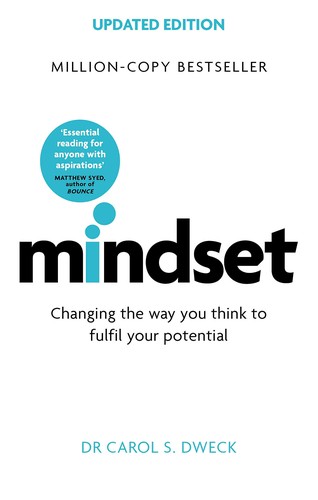
Mindset at a Glance
| Detail | Info |
|---|---|
| Author | Carol S. Dweck, PhD, Stanford University psychologist |
| Published | 2006 (updated edition 2016) |
| Genre | Psychology / self-help |
| Core idea | Fixed mindset vs growth mindset |
| Best for | Parents, teachers, students, coaches, managers and anyone who fears failure |
What Is Mindset About?
Dweck’s research began with a question: why do some children give up when a task gets hard, while others seem to enjoy the struggle? She found the difference often wasn’t ability, but belief. Children who thought intelligence was fixed saw failure as proof they weren’t smart. Children who believed abilities could grow saw failure as information and kept trying. The book applies this idea to school, sports, business, relationships and parenting.
Key Ideas, Topic by Topic
The Two Mindsets
With a fixed mindset, every task is a test of whether you’re smart or talented, so you avoid situations where you might look bad. With a growth mindset, you care more about learning than looking good. Most people have a mix of both, and different situations can trigger either one.
Ability and Accomplishment
Dweck argues that even remarkable achievers developed their abilities through years of practice and persistence. Believing that talent is everything can actually hold people back, because it makes effort look like a sign of weakness.
Sports
The book contrasts “naturals” who stopped improving with athletes who worked relentlessly on their weaknesses. Dweck uses examples like Michael Jordan, who was cut from his high school varsity team and became famous for his work ethic.
Business and Leadership
Fixed-mindset leaders often surround themselves with people who confirm their brilliance and avoid hearing bad news. Growth-mindset leaders build learning cultures, admit mistakes and develop their teams.
Relationships
In relationships, a fixed mindset can lead people to believe a good partnership should be effortless, and that problems mean something is permanently wrong. A growth mindset sees conflicts as problems to work through together.
Parents, Teachers and Coaches
One of Dweck’s best-known studies found that children praised for being smart were more likely to avoid harder puzzles afterward, while children praised for their effort chose challenges. She recommends praising process (effort, strategies, persistence and improvement) rather than fixed traits.
Changing Your Mindset
The final section explains that mindsets can change. It starts with noticing your fixed-mindset “voice,” recognizing you have a choice, and responding with a growth-oriented perspective. The updated edition also warns about a “false growth mindset,” such as praising effort that isn’t working instead of helping people find new strategies.
5 Key Takeaways From Mindset
- Abilities can be developed. Talent is a starting point, not a ceiling.
- Praise the process. Praise effort, strategies and progress, not just intelligence or talent.
- Failure is information. Treat setbacks as feedback about what to try next.
- Add the word “yet.” “I can’t do this yet” keeps the door open to growth.
- Effort alone isn’t enough. A real growth mindset combines effort with better strategies and help from others.
Ideas Worth Remembering
- The view you adopt for yourself profoundly affects the way you lead your life. (paraphrased)
- Becoming is better than being: focus on growing, not proving. (paraphrased)
- Challenges aren’t threats to your worth; they’re opportunities to improve. (paraphrased)
Who Should Read Mindset?
Parents and teachers will get the most practical value, especially from the chapters on praise and feedback. It’s also helpful for students who freeze up around tests, athletes who struggle after losses, and professionals who avoid feedback. If you’ve already read many articles about growth mindset, the book adds research, examples and nuance that summaries leave out.
What to Read Next
- Grit by Angela Duckworth on passion and perseverance for long-term goals.
- Atomic Habits by James Clear on building the small daily habits that make growth possible.
- Hidden Potential by Adam Grant on how ordinary people achieve extraordinary growth.
Related: summary of Think and Grow Rich and Educated summary and key takeaways.
Frequently Asked Questions
What is the difference between a fixed and growth mindset?
A fixed mindset is the belief that intelligence and talent are set and can’t change much. A growth mindset is the belief that abilities can be developed through effort, good strategies and help from others.
Who wrote Mindset?
Mindset was written by Carol S. Dweck, a psychology professor at Stanford University, and first published in 2006.
What is a false growth mindset?
Dweck uses the term for misunderstandings of her work, such as only praising effort even when it isn’t leading to learning, or claiming to have a growth mindset without acting on it.