
Disclosure: As an Amazon Associate, Bookish Wisdom earns from qualifying purchases. This doesn’t change our picks or your price.
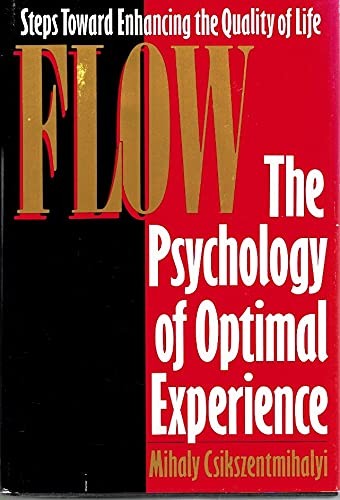
TL;DR: Flow: The Psychology of Optimal Experience by Mihaly Csikszentmihalyi explains the state of deep absorption in which people feel focused, happy and in control while doing something challenging. After decades of research, the author concludes that happiness comes less from comfort than from engaging fully in goals that match our skills, and he shows how to shape work, leisure and relationships to create more flow.
Think of a time when you were so absorbed in an activity, such as playing music, climbing, coding or cooking, that hours passed unnoticed. Psychologist Mihaly Csikszentmihalyi (pronounced roughly chick-SENT-me-high) spent decades studying such moments. In Flow, published in 1990, he reports what he learned from thousands of interviews and from studies in which people carried pagers and recorded their feelings through the day. The book is part science, part practical philosophy and has influenced psychology, education, sports and game design. Here’s a summary of its main ideas.
Table of Contents
Flow at a Glance
| Detail | Info |
|---|---|
| Author | Mihaly Csikszentmihalyi |
| Published | 1990 |
| Genre | Psychology, self-help |
| Core idea | Optimal experience arises when challenge and skill are in balance and attention is fully engaged |
| Structure | Ten chapters on consciousness, enjoyment, work, relationships and meaning |
| Best for | Readers interested in motivation, focus, creativity and happiness |
What Is Flow About?
Csikszentmihalyi begins with a question: why do so many people feel unhappy despite material comfort? His answer is that happiness depends on how we direct our attention. Ordinary life is full of distractions and tasks that don’t absorb us, and our minds can drift toward worry. Flow is a state in which attention is fully used, leaving no room for worry.
He introduced the term flow after hearing people describe their best moments as like being carried by a current. His research found that these experiences are not tied to particular activities, but to the way activities are structured.
Key Ideas, Part by Part
What Flow Feels Like
The author lists elements of flow. The task has clear goals and gives immediate feedback. There is a balance between the challenge and your skills, so it is neither too hard nor too easy. Action and awareness merge, self-consciousness fades, and you feel a sense of control. Time seems to speed up or slow down. The activity becomes autotelic, meaning it is rewarding in itself.
He describes a flow channel. If a task is too difficult for your skills, you feel anxiety. If it is too easy, you feel boredom. When challenge and skill are both high and balanced, you enter flow. As skills grow, you must raise the challenge to stay in the channel.
Flow in Everyday Life and Work
Csikszentmihalyi’s research used the experience sampling method, in which participants were signaled at random times and asked what they were doing and how they felt. He found that people reported more flow at work than at leisure, although they often wished to be free of work. Passive leisure, like watching television, rarely produced flow.
He argues that jobs can be redesigned to offer more flow, with clearer goals, feedback and challenges. Likewise, leisure should be active, such as hobbies, sports or learning, instead of passive. He also shows that flow can occur in routine tasks if you pay attention to details and set small challenges.
Relationships, the Body and the Mind
The book also explores how to find flow in relationships and family life. Parents who create an environment with clear expectations, support and challenge help children develop autonomy and interest. In friendships and conversation, flow can arise when people listen fully and share ideas.
Csikszentmihalyi discusses the body, such as in sports, dance and yoga, which can create flow through movement. He also discusses mental activities such as reading, writing and playing games, where rules and goals structure attention.
Handling Chaos and Finding Meaning
The final chapters address how to cope with difficulty. People with an autotelic personality turn challenges into opportunities, finding flow in adversity. They set goals, immerse themselves, pay attention to feedback and adjust. They are not easily bored or anxious.
In the end, the author suggests that meaning arises when our goals fit together. By choosing worthwhile goals and working toward them with full attention, we build a sense of order in consciousness. This leads to a meaningful life, not just a pleasant one.
6 Key Takeaways From Flow
- Happiness depends on attention. What we focus on shapes our experience.
- Match challenge and skill. Too easy leads to boredom, too hard to anxiety.
- Set clear goals. Know what you are trying to do.
- Seek feedback. Immediate information keeps you engaged.
- Choose active leisure. Hobbies produce more flow than passive entertainment.
- Cultivate an autotelic mindset. Find reward in the activity itself.
Ideas Worth Remembering
- Flow is available in ordinary tasks. (paraphrased)
- Comfort alone doesn’t create happiness. (paraphrased)
- Skills grow when challenges grow. (paraphrased)
- Order in consciousness leads to meaning. (paraphrased)
How to Apply Flow in Real Life
- Raise or lower the difficulty. Adjust tasks to fit your skill level.
- Make goals concrete. Define what finishing looks like.
- Remove distractions. Silence notifications while you work.
- Pick an active hobby. Learn an instrument, sport or craft.
- Track your flow moments. Note when you lose track of time.
Criticisms and Limits
Critics note that the evidence for flow relies heavily on self-reports, which can be subjective, and that some studies have trouble measuring the state directly. The concept can also be used loosely, and the claim that flow is the key to happiness may be overstated. Some find the writing academic and repetitive, and the book offers fewer step-by-step exercises than modern self-help.
Still, the model of balancing challenge and skill is widely used in education, sports and design. Read it as a framework for thinking about focus and engagement.
Flow in One Minute
Flow is a state of full absorption that occurs when you pursue clear goals with immediate feedback and a challenge that matches your skills. Self-consciousness fades and time distorts. It is more likely in active pursuits than passive leisure. Design work and hobbies to include flow, and choose goals that give your life meaning.
The Eight Components in Plain Language
The common features are a challenging activity that requires skill, merging of action and awareness, clear goals, immediate feedback, concentration on the task, a sense of control, loss of self-consciousness and a transformed sense of time. Not every flow experience has all eight, but most have several. Knowing them helps you notice what is missing when you feel stuck.
Using Flow at Work
Managers can foster flow by giving clear goals, quick feedback and tasks that stretch people but remain achievable. Employees can look for ways to turn routine tasks into small challenges, like beating a personal best. Reduce interruptions by batching email and setting focus hours. If your job rarely offers flow, consider a hobby or side project that does.
Flow and Technology
Games and apps often borrow the principles of flow, using levels, quick feedback and rising challenge. This can be fun, but it can also hold attention without giving meaning. Csikszentmihalyi warns that not all flow is good; activities such as gambling can be absorbing but harmful. Ask whether an activity helps you grow and fits your values.
Designing a Flow Session
To create flow on purpose, pick one task and define a clear target, such as writing 500 words or learning a piece of music. Remove interruptions by silencing your phone, and set a timer for 45 to 90 minutes. Make sure the challenge is slightly above your current skill, and arrange quick feedback, like checking your progress after each section. When the session ends, note how it felt and what helped. Repeating the process teaches you which conditions you need.
Flow for Students and Parents
Students are more engaged when assignments have clear goals, the right difficulty and visible progress. Parents can help by breaking homework into steps, praising effort and offering new challenges as skills grow. Hobbies like music, sports or art often provide flow outside school. Csikszentmihalyi suggests that families create a supportive environment where children can explore interests without constant pressure, which builds curiosity and confidence.
Who Should Read Flow?
Read it if you want to understand motivation and focus, design better work or learning environments or find more joy in activities. It suits readers who like research-based books. For a practical approach to focus, pair it with Deep Work.
What to Read Next
- Deep Work by Cal Newport rules for focused success
- Drive by Daniel H. Pink the surprising truth about what motivates us
- Ikigai by Hector Garcia and Francesc Miralles a Japanese approach to purpose
Related: Deep Work summary and key takeaways and Ikigai summary and key takeaways.
Frequently Asked Questions
What is the main idea of Flow?
That people are happiest when fully absorbed in challenging activities that match their skills.
What are the conditions for flow?
Clear goals, immediate feedback and a balance between challenge and skill.
Who was Mihaly Csikszentmihalyi?
A Hungarian-American psychologist who studied happiness and creativity.
Can you find flow at work?
Yes, if tasks have clear goals, feedback and the right level of challenge.
Is flow always positive?
Not always; absorbing activities can be harmful if they do not align with your values.