

Disclosure: As an Amazon Associate, Bookish Wisdom earns from qualifying purchases. This doesn’t change our picks or your price.
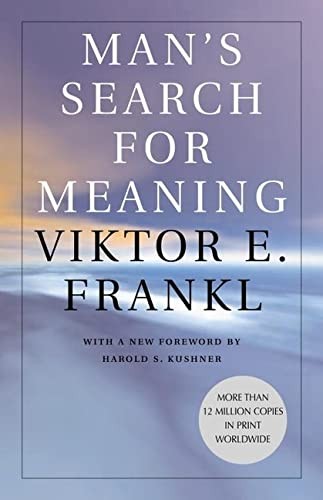
TL;DR: Man’s Search for Meaning by Viktor Frankl combines a memoir of his time in Nazi concentration camps with an introduction to logotherapy. Frankl argues that the primary human drive is the search for meaning, and that even in unavoidable suffering we keep the freedom to choose our attitude.
Man’s Search for Meaning is one of the most influential books of the 20th century. Viktor Frankl, an Austrian psychiatrist and neurologist, wrote the first version in nine days in 1946, after surviving Theresienstadt, Auschwitz, Kaufering and Türkheim. The book has two parts: a restrained account of his experiences, and a short explanation of logotherapy, the approach to therapy he developed before and after the war. Millions of readers have found comfort and direction in it. Here’s a summary of its main ideas. The book describes the Holocaust and may be distressing.
Table of Contents
Man’s Search for Meaning at a Glance
| Detail | Info |
|---|---|
| Author | Viktor E. Frankl |
| First published | 1946 (English edition 1959) |
| Genre | Memoir, psychology, philosophy |
| Core idea | The main human drive is the search for meaning |
| Structure | Experiences in a concentration camp, then logotherapy |
| Best for | Readers facing hardship or asking big questions about purpose |
What Is Man’s Search for Meaning About?
In the first part, Frankl describes his experience as a prisoner, writing in the third person and focusing on psychology rather than graphic detail. He divides the prisoner’s mental reactions into three phases: shock upon admission, apathy as a defense in the camp’s routines and, after liberation, depersonalization and bitterness. He notes that those who retained some sense of purpose, such as a task to complete or a loved one to see again, were more likely to survive, though he stresses that survival also depended on chance.
In the second part, he summarizes logotherapy, from the Greek word logos, meaning meaning. He says that the will to meaning is more basic than the will to pleasure, which Freud emphasized, or the will to power, which Adler emphasized, and that a lack of meaning, which he calls the existential vacuum, produces boredom, depression and aggression.
Key Ideas, Part by Part
Experiences in a Concentration Camp
Frankl describes arrival in Auschwitz, the loss of belongings and the stripping away of identity. He notes how the prisoners’ inner lives changed as hunger, cold and cruelty dominated. He gives examples of small acts of kindness, humor and moments of beauty, such as a sunset glimpsed through a window, which helped prisoners endure.
He also describes the importance of an inner life. He imagined conversations with his wife, whom he did not know whether he would see again, and drew strength from the thought of her. This experience shaped his belief that love is one of the highest goals to which man can aspire.
The Last of the Human Freedoms
One of the book’s best-known ideas is that everything can be taken from a person but one thing: the last of the human freedoms, to choose one’s attitude in any given set of circumstances, to choose one’s own way. Frankl observed prisoners who comforted others and gave away their bread, which he said showed that human beings can retain dignity even in the worst conditions.
He is careful not to romanticize suffering. He says that unnecessary suffering is pointless, but when suffering cannot be avoided, we can find meaning in how we face it.
Logotherapy in a Nutshell
In the second part, Frankl explains three ways of finding meaning: through creating a work or doing a deed, through experiencing something or encountering someone, and through the attitude we take toward unavoidable suffering. He argues that meaning is unique to each person and moment, and that the question is not what we expect from life but what life expects from us.
He describes techniques such as paradoxical intention, in which patients are encouraged to wish for what they fear, which can reduce anxiety, and dereflection, which turns attention away from the self. These ideas influenced later forms of therapy.
Tragic Optimism
Later editions include a postscript titled The Case for a Tragic Optimism, in which Frankl argues that one can remain optimistic despite pain, guilt and death by turning suffering into achievement, guilt into change and life’s transitoriness into an incentive to act responsibly. This idea ties the book together: meaning is possible under all conditions.
7 Key Takeaways From Man’s Search for Meaning
- Meaning is a primary drive. People seek purpose, not only pleasure or power.
- Choose your attitude. Even when circumstances can’t be changed, your response can.
- Three paths to meaning. Work or deeds, love or experience, and the attitude toward suffering.
- An inner life matters. Memories, love and imagination can sustain us.
- Beware the existential vacuum. A lack of meaning can lead to boredom, depression and addiction.
- Suffering can have meaning. But avoid unnecessary suffering.
- Responsibility gives life shape. Ask what life expects of you.
Ideas Worth Remembering
- People who have a reason to live can endure almost any hardship. (paraphrased)
- Even when circumstances can’t be changed, we keep the freedom to choose our attitude. (paraphrased)
- Life becomes unbearable mainly when it seems to have no meaning or purpose. (paraphrased)
- The deepest human drive is the search for meaning, not simply pleasure or the avoidance of pain. (paraphrased)
How to Apply Man’s Search for Meaning in Real Life
- Ask what life asks of you. Write down a task, a person or a cause that depends on you.
- Reframe challenges. When stuck, ask what you can learn or do with this situation.
- Protect an inner life. Spend time with memories, reading, nature or reflection.
- Serve someone. Meaning often comes from contributing to others.
- Seek help when needed. If you feel hopeless, talk to a mental health professional or call or text 988 in the US.
Content Notes and Limits
Man’s Search for Meaning includes descriptions of starvation, forced labor, brutality and death in concentration camps. Frankl writes with restraint, but the subject is heavy. Readers who find such material overwhelming should take breaks or choose a gentler book first. The second part is more theoretical and shorter, and some find it less gripping than the first.
The book is also a product of its time, and some of its language about gender and psychology may feel dated. Still, its central message, that people can find meaning even in the worst circumstances, continues to resonate.
About Viktor Frankl
Viktor Frankl (1905–1997) was born in Vienna and studied medicine, specializing in neurology and psychiatry. Before the war he developed the foundations of logotherapy, and worked with suicidal patients. He and his family were deported to Theresienstadt in 1942; his wife, parents and brother died in the camps. After his liberation, he returned to Vienna, where he rebuilt his career and wrote more than thirty books. He lectured around the world and taught at universities, including Harvard and Stanford.
How the Book Has Been Used
The book is widely used by therapists, teachers and chaplains, and it is often assigned in high school and college courses. Hospice workers and patients have used it to reflect on suffering and purpose, and many readers say it helped them cope with illness, grief or burnout. Its ideas have influenced existential and positive psychology, including research on meaning in life. Frankl’s reflections on tragedy and resilience also appear in business and leadership writing, though some critics warn against using the book as a productivity tool.
Criticisms and Debates
Some historians and psychologists have questioned details of Frankl’s account or his claims about who survived, noting that survival often depended on luck, health or the actions of others. Others say that his emphasis on attitude could imply that victims are responsible for their suffering, which Frankl himself rejected. Many readers see the book as one man’s testimony rather than a universal guide. It’s best read with humility, alongside other survivors’ accounts such as Night, The Choice and The Diary of a Young Girl.
A Reading Plan for Hard Times
If you’re going through a difficult period, read Man’s Search for Meaning slowly, perhaps a chapter a day. Write down passages that speak to you, and note questions about your own life. Pair it with a lighter book such as Tuesdays with Morrie or The Last Lecture, and with practices that support you, such as walking, talking with a friend or journaling. If feelings become overwhelming, seek professional support. Frankl’s own life shows that meaning is possible, but it often grows through connection with others.
Discussion Questions for Man’s Search for Meaning
The book is rich for reflection. What did you notice about how Frankl describes the prisoners’ inner lives? Do you agree that we always have a choice about our attitude, even in extreme situations? What gives your life meaning right now, and what has given it meaning in the past? How do you balance acceptance of what can’t be changed with action about what can? What does the book suggest about the role of love, work and suffering? Take time with these questions, and share only what you’re comfortable with.
Man’s Search for Meaning in One Minute
Frankl observed that people who found a purpose, a task or a loved one to live for coped better with extreme suffering. Meaning can come from work, from love and from the attitude we take toward unavoidable pain, and we always keep some freedom to choose that attitude. Ask what life is asking of you, and act on it, even in small ways.
Who Should Read Man’s Search for Meaning?
Read it if you’re facing a hardship or a transition, if you work in counseling, medicine, education or ministry or if you like thoughtful short books that stay with you. It’s a good choice for book clubs, since it prompts reflection. If the subject matter is difficult, start with the second part, which describes logotherapy, and then return to the first when you feel ready.
What to Read Next
- The Choice by Edith Eger a survivor and psychologist on freedom and healing
- Tuesdays with Morrie by Mitch Albom a gentle book about lessons from a dying teacher
- Flow by Mihaly Csikszentmihalyi a psychologist on absorption, joy and meaning
Related: books like Man’s Search for Meaning and The Obstacle Is the Way summary and key takeaways.
Frequently Asked Questions
What is the main idea of Man’s Search for Meaning?
That the primary human drive is the search for meaning and that we can find meaning even in suffering by choosing our attitude.
What is logotherapy?
Frankl’s school of psychotherapy, which holds that finding meaning is the key to mental health.
What is the existential vacuum?
A state of emptiness and lack of purpose that can lead to boredom, depression or addiction.
Is Man’s Search for Meaning hard to read?
It’s short and clear, but the descriptions of the camps are heavy.
What should I read after Man’s Search for Meaning?
Try The Choice by Edith Eger or Flow by Mihaly Csikszentmihalyi.