
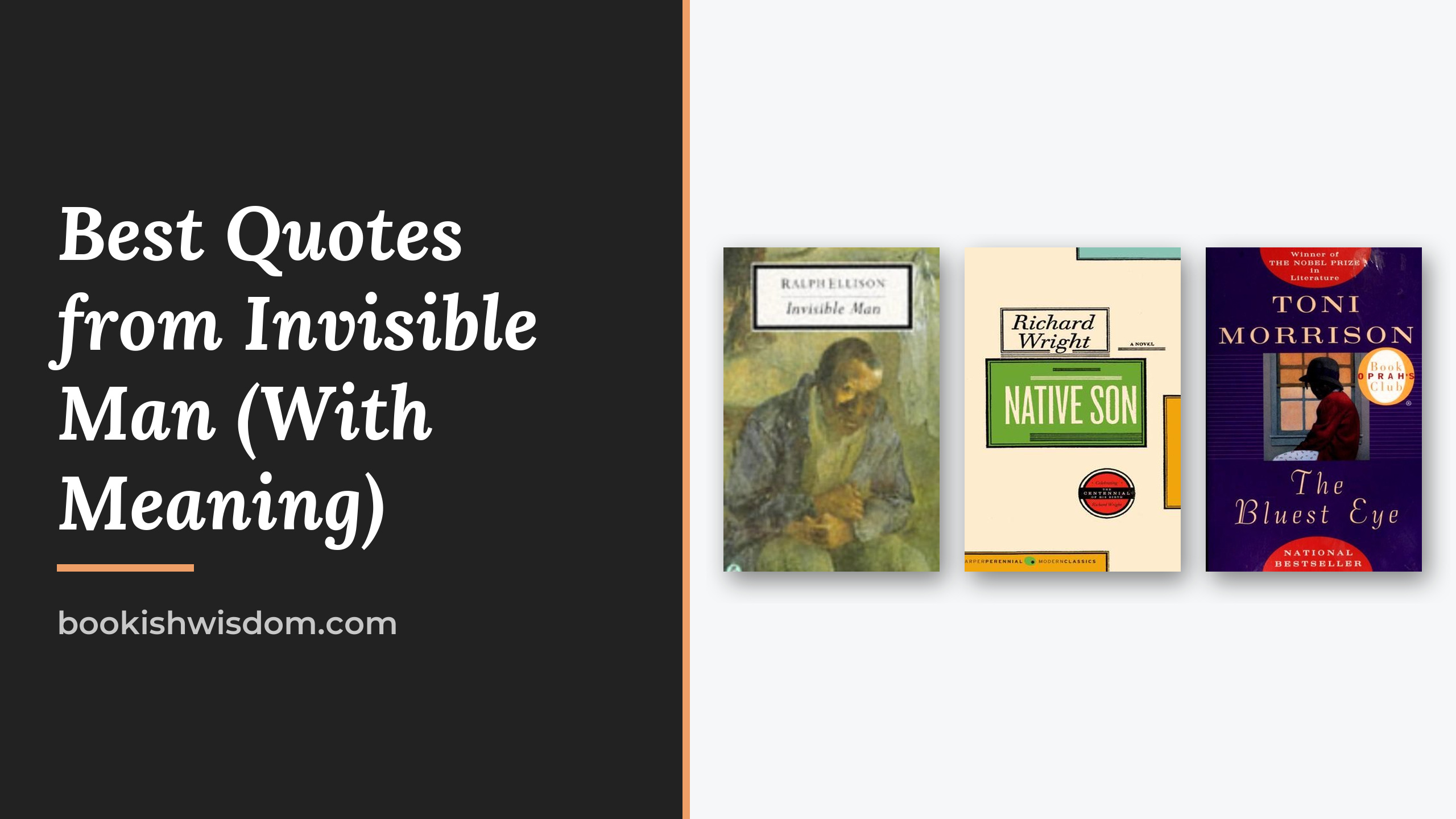
Disclosure: As an Amazon Associate, Bookish Wisdom earns from qualifying purchases. This doesn't change our picks or your price.
Quick answer: The best quotes from Invisible Man by Ralph Ellison include “I am an invisible man.” and “I am invisible, understand, simply because people refuse to see me.” Below are 4 of the most memorable lines, with who says them, where they come from and what they mean.
Quick facts
- Book: Invisible Man by Ralph Ellison
- First published: 1952
- Quotes covered: 4
- Best for: essays, captions, book club talks and rereads
Table of Contents
What Invisible Man Is About
An unnamed Black narrator, living hidden in a basement lit by hundreds of stolen light bulbs, tells the story of his life. He recalls being expelled from a Southern college, moving to Harlem, working at a paint factory and joining a political group called the Brotherhood. Again and again, people see him only as a role or a symbol, never as himself, until he realizes he is invisible.
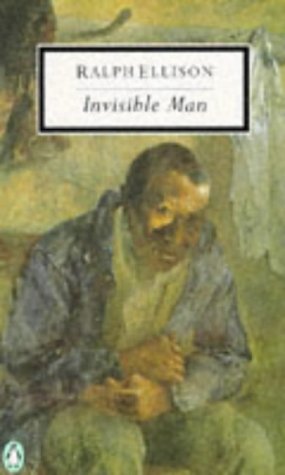
Check price of Invisible Man on Amazon
The Best Quotes from Invisible Man, Explained
1. “I am an invisible man.”
Opening line. The narrator explains that he is not a ghost but a real person whom others refuse to see. The famous first sentence sets up the novel's central idea.
2. “I am invisible, understand, simply because people refuse to see me.”
The narrator, prologue. Invisibility here is social, not physical. Ellison shows how racism erases people's individuality.
3. “When I discover who I am, I'll be free.”
The narrator. The search for identity drives the whole book. Freedom, he realizes, depends on defining himself instead of accepting others' labels.
4. “Who knows but that, on the lower frequencies, I speak for you?”
Final line. The narrator suggests that his experience of being unseen may speak for many readers. The ending turns a personal story into a universal one.
Why These Lines Stay With Readers
Invisible Man won the National Book Award and is one of the most important American novels of the twentieth century. Its lines about identity, visibility and freedom are widely quoted in classrooms and essays about race and individuality. Ellison spent years writing the novel, and its mix of realism, surrealism and jazz-like rhythm made it unlike anything before it. The narrator's voice moves from anger to reflection, which is why so many of his lines feel like personal confessions. Readers today still connect the book to debates about who gets seen and heard in public life, so its quotes often appear in essays and speeches far beyond literature classes.
How to Use These Quotes
- In an essay: introduce the quote, give its context in one sentence, then explain how it supports your point.
- For a book club: read one line aloud and ask whether everyone agrees with the speaker.
- For a caption or card: pick a short line and credit Ralph Ellison and Invisible Man.
- For a reread: look for the moment each line appears and notice what changes around it.
A Note on Quoting Invisible Man Accurately
Wording can differ slightly between editions, translations and film versions, and many lines shared online are paraphrased or misattributed. If you need an exact quote for an essay, check it against a printed copy of Invisible Man and note the edition and page number. The lines above are given as they appear in the book, not as they were changed for later adaptations.
When you quote in an essay, keep the quotation short and let your own explanation do most of the work. A good pattern is to name the speaker, place the line in the story, quote it and then spend two or three sentences on what it shows. Quotes from Invisible Man work best when they support a clear point about a character or theme, rather than standing alone.
Reading the Lines in Context
A quote often means more once you know where it falls in the story. Before using any of these lines, reread the surrounding page or two and ask what has just happened, who is listening and what the speaker wants. The same words can sound hopeful, ironic or desperate depending on that moment. Noticing this context is what turns a memorable line into real evidence for an argument about the book.
Discussion Questions
- Which quote above best sums up Invisible Man for you, and why?
- Do any of these lines mean something different once you know how the book ends?
- Which quote would you disagree with, and what would you say back?
If You Love the Writing in Invisible Man
-
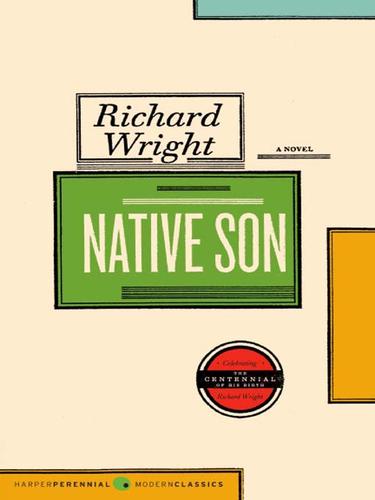
Native Son by Richard Wright
-
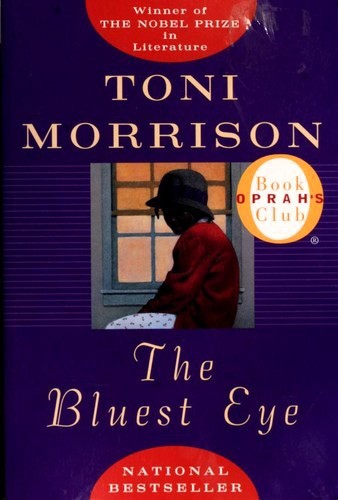
The Bluest Eye by Toni Morrison
Related: Invisible Man by Ralph Ellison: Summary and Key Takeaways · The Invisible Man by H.G. Wells: Summary and Key Takeaways
Frequently Asked Questions
What is the most famous quote from Invisible Man?
One of the best-known lines is “I am an invisible man.” (opening line).
Who wrote Invisible Man?
Invisible Man was written by Ralph Ellison and first published in 1952.
Can I use quotes from Invisible Man in an essay?
Yes. Short quotations with clear credit to Ralph Ellison are standard in essays and reviews. Always explain the quote in your own words.
What should I read after Invisible Man?
Try Native Son by Richard Wright or The Bluest Eye by Toni Morrison.