
Disclosure: As an Amazon Associate, Bookish Wisdom earns from qualifying purchases. This doesn't change our picks or your price.
Quick answer: The best quotes from Through the Looking-Glass by Lewis Carroll include “'Twas brillig, and the slithy toves / Did gyre and gimble in the wabe.” and “Now, here, you see, it takes all the running you can do, to keep in the same place.” Below are 5 of the most memorable lines, with who says them, where they come from and what they mean.
Quick facts
- Book: Through the Looking-Glass by Lewis Carroll
- First published: 1871
- Quotes covered: 5
- Best for: essays, captions, book club talks and rereads
Table of Contents
What Through the Looking-Glass Is About
In this sequel to Alice's Adventures in Wonderland, Alice climbs through the mirror over her fireplace into a world where everything runs backward. The land is laid out like a giant chessboard, and Alice joins the game as a pawn who hopes to become a queen. On the way she meets the Red Queen, Tweedledum and Tweedledee, Humpty Dumpty and the White Knight, and she hears the nonsense poem Jabberwocky.
Check price of Through the Looking-Glass on Amazon
The Best Quotes from Through the Looking-Glass, Explained
1. “'Twas brillig, and the slithy toves / Did gyre and gimble in the wabe.”
Jabberwocky. This opening of Carroll's famous nonsense poem sounds like real English even though most of the words are invented. It shows how readers can feel meaning from sound and grammar alone.
2. “Now, here, you see, it takes all the running you can do, to keep in the same place.”
The Red Queen. In the looking-glass world, standing still requires constant effort. The line is now used to describe any situation where people must work harder and harder just to avoid falling behind.
3. “It's a poor sort of memory that only works backwards.”
The White Queen. The White Queen remembers things before they happen. Her remark is funny, but it also teases the reader to imagine memory and time working in new ways.
4. “Why, sometimes I've believed as many as six impossible things before breakfast.”
The White Queen. When Alice says one cannot believe impossible things, the Queen says she just has not practiced. It is a playful defense of imagination.
5. “When I use a word, it means just what I choose it to mean, neither more nor less.”
Humpty Dumpty. Humpty Dumpty claims he can make words mean anything he likes. Writers, teachers and even judges quote the line when someone bends language to suit themselves.
Why These Lines Stay With Readers
Through the Looking-Glass is full of logic games, wordplay and characters who say odd things with total confidence. Many of its lines have become part of everyday speech, quoted in science, law and politics as well as by readers who simply love Carroll's nonsense.
How to Use These Quotes
- In an essay: introduce the quote, give its context in one sentence, then explain how it supports your point.
- For a book club: read one line aloud and ask whether everyone agrees with the speaker.
- For a caption or card: pick a short line and credit Lewis Carroll and Through the Looking-Glass.
- For a reread: look for the moment each line appears and notice what changes around it.
A Note on Quoting Through the Looking-Glass Accurately
Wording can differ slightly between editions, translations and film versions, and many lines shared online are paraphrased or misattributed. If you need an exact quote for an essay, check it against a printed copy of Through the Looking-Glass and note the edition and page number. The lines above are given as they appear in the book, not as they were changed for later adaptations.
When you quote in an essay, keep the quotation short and let your own explanation do most of the work. A good pattern is to name the speaker, place the line in the story, quote it and then spend two or three sentences on what it shows. Quotes from Through the Looking-Glass work best when they support a clear point about a character or theme, rather than standing alone.
Discussion Questions
- Which quote above best sums up Through the Looking-Glass for you, and why?
- Do any of these lines mean something different once you know how the book ends?
- Which quote would you disagree with, and what would you say back?
If You Love the Writing in Through the Looking-Glass
-
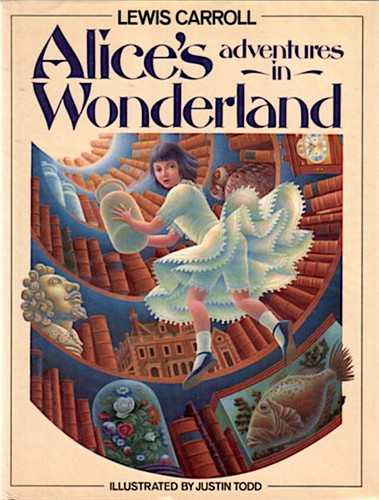
Alice's Adventures in Wonderland by Lewis Carroll
-
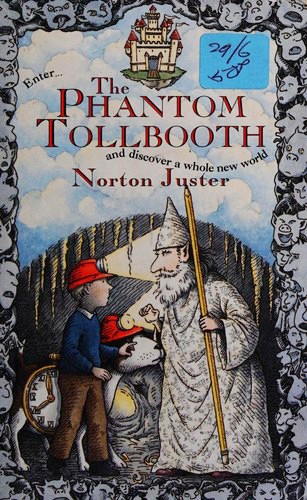
The Phantom Tollbooth by Norton Juster
Related: Through the Looking-Glass by Lewis Carroll: Summary and Key Takeaways · Lewis Carroll Books in Order: Complete Reading List
Frequently Asked Questions
What is the most famous quote from Through the Looking-Glass?
One of the best-known lines is “'Twas brillig, and the slithy toves / Did gyre and gimble in the wabe.” (jabberwocky).
Who wrote Through the Looking-Glass?
Through the Looking-Glass was written by Lewis Carroll and first published in 1871.
Can I use quotes from Through the Looking-Glass in an essay?
Yes. Short quotations with clear credit to Lewis Carroll are standard in essays and reviews. Always explain the quote in your own words.
What should I read after Through the Looking-Glass?
Try Alice's Adventures in Wonderland by Lewis Carroll or The Phantom Tollbooth by Norton Juster.