

Disclosure: As an Amazon Associate, Bookish Wisdom earns from qualifying purchases. This doesn’t change our picks or your price.
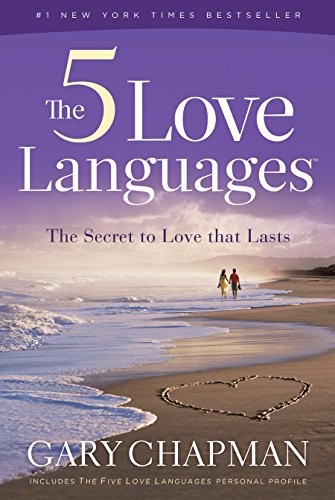
TL;DR: The 5 Love Languages: The Secret to Love That Lasts by Gary Chapman proposes that people express and feel love in five main ways: words of affirmation, quality time, receiving gifts, acts of service and physical touch. By learning your own and your partner’s primary love language, he says, you can fill each other’s emotional love tank and build a more satisfying relationship.
Many couples say, I tell them I love them, but they don’t seem to feel it. Counselor Gary Chapman noticed the same pattern in his marriage counseling practice and concluded that people speak different emotional languages. The 5 Love Languages, first published in 1992, has since sold millions of copies and been updated for new editions. It’s an easy, practical book with quizzes and examples. Here’s a summary of its main ideas.
Table of Contents
The 5 Love Languages at a Glance
| Detail | Info |
|---|---|
| Author | Gary Chapman |
| First published | 1992 (updated editions later) |
| Genre | Relationships, self-help |
| Core idea | People give and receive love in five different languages |
| Structure | Chapters on being in love, each language and applying them |
| Best for | Couples, parents and anyone who wants to communicate care more effectively |
What Is The 5 Love Languages About?
Chapman says that each of us has an emotional love tank. When it is full, we feel secure and appreciated, and when it is empty, we feel neglected. Different actions fill the tank for different people, so a partner may be working hard to show love and still miss the mark.
He also discusses the honeymoon stage, the in-love feeling that fades after a couple of years. Chapman argues that lasting love is a choice and a set of actions, and that learning the other person’s language helps keep it alive after the initial excitement.
Key Ideas, Part by Part
Words of Affirmation and Quality Time
Words of affirmation are about verbal expressions of love, such as compliments, encouragement and thank-yous. For people with this language, harsh words or silence can hurt deeply. Chapman suggests giving specific praise, writing notes and speaking kindly.
Quality time means giving undivided attention. For these people, being together with no distractions is a sign of love. Chapman distinguishes between simply being in the same room and sharing focused activities or conversation. Cancelled plans or distracted listening can feel like rejection.
Receiving Gifts and Acts of Service
For some, a gift is a visible symbol of thought and care. It does not have to be expensive. Chapman says that people with this language value the thought behind the gift, and may be hurt by forgotten birthdays or thoughtless presents. He suggests keeping a list of gift ideas and marking special occasions.
Acts of service are actions that ease the other person’s burden, such as cooking a meal, washing the car or handling an errand. For these people, laziness or broken commitments feel unloving. Chapman recommends asking what would help and doing it willingly, not out of obligation.
Physical Touch and Finding Your Language
Physical touch includes hugs, hand-holding, kisses and sexual intimacy. For people with this language, touch conveys warmth and connection, and its absence is painful. Chapman stresses that touch should always be welcome and respectful.
To find a primary language, he suggests considering what your partner requests most often, what they complain about and how they express love to others. Readers can also take the quiz on the book’s website. Most people have a primary language and a secondary one.
Applying the Languages
In later chapters Chapman discusses applying the languages to children, singles and the workplace, and to difficult situations such as when love is not returned. He encourages readers to take the first step, even if their partner does not respond immediately, and to practice generosity.
He also acknowledges that love languages cannot fix everything. Problems like abuse, addiction or deep conflict need professional help. The book’s message is that small, intentional acts in the right language can lift a relationship.
6 Key Takeaways From The 5 Love Languages
- People speak different love languages. Your way may not be theirs.
- Fill the love tank. Regular, meaningful gestures keep connection strong.
- Learn your partner’s language. Ask, observe and listen.
- Love is a choice. Feelings fade; commitment and action sustain it.
- Be specific and sincere. Small acts matter if they’re genuine.
- Don’t expect instant results. Practice builds trust.
Ideas Worth Remembering
- What feels loving to you may not feel loving to them. (paraphrased)
- Complaints often point to a person’s primary language. (paraphrased)
- Consistency matters more than grand gestures. (paraphrased)
- Each language can be expressed in many ways. (paraphrased)
How to Apply The 5 Love Languages in Real Life
- Take the quiz together. Compare your top two languages.
- Make a list. Write three actions in your partner’s language.
- Ask directly. Say what makes you feel most loved.
- Schedule time. Plan quality time without screens.
- Say thank you daily. Name one thing you appreciate.
Criticisms and Limits
Researchers have questioned whether love languages are distinct and stable, and the original examples reflect traditional assumptions about marriage and gender roles. The book can oversimplify the complexity of relationships, and the tone is sometimes prescriptive. It also was written from the perspective of a counselor who is a pastor, and later editions are broader, but some examples may not fit all relationships.
Still, as a practical prompt to pay attention to how your partner feels loved, it can be helpful. Use it to start a conversation, not to label people.
The 5 Love Languages in One Minute
People give and receive love through words of affirmation, quality time, gifts, acts of service and physical touch. Discover your own and your partner’s primary language, then express care in that language to fill their love tank. Love is a choice and a habit, and consistent small actions beat occasional big ones.
Love Languages for Kids and Teens
Chapman co-wrote books applying the idea to children and teens. Parents may notice that one child wants hugs, another wants time and another wants help with homework. Matching your expressions of love to each child can help them feel secure, though children also need consistent boundaries and care in all five areas. Asking, what makes you feel loved? can open good conversations.
What Research Says
Studies have found mixed evidence. Some research suggests that people do not have a single fixed love language, and that matching partners by language does not predict satisfaction strongly. Other studies show that all five forms of expression matter for most couples. Many therapists use the concept as a conversation starter, not as a scientific category, and emphasize that kindness, respect and communication matter across all languages.
Common Pitfalls
Some readers use the idea as a scorecard, expecting partners to speak their language perfectly. Others use it as an excuse, saying I’m just not a physical touch person. Chapman’s point is to stretch yourself and give love in a form your partner receives. The model also does not address issues like control, disrespect or unequal workloads, which need direct conversation or help from a counselor.
A Sample Week of Speaking Each Language
To practice, plan one gesture per day. On Monday, send a specific compliment as a message. On Tuesday, set aside thirty phone-free minutes to talk. On Wednesday, leave a small, thoughtful gift, like a favorite snack. On Thursday, do a chore your partner dislikes. On Friday, offer a long hug or a hand to hold. On the weekend, ask which one felt best. The point is to learn through experiment and feedback, and not to guess.
When Languages Differ
Differences can be a source of friction. A person who values quality time may feel hurt by a partner who shows love through gifts but is always working. Chapman suggests recognizing that both are showing care and then stretching to meet in the middle. The partner who values quality time can say how much a shared hour means, and the gift giver can schedule that hour. Open conversation, rather than assumptions, helps both feel understood.
Who Should Read The 5 Love Languages?
Read it if you want to communicate care more effectively, if you feel unappreciated or if you are looking for a simple relationship tool. It’s an easy read. For a deeper look at conflict and attachment, pair it with Hold Me Tight.
What to Read Next
- Hold Me Tight by Sue Johnson a deeper look at attachment in couples
- Attached by Amir Levine and Rachel Heller how attachment style shapes love
- Nonviolent Communication by Marshall B. Rosenberg a language of compassion
Related: Hold Me Tight summary and key takeaways and Attached summary and key takeaways.
Frequently Asked Questions
What is the main idea of The 5 Love Languages?
That people feel loved in different ways, and learning a partner’s primary language helps you show love effectively.
What are the five love languages?
Words of affirmation, quality time, receiving gifts, acts of service and physical touch.
How do I find my love language?
Notice what you ask for and complain about, and take Chapman’s quiz.
Is the theory backed by research?
Evidence is mixed; many use it as a communication tool.
Can it help with friends and family?
Yes, the ideas apply to children, friends and colleagues too.