

Disclosure: As an Amazon Associate, Bookish Wisdom earns from qualifying purchases. This doesn’t change our picks or your price.
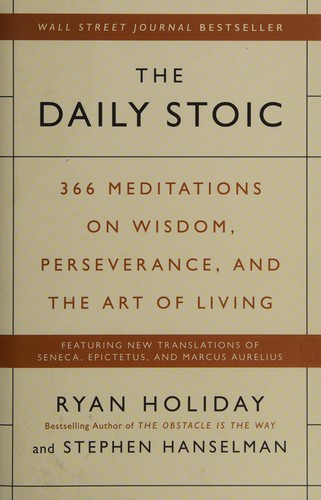
TL;DR: The Daily Stoic: 366 Meditations on Wisdom, Perseverance, and the Art of Living by Ryan Holiday and Stephen Hanselman offers a page of Stoic wisdom for every day of the year. Drawing on Marcus Aurelius, Seneca, Epictetus and others, it teaches how to see clearly, act well and accept what you can’t control.
Stoicism is an ancient philosophy that teaches resilience, self-control and acceptance, and it has become popular again as a practical guide to modern life. The Daily Stoic, published in 2016, is a day-by-day reader that makes the philosophy easy to start. Author Ryan Holiday, known for The Obstacle Is the Way, teamed up with classicist Stephen Hanselman to select passages and write a short commentary for each date. The book is meant to be read slowly, one page a day. Here’s a summary of its main ideas.
Table of Contents
The Daily Stoic at a Glance
| Detail | Info |
|---|---|
| Authors | Ryan Holiday and Stephen Hanselman |
| Published | 2016 |
| Genre | Philosophy, daily reader |
| Core idea | Stoic practice is a daily habit of clear thinking, right action and acceptance |
| Structure | 366 daily entries, grouped by month and theme |
| Best for | Readers who want a gentle, daily introduction to Stoic philosophy |
What Is The Daily Stoic About?
Each entry begins with a quotation from a Stoic thinker such as Marcus Aurelius, the Roman emperor whose notes became Meditations, Seneca, a statesman and playwright, and Epictetus, a former slave who became a teacher. Below it comes a brief commentary that connects the idea to modern life, along with a question or action.
The authors organize the book around three Stoic disciplines: perception, action and will. These form the backbone of the practice.
Key Ideas, Part by Part
The Discipline of Perception
The first third of the year focuses on how we see things. Stoics held that it is not events that disturb us, but our judgments about them. The entries encourage readers to separate facts from stories, to pause before reacting and to look at hardships as chances to practice virtue.
A central teaching is the dichotomy of control: some things are up to us, such as our opinions, choices and actions, and others, like the weather or other people’s behavior, are not. Peace comes from focusing on the first group.
The Discipline of Action
The middle months turn to action. The entries emphasize doing the right thing, working hard and serving others. The Stoics valued virtues like courage, justice, moderation and wisdom. They saw obstacles as material for action, a theme Holiday explored in his earlier book.
Readers are encouraged to act with purpose, not wait for perfect conditions, and to focus on their duties. Marcus Aurelius’s reminders to get up and do the work of a human being are an example.
The Discipline of Will
The final third addresses the will, meaning how we handle what we cannot change. It covers acceptance, resilience, humility and facing mortality. The practice of memento mori, remembering that life is short, is meant to sharpen priorities, not to cause despair.
Entries encourage amor fati, loving your fate, as a way to meet hardship without bitterness. They also consider how to live in harmony with others and with nature.
Using the Book Daily
The authors suggest reading each entry in the morning, thinking about it during the day and reflecting in the evening. Many readers keep a journal, writing a sentence about how the day’s passage applied. The book also includes recommendations for further reading.
The format makes it easy to pick up and put down. You can start any day of the year and skip around, though reading in order lets themes build.
6 Key Takeaways From The Daily Stoic
- Focus on what you control. Your choices and judgments are yours.
- Perception shapes experience. Question your first interpretation.
- Act with virtue. Courage, justice and wisdom guide action.
- Accept what you can’t change. Resilience begins with acceptance.
- Remember mortality. Time is limited, so use it well.
- Practice daily. Small reflections build character.
Ideas Worth Remembering
- You have power over your mind, not outside events. (paraphrased)
- Obstacles can become the way forward. (paraphrased)
- Be the same person in private as in public. (paraphrased)
- Begin and end the day with reflection. (paraphrased)
How to Apply The Daily Stoic in Real Life
- Read one entry each morning. Take two minutes to think about it.
- Sort worries by control. List what is and isn’t up to you.
- Keep a Stoic journal. Write one lesson each evening.
- Do a premeditation. Imagine what could go wrong and plan your response.
- Practice memento mori. Ask what matters if today were limited.
Criticisms and Limits
Some readers feel the book is a collection of quotations with light commentary, better as a starting point than a full education. Critics of the modern Stoicism trend say it can be used to justify passivity or emotional suppression, and that it is commercialized. Others note that the daily format can feel repetitive, and that translations vary in quality.
Many readers still value it as a gentle, accessible way to build a reflective habit. Pair it with the original texts to go deeper.
The Daily Stoic in One Minute
Stoicism teaches that you control your judgments, choices and actions but not external events. Practice the three disciplines of perception, action and will. See clearly, do your duty with courage and accept what you cannot change. Remember that life is short, and use a daily reading and journaling habit to keep these ideas fresh.
Who Were the Stoics?
Stoicism began in Athens around 300 BCE with Zeno of Citium and later flourished in Rome. Epictetus taught that freedom comes from controlling your own mind. Seneca wrote letters on how to live well under pressure. Marcus Aurelius ruled the Roman Empire and recorded private reflections to keep himself steady. Their writings, preserved over nearly two thousand years, remain popular because they address timeless problems like stress, anger and loss.
Stoicism Versus Modern Self-Help
Stoicism shares ground with cognitive therapy, which also stresses that thoughts shape feelings. Unlike some self-help, it doesn’t promise constant happiness. It aims for tranquility and resilience, and it places a high value on duty and character. Some critics say modern versions are stripped of the philosophy’s depth. The Daily Stoic is a primer, and readers who want more can move on to primary texts.
A Simple Evening Review
Seneca described reviewing his day each night. You can do the same by asking three questions. What did I do well? Where did I fall short? What will I do differently tomorrow? Keep your answers brief and kind. The practice builds self-awareness and makes the daily readings more personal. Over a month, patterns emerge, such as triggers for anger or habits that need work.
A Month of Stoic Practice
If you want to try the ideas for a month, build a simple routine. In week one, practice sorting what is in your control before stressful events. In week two, practice pausing before reacting to irritation and asking whether your judgment is accurate. In week three, do something difficult on purpose, like a cold shower or a polite conversation you have been avoiding. In week four, reflect each night on what you did well. Keep notes and see what changes.
Memento Mori Without Gloom
Stoic reminders about death can sound grim, but their aim is to clarify what matters. Remembering that time is limited can motivate you to call a friend, finish a project or let go of petty grudges. If the topic feels heavy, focus on the gratitude side: each day is a gift. If thoughts about death or self-harm become overwhelming, please reach out to a professional, or in the US call or text 988 to reach the Suicide and Crisis Lifeline.
Who Should Read The Daily Stoic?
Read it if you are curious about Stoicism, like short daily readings or want a steady source of perspective. It’s good as a gift. If you want the primary source, try Meditations by Marcus Aurelius.
What to Read Next
- Meditations by Marcus Aurelius the private notes of a Roman emperor
- The Obstacle Is the Way by Ryan Holiday turning trials into triumph
- Letters from a Stoic by Seneca practical advice on living well
Related: books like Meditations and Man’s Search for Meaning summary and key takeaways.
Frequently Asked Questions
What is the main idea of The Daily Stoic?
That daily practice of Stoic ideas, focusing on what you control, acting virtuously and accepting what you cannot change, leads to a calmer, stronger life.
What are the three Stoic disciplines?
Perception, action and will.
How do I use The Daily Stoic?
Read one page each morning and reflect in the evening.
Who are the main Stoics quoted?
Marcus Aurelius, Seneca and Epictetus, among others.
Is it a good beginner’s book?
Yes, it is designed as an easy entry into Stoicism.