
Disclosure: As an Amazon Associate, Bookish Wisdom earns from qualifying purchases. This doesn’t change our picks or your price.
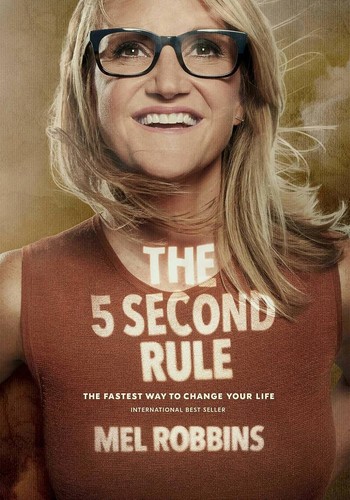
TL;DR: The 5 Second Rule: Transform Your Life, Work, and Confidence with Everyday Courage by Mel Robbins offers a simple tool: when you have an impulse to act on a goal, count backward 5-4-3-2-1 and move before your brain talks you out of it. Robbins argues that this small act of courage interrupts hesitation and helps you build confidence, one decision at a time.
Mel Robbins was a lawyer-turned-radio-host who, at a low point in her life, found herself unable to get out of bed each morning. One night, watching a rocket launch on television, she had the idea of counting backward and launching herself out of bed. That tiny trick became the foundation of The 5 Second Rule, published in 2017. The book mixes personal stories with research on habits, motivation and anxiety, in a bold, conversational voice. Here’s a summary of its main ideas.
Table of Contents
The 5 Second Rule at a Glance
| Detail | Info |
|---|---|
| Author | Mel Robbins |
| Published | 2017 |
| Genre | Self-help, motivation |
| Core idea | Count down from five and act before hesitation sets in |
| Structure | Chapters on the rule, how it works and how to use it for work, anxiety and habits |
| Best for | Procrastinators, anxious or self-doubting readers and anyone who wants a quick action tool |
What Is The 5 Second Rule About?
Robbins says that we all have instincts to act, such as speaking up in a meeting, starting a project or reaching out to someone, but we usually kill them with excuses within about five seconds. After that window, the mind starts arguing against the idea, and we stay stuck.
The 5 Second Rule is her answer. When you have an impulse to act on a goal, count 5-4-3-2-1 and then move. The countdown shifts you from thinking to doing, and it acts as a mental trigger that interrupts the habit of hesitation.
Key Ideas, Part by Part
How the Rule Works
Robbins explains that the countdown does several things. It distracts your mind from the excuses, focuses your attention on the goal and gives you a clear signal to start. She describes the idea of activation energy, the push needed to begin something. Counting backward provides that push in a small way.
She also links the rule to metacognition, the ability to think about your own thinking. The countdown puts you in a position to take charge of your behavior, instead of being carried along by feelings. She compares it to the launch of a rocket, in which the countdown is followed by action.
Using the Rule for Habits and Productivity
The rule can help build habits by getting you to start. Robbins suggests using it to get up at the first alarm, to go to the gym, to speak up and to begin tasks you have been avoiding. She notes that the rule is not meant to be used when you don’t want to do something, but when you know it would help you.
She also explains that motivation is unreliable, and that action creates motivation. By taking a small step quickly, you create momentum that makes the next step easier.
Anxiety, Fear and Confidence
A chapter addresses anxiety. Robbins says that anxiety and excitement feel similar in the body, and suggests reframing nerves as excitement by saying I’m excited, then counting down and acting. She also describes using the rule to interrupt anxious thoughts, by counting and then shifting attention to a task.
She argues that confidence is a skill built through action. Each time you act on an impulse, you build trust in yourself. She calls this the habit of courage, and says it grows with repetition. For serious anxiety, however, she notes that professional help is important.
Relationships, Careers and Big Changes
The latter part of the book includes stories from readers who used the rule to change jobs, speak up in meetings, repair relationships or confront health issues. Robbins presents these as examples of how small actions can reshape a life.
She also describes the rule as a tool for leaders and teams, for example by encouraging people to speak up with ideas. The book ends with an invitation to try the rule for a month, and to notice how often you pause when you could simply start.
6 Key Takeaways From The 5 Second Rule
- Act within five seconds. Hesitation grows quickly.
- Count down to start. 5-4-3-2-1 gives a clear trigger.
- Action creates motivation. Don’t wait to feel ready.
- Reframe nerves. Anxiety and excitement feel alike.
- Confidence is built. Each brave step adds self-trust.
- Use it for small moves. Tiny actions add up to change.
Ideas Worth Remembering
- You are not going to feel like it, so start anyway. (paraphrased)
- Your brain protects you from risk, even when the risk is good. (paraphrased)
- Courage is a habit built by repetition. (paraphrased)
- The rule is a starter, not a magic cure. (paraphrased)
How to Apply The 5 Second Rule in Real Life
- Try it with your alarm. Count down and get out of bed.
- Use it before speaking up. Count and say the first sentence.
- Start the hard task. Count and open the document.
- Reframe anxiety. Say I’m excited, then act.
- Track your wins. Note each time the rule helped you act.
Criticisms and Limits
Critics note that the book is long for a one-trick idea, and that the explanation of how the countdown affects the brain is loosely supported by research. Some find the writing repetitive or the tone overly emphatic, and a few say the rule oversimplifies conditions such as depression and anxiety, which need more than a mental trick. Others note that the book’s stories come from readers, which makes them hard to verify.
Even so, many people find that a simple trigger helps them start. Treat it as a useful technique, and combine it with planning, rest and, if needed, professional support.
The 5 Second Rule in One Minute
When you feel an impulse to act, count 5-4-3-2-1 and move. The countdown interrupts hesitation and gets you past activation energy. Action builds motivation and confidence, and nerves can be reframed as excitement. Use it to start habits, speak up and handle anxious thoughts, and seek professional help for serious anxiety.
What Science Says
Some ideas in the book are grounded in research. Studies on implementation intentions show that planning a specific cue and action makes people more likely to follow through, and research suggests that taking action can improve mood. However, there are no strong studies showing that counting backward from five is itself special. The countdown works more like a ritual cue, and any simple, repeatable signal might do the same.
A Seven-Day Starter Plan
On day one, use the rule to get out of bed. On day two, use it to start your top task. On day three, use it to speak first in a meeting or a conversation. On day four, use it to move your body for ten minutes. On day five, use it to make a call you have been avoiding. On day six, use it to say no politely. On day seven, review which uses worked best and plan the next week.
When the Rule Isn’t Enough
Counting down doesn’t solve problems that need rest, planning or support. If you are burned out, grieving or depressed, pushing yourself may not help, and you may need medical care. Likewise, don’t use the rule to override safety instincts. Use it for actions you have good reason to take. If you struggle with persistent low mood, talk to a professional, or in the US call or text 988 in a crisis.
Where the Idea Came From
Robbins says the idea hit her during a period of financial stress and low motivation. Each morning she would hit snooze and dread the day. After seeing a rocket launch on television, she decided to count backward and move on zero, treating herself as the thing being launched. It worked well enough that she kept using it and later shared it on stage and in videos, where it spread widely. Her story is a reminder that a tiny change in behavior can sometimes break a long cycle.
Five Seconds Across Different Situations
The same tool shows up in many settings. At work, you might count down before raising your hand or sending a hard email. In health, you might count before putting on running shoes or declining a second helping. In relationships, you might count before saying a kind word or apologizing. In each case, you are not eliminating fear, only moving despite it. Tracking small wins in a notebook can help you see how often you follow through.
Who Should Read The 5 Second Rule?
Read it if you often hesitate, procrastinate or hold back from speaking up. It’s quick and motivating, and the tool takes seconds to try. For a more complete habit system, follow it with Atomic Habits.
What to Read Next
- The Let Them Theory by Mel Robbins a mindset for letting go of control
- Atomic Habits by James Clear a system for building habits
- Feel-Good Productivity by Ali Abdaal a more joyful approach to getting things done
Related: The Let Them Theory summary and key takeaways and Atomic Habits summary and key takeaways.
Frequently Asked Questions
What is the main idea of The 5 Second Rule?
That counting 5-4-3-2-1 and then moving interrupts hesitation and helps you act on your goals.
How do you use the 5 Second Rule?
When you have an impulse to act, count backward from five and take the first step.
Is the 5 Second Rule scientifically proven?
The idea of cues and action is supported, but the countdown itself has little direct research.
Can it help with anxiety?
It may help you act despite nerves, but serious anxiety needs professional care.
What should I read after it?
Try Atomic Habits, The Let Them Theory or Feel-Good Productivity.