

Disclosure: As an Amazon Associate, Bookish Wisdom earns from qualifying purchases. This doesn’t change our picks or your price.
TL;DR: The Let Them Theory: A Life-Changing Tool That Millions of People Can’t Stop Talking About by Mel Robbins offers a two-part mindset: when someone does something you can’t control, such as ignoring you or judging you, say Let them. Then follow with Let me, choosing how you will respond. The idea aims to cut stress, protect your energy and help you focus on what you can influence.
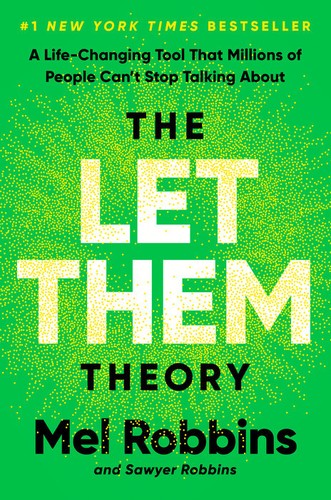
When a friend doesn’t invite you, a coworker takes credit or a relative criticizes your choices, it’s tempting to argue, plead or stew. Mel Robbins, a podcast host and author of The 5 Second Rule, built her new book around a short phrase: let them. The Let Them Theory, published in late 2024, grew from a social media post that spread widely and became a bestseller. Robbins writes in a friendly, motivational style, mixing stories with research. Here’s a summary of its main ideas.
Table of Contents
The Let Them Theory at a Glance
| Detail | Info |
|---|---|
| Author | Mel Robbins |
| Published | 2024 |
| Genre | Self-help, relationships |
| Core idea | Let people be who they are, and focus on your own response |
| Structure | Two parts: Let Them and Let Me, with chapters on relationships, work and mindset |
| Best for | Readers who feel stressed by other people’s choices or opinions |
What Is The Let Them Theory About?
Robbins says that much of our stress comes from trying to control other people. We spend energy wanting friends, partners or coworkers to act differently, and we feel hurt when they do not. The first part of her theory is Let them: accept that others will do what they will do, and stop trying to manage it.
The second part is Let me. You can’t control what others do, but you can decide how to respond, and where to put your attention. This might mean setting a boundary, making a plan or simply letting go. Together, the two phrases move you from reaction to choice.
Key Ideas, Part by Part
Let Them: Releasing Control
Robbins gives everyday examples. If your friends don’t text back, let them. If someone is rude, let them show you who they are. If a person is late, let them be late, and decide whether you’ll wait. She argues that when you let people show you their behavior, you get information that helps you decide how to engage.
She also points out that we can’t force others to like us. Some people will always misunderstand you, and chasing their approval wastes energy. Letting them has a freeing effect, she says, because it removes the burden of managing other people’s opinions.
Let Me: Choosing Your Response
Let me turns attention back to your own actions. After you let someone behave a certain way, ask what you want to do about it. This might mean spending less time with a person who is unkind, choosing a different group or taking steps toward your goals. Robbins emphasizes that this is about power and choice, not passivity.
She suggests practical steps for reclaiming your time and energy, such as deciding what matters to you, taking small actions and using the Let me question to move forward. She also ties the idea to emotions, saying that you can acknowledge feelings while still choosing your response.
Relationships, Friendship and Work
The book applies the theory to different areas. In friendships, Robbins says it is normal for friends to drift or for some to make less effort, and that seeing this clearly helps you invest in people who show up. In family conflicts, you can let relatives hold their opinions while setting limits on how you engage.
At work, the theory helps with difficult colleagues or competition. You can let others get promoted or praised, and focus on your own growth. In romantic relationships, it can help you avoid trying to change a partner, while deciding what you need.
Comparison, Dreams and Self-Doubt
Robbins also addresses jealousy and comparison. When you see someone doing well, let them, and use it as information about what you want. She encourages readers to follow their own dreams without waiting for permission, and to stop letting fear of judgment hold them back.
The closing chapters stress that you are responsible for your own happiness. By letting go of control over others, you gain energy for what you can shape.
6 Key Takeaways From The Let Them Theory
- You can’t control other people. Their choices are theirs.
- Let them show you who they are. Behavior is useful information.
- Choose your response. Let me puts you back in charge.
- Stop chasing approval. Not everyone will like you.
- Invest where it’s returned. Focus on people who show up.
- Use envy as a guide. Others’ success shows what you want.
Ideas Worth Remembering
- Your peace depends on what you do, not on what others do. (paraphrased)
- Letting go isn’t giving up; it is a choice. (paraphrased)
- Boundaries are about your actions, not about controlling theirs. (paraphrased)
- Energy spent on worry could be spent on goals. (paraphrased)
How to Apply The Let Them Theory in Real Life
- Say it out loud. When frustrated, quietly say Let them, then Let me.
- Write the Let me action. Decide one step you can take.
- Audit your friendships. Notice who shows effort and who does not.
- Set a boundary. Tell someone what you will and won’t do.
- Turn envy into goals. Ask what a person’s success tells you about your desires.
Criticisms and Limits
Critics say the idea is simple to the point of being obvious and that the book repeats it many times. Others worry that the approach can encourage avoiding hard conversations or accepting poor treatment, especially in relationships where one person has more power. Some research claims are used loosely, and the advice may not fit situations involving safety, children or caregiving duties, in which you can’t simply let things be.
Still, the short phrases are easy to remember and can help in the moment. Use them as a tool for reducing needless stress, along with honest communication and healthy boundaries.
The Let Them Theory in One Minute
Stop trying to control other people. When they act in ways you dislike, say Let them, and notice what their behavior tells you. Then say Let me, and choose your own response: set a boundary, change your plan or move on. Stop chasing approval, invest in people who show up and use comparison as a clue about what you want.
What Let Them Does Not Mean
Letting someone be themselves doesn’t mean accepting mistreatment, unsafe behavior or abuse. Robbins stresses that the theory is about releasing control, and that Let me may include leaving a situation, setting firm limits or seeking help. Likewise, it’s not a replacement for honest conversations. If something important is bothering you, speaking up may be the right Let me action.
A Few Scenarios
Suppose your sister always cancels at the last minute. Let her, and decide whether to keep making plans or to meet her halfway. Suppose a coworker takes credit for your idea. Let him, and then decide to share updates more openly or speak to your manager. Suppose a friend posts about a trip you wish you could take. Let her enjoy it, and ask what you could plan for yourself. Practicing with small cases builds the habit.
Using It With Teens and Family
Parents might use the idea when teens make choices they can’t control, such as choosing friends, while still setting clear rules about safety. The approach can reduce power struggles by focusing on what you can influence. Couples can also use it to avoid nagging and instead talk about needs. In every case, balance letting go with care and communication.
Let Them in Friendships: A Short Guide
Friendships change with jobs, moves and family. If a friend becomes distant, let them, and notice whether the relationship feels one-sided. Then decide on your Let me: reach out once, invite them to something low-pressure or put your energy elsewhere. Healthy friendships have mutual effort over time. Accepting that some friendships fade can free space for new ones, and clear expectations reduce hurt feelings.
Journaling Prompts for the Theory
Write: What am I trying to control that is not mine to control? What would I do if I stopped waiting for this person to change? What does their behavior tell me? What is my Let me for this week? Whose opinion am I carrying that I could set down? Answering these once a week helps turn the slogan into a practice and shows how much energy you can reclaim.
Who Should Read The Let Them Theory?
Read it if you often feel stressed by others’ behavior, struggle with approval or want a quick, encouraging tool for boundaries. It’s easy and upbeat. For more on motivation, pair it with The 5 Second Rule, and for relationships, add Attached.
What to Read Next
- The 5 Second Rule by Mel Robbins a countdown method for taking action
- Boundaries by Henry Cloud and John Townsend a guide to setting healthy limits
- The Gifts of Imperfection by Brene Brown embracing who you are
Related: Attached summary and key takeaways and The Mountain Is You summary and key takeaways.
Frequently Asked Questions
What is the main idea of The Let Them Theory?
That you should stop trying to control other people, let them behave as they will, and focus on your own response.
What does Let me mean?
It is the second step: after letting others be, you choose how you will act.
Does Let Them mean tolerating bad behavior?
No, it means not trying to control it; you can still set boundaries or leave.
Who wrote The Let Them Theory?
Mel Robbins, a podcast host and author of The 5 Second Rule.
Is the book based on a social media post?
Yes, it grew from an idea that went viral online.