

Disclosure: As an Amazon Associate, Bookish Wisdom earns from qualifying purchases. This doesn't change our picks or your price.
TL;DR: Physician Siddhartha Mukherjee tells the history of the gene, from Mendel's pea plants and Darwin's theories to the discovery of DNA, the Human Genome Project and gene editing. He weaves in his family's experience of inherited mental illness and asks what genetics means for identity, medicine and our future.
Table of Contents
The Gene at a Glance
| Author | Siddhartha Mukherjee |
| First published | 2016 |
| Type | Popular science |
| Best for | readers who want a rich, personal history of genetics |
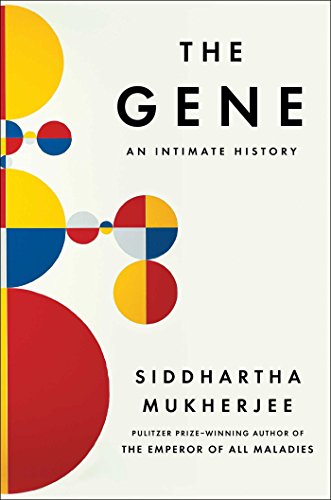
The Gene: An Intimate History is a nonfiction book by Siddhartha Mukherjee, published in 2016. It follows his Pulitzer Prize–winning The Emperor of All Maladies. Below you will find a part-by-part summary, five key takeaways, ideas worth remembering and a note on who will enjoy it.
Content note: Includes mental illness and the history of eugenics.
Key Concepts
- Gene: A unit of heredity.
- DNA: The molecule that carries genetic instructions.
- Eugenics: The harmful movement to “improve” humans by controlling breeding.
- The Human Genome Project: The effort to map all human genes.
- Gene editing: Technologies like CRISPR that can change DNA.
The Main Ideas, Part by Part
Mendel and Darwin
The story begins with Gregor Mendel, who discovered rules of inheritance by breeding pea plants in the 1860s, and Charles Darwin, whose theory of evolution needed a way to pass on traits. Mendel's work was ignored for decades.
Eugenics
Francis Galton and others misused heredity to promote eugenics. In the US, the Supreme Court case Buck v. Bell allowed forced sterilization. Nazi Germany took eugenics to horrific extremes. Mukherjee shows how science can be misused.
DNA
Thomas Hunt Morgan's fruit flies showed genes on chromosomes. In 1953, James Watson and Francis Crick, using Rosalind Franklin's X-ray images, discovered DNA's double helix. Scientists then cracked the genetic code.
Reading and writing genes
Recombinant DNA let scientists cut and paste genes, leading to the Asilomar meeting on safety. The Human Genome Project mapped our genes. Gene therapy brought hope and tragedy, including the death of Jesse Gelsinger in a 1999 trial.
The future
Mukherjee explores how genes shape identity, sexuality and temperament, and how they interact with environment through epigenetics. He discusses CRISPR and the ethics of editing human embryos, returning to his family's mental illness and the limits of genetic destiny.
5 Key Takeaways
- Genes shape us but do not define us.
- Science can be misused with terrible results.
- Knowledge of genes brings great power and responsibility.
- Heredity and environment work together.
- Ethics must guide genetic technology.
Ideas Worth Remembering
These are paraphrased, not direct quotes:
- Genes are not destiny.
- History warns us about misusing science.
- Understanding heredity means understanding ourselves.
Who Should Read The Gene?
Read The Gene if you want a beautifully written history of genetics. It suits adults and older teens interested in science and medicine.
Questions to Think About After Reading
These prompts work for solo reading, a book club or a classroom discussion of The Gene:
- Should we edit human genes?
- How does Mukherjee's family story shape the book?
- What lessons does eugenics teach?
How to Use This Summary
Use this page as a quick reference before a book club meeting, an exam, or a decision about whether The Gene is worth your time. The takeaways are written to stand on their own. If a point interests you, go back to the book for the author's full argument, examples and evidence, which no short summary can replace.
A Note on Accuracy and Spoilers
This summary is based on the published text of The Gene, not on any film, series or stage adaptation, which often change the story. Details are kept at the level of the main arguments so that nothing is invented. Editions differ slightly in length and wording, so page numbers and small details may vary between copies.
Should You Read the Book?
Yes, if you enjoy long, thoughtful science writing. Mukherjee blends history, science and memoir gracefully. At nearly 600 pages, it is a commitment, and the science chapters can be dense, but the personal story of his family keeps it grounded. Some geneticists have critiqued simplifications, especially on epigenetics.
Check price of The Gene on Amazon
What to Read Next
- The Emperor of All Maladies by Siddhartha Mukherjee: Mukherjee's history of cancer
- The Code Breaker by Walter Isaacson: Jennifer Doudna and CRISPR
- The Immortal Life of Henrietta Lacks by Rebecca Skloot: ethics and medical research
Related: 15 Books Like The Gene You’ll Love
Frequently Asked Questions
What is The Gene about?
The history of genetics and its impact on identity and medicine.
Who wrote it?
Siddhartha Mukherjee, a physician and cancer researcher.
What is CRISPR?
A technology for editing genes.
What was eugenics?
A movement to control human breeding, leading to forced sterilization and worse.
Who discovered DNA's structure?
Watson and Crick, using Rosalind Franklin's data.
How long is it?
About 590 pages.
Is there a documentary?
Yes, a PBS series called The Gene: An Intimate History.
Is it suitable for non-scientists?
Yes, though some sections are technical.
Why does Mukherjee include his family?
Several relatives had mental illness, giving the story personal stakes.
What was the Asilomar conference?
A 1975 meeting where scientists agreed on safety rules for recombinant DNA research, an early example of science regulating itself.
What is epigenetics?
Chemical marks on DNA that switch genes on or off without changing the genetic code, influenced partly by environment.
Who are the main ideas in The Gene?
The key concepts are Gene, DNA, Eugenics, the Human Genome Project and Gene editing. Gene: A unit of heredity. DNA: The molecule that carries genetic instructions. Eugenics: The harmful movement to “improve” humans by controlling breeding.
Is The Gene worth reading?
It depends on what you want. The book is best for readers who want a rich, personal history of genetics. If that describes you, it is likely a good fit. If not, the titles under What to Read Next may suit you better.