

Disclosure: As an Amazon Associate, Bookish Wisdom earns from qualifying purchases. This doesn't change our picks or your price.
TL;DR: Jurgis Rudkus, a strong young Lithuanian immigrant, arrives in Chicago with his family, full of hope. They work in the meatpacking plants of Packingtown, where conditions are brutal, unsafe and filthy. Exploitation, injury, debt and death destroy the family, until Jurgis, broken and alone, finds hope in socialism.
Table of Contents
The Jungle at a Glance
| Author | Upton Sinclair |
| First published | 1906 |
| Type | Novel |
| Best for | readers interested in history, labor rights and social justice |
The Jungle is a novel by Upton Sinclair, published in 1906. Its shocking descriptions of the meatpacking industry led to the Pure Food and Drug Act and the Meat Inspection Act. Below you will find a part-by-part summary, five key takeaways, ideas worth remembering and a note on who will enjoy it.
Content note: Includes graphic workplace injuries, deaths, sexual exploitation and child deaths.
Main Characters
- Jurgis Rudkus: A strong, hardworking Lithuanian immigrant.
- Ona Lukoszaite: Jurgis's young wife.
- Teta Elzbieta: Ona's stepmother.
- Marija Berczynskas: Ona's cousin, a strong, independent woman.
- Phil Connor: A boss who abuses Ona.
What Happens, Part by Part (Contains Spoilers)
The wedding
Jurgis and Ona celebrate their wedding with a traditional Lithuanian feast in Chicago. They and their family came to America for a better life. Jurgis believes hard work will bring success, saying “I will work harder.”
Packingtown
Jurgis gets a job in the meatpacking plants. He discovers horrific conditions: diseased meat, rats ground into sausage and workers exposed to danger. The family is cheated into buying a house with hidden costs. Everyone, including children, must work.
Losses
Jurgis is injured at work and cannot work for months. Ona is forced into a sexual relationship with her boss, Phil Connor, to keep her job. When Jurgis finds out, he attacks Connor and is jailed. The family loses the house, and Ona dies in childbirth.
Wandering
Jurgis's son drowns in the muddy street. Jurgis leaves Chicago, becomes a tramp, then returns and works with corrupt politicians and criminals. Marija becomes a prostitute to support the family.
Hope
Jurgis wanders into a socialist meeting and is inspired by the speaker. He finds work in a hotel run by a socialist and dedicates himself to the movement, believing workers can build a fairer world.
5 Key Takeaways
- Unregulated industry can exploit workers terribly.
- The American Dream was often denied to immigrants.
- Poverty traps people in cycles of hardship.
- Collective action can create change.
- Literature can lead to real laws.
Ideas Worth Remembering
These are paraphrased, not direct quotes:
- Hard work alone does not guarantee a fair reward.
- Exploitation affects whole families.
- Public outrage can force reform.
Who Should Read The Jungle?
Read The Jungle if you are interested in American history, labor rights and social justice. It suits older teens and adults.
Questions to Think About After Reading
These prompts work for solo reading, a book club or a classroom discussion of The Jungle:
- Why does Jurgis's family fail?
- What does the novel say about the American Dream?
- Why did readers react more to the meat than to the workers?
How to Use This Summary
Use this page as a quick reference before a book club meeting, an exam, or a decision about whether The Jungle is worth your time. The takeaways are written to stand on their own. If a point interests you, go back to the book for the author's full story, characters and style, which no short summary can replace.
A Note on Accuracy and Spoilers
This summary is based on the published text of The Jungle, not on any film, series or stage adaptation, which often change the story. Details are kept at the level of the main events so that nothing is invented. Editions differ slightly in length and wording, so page numbers and small details may vary between copies.
Should You Read the Book?
Yes, as an important and powerful book. It is grim and heavy-handed in its final chapters, but its impact on history makes it essential.
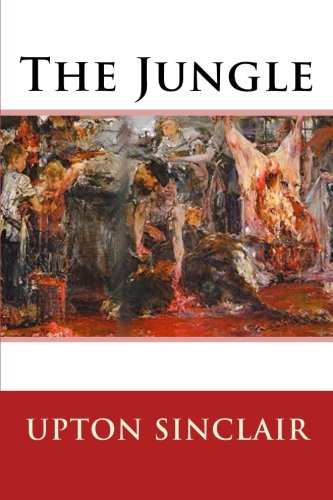
Check price of The Jungle on Amazon
What to Read Next
- The Grapes of Wrath by John Steinbeck: migrant workers' struggles
- Fast Food Nation by Eric Schlosser: the modern meat industry
- Sister Carrie by Theodore Dreiser: a woman's life in industrial Chicago
Related: 15 Books Like The Jungle You’ll Love
Frequently Asked Questions
What is The Jungle about?
An immigrant family's suffering in Chicago's meatpacking industry.
Who wrote The Jungle?
Upton Sinclair, in 1906.
What laws did it inspire?
The Pure Food and Drug Act and the Meat Inspection Act of 1906.
Where is it set?
In Packingtown, Chicago's meatpacking district.
What happens to Ona?
She dies in childbirth.
Why does Jurgis turn to socialism?
He sees it as hope for workers' rights.
What age is it for?
Older teens and adults.
How long is it?
About 400 pages.
What did Sinclair say about its effect?
He said he aimed at the public's heart and by accident hit its stomach.
Is it based on real conditions?
Yes. Sinclair researched the plants undercover.
What does the title mean?
It compares industrial Chicago to a brutal jungle.
Who is Marija?
Ona's strong cousin, who later turns to prostitution to support the family.
What happens to Jurgis's son?
He drowns in a flooded, muddy street.
Who is Phil Connor?
A boss who abuses Ona and whom Jurgis attacks.
Who are the main characters in The Jungle?
The main characters are Jurgis Rudkus, Ona Lukoszaite, Teta Elzbieta, Marija Berczynskas and Phil Connor. Jurgis Rudkus: A strong, hardworking Lithuanian immigrant. Ona Lukoszaite: Jurgis's young wife. Teta Elzbieta: Ona's stepmother.
Is The Jungle worth reading?
It depends on what you want. The book is best for readers interested in history, labor rights and social justice. If that describes you, it is likely a good fit. If not, the titles under What to Read Next may suit you better.