
Disclosure: As an Amazon Associate, Bookish Wisdom earns from qualifying purchases. This doesn’t change our picks or your price.
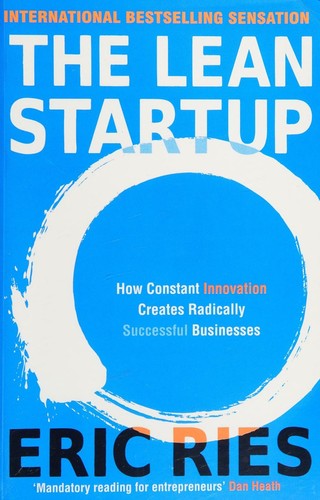
TL;DR: The Lean Startup: How Today’s Entrepreneurs Use Continuous Innovation to Create Radically Successful Businesses by Eric Ries argues that startups should treat their business ideas as experiments. By building a minimum viable product, measuring real customer behavior and learning quickly through the Build-Measure-Learn loop, founders can avoid wasting time and money on products nobody wants.
Most new products fail, and the cause is usually not bad engineering but building something customers don’t want. The Lean Startup, published in 2011, offers a method for avoiding that fate. Eric Ries, a software entrepreneur, developed the approach after his own failures, including a startup called IMVU, and drew on lean manufacturing ideas from Toyota. The book became a guide for founders, product teams and even large companies. Its terms, such as minimum viable product and pivot, are now part of everyday business language. Here’s a summary of its main ideas.
Table of Contents
The Lean Startup at a Glance
| Detail | Info |
|---|---|
| Author | Eric Ries |
| Published | 2011 |
| Genre | Business, entrepreneurship |
| Core idea | Treat startups as experiments and learn quickly from customers |
| Structure | Three parts: Vision, Steer and Accelerate |
| Best for | Founders, product managers, innovators and teams working under uncertainty |
What Is The Lean Startup About?
Ries defines a startup as a human institution designed to create a new product or service under conditions of extreme uncertainty. Under such uncertainty, traditional management based on detailed plans and forecasts does not work well, because nobody knows yet what customers will want.
His answer is a scientific approach to entrepreneurship. Instead of asking whether a product can be built, ask whether it should be built, and test the riskiest assumptions as early and cheaply as possible. The unit of progress is not lines of code or features shipped, but validated learning about customers.
Key Ideas, Part by Part
Part One: Vision
The first part introduces validated learning, the idea that progress comes from running experiments that test a specific hypothesis. Ries tells the story of Zappos, whose founder Nick Swinmurn tested demand for selling shoes online by photographing shoes in local stores and buying them only after a customer ordered. The test avoided building a warehouse until demand was proven.
He also describes the two leaps of faith behind most startups: the value hypothesis, which asks whether customers value the product, and the growth hypothesis, which asks how new customers will find it. Founders should identify these assumptions and test them first.
Part Two: Steer
The second part explains the Build-Measure-Learn feedback loop. You build the smallest thing that can test your hypothesis, which is the minimum viable product or MVP. You measure how real customers respond, then learn whether to continue or change direction. The goal is to speed through the loop as fast as possible.
Ries stresses measuring the right things. Vanity metrics, like total registered users or page views, make a company feel good without showing whether it is improving. Actionable metrics, such as the conversion rate of a particular group of new customers, connect cause and effect. He recommends cohort analysis and split testing to see whether changes make a difference, and calls this approach innovation accounting.
The part ends with the pivot or persevere decision. A pivot is a structured course correction to test a new hypothesis about the product, strategy or engine of growth, while persevering means staying the course because the numbers show progress. Regular meetings to review evidence help teams decide.
Part Three: Accelerate
The final part discusses how to scale learning. Ries recommends working in small batches, which reveal problems sooner and reduce waste. He describes continuous deployment, in which software changes are released in small increments many times a day, and the Five Whys, a technique borrowed from Toyota that traces a problem through successive questions to its root cause.
He also describes three engines of growth: the sticky engine, based on retaining customers, the viral engine, where customers recruit others, and the paid engine, where the company spends money on acquiring customers and profits from their lifetime value. Startups should focus on one engine at a time and measure its key metric.
Finally, Ries discusses building an adaptive organization that learns, with a culture that tolerates experiments and takes failure as information. He argues that large companies can use the same methods through internal innovation teams with protection and clear goals.
6 Key Takeaways From The Lean Startup
- Treat ideas as hypotheses. Test assumptions before betting everything on them.
- Build the smallest test. An MVP helps you learn with minimum effort.
- Measure what matters. Actionable metrics beat vanity metrics.
- Be ready to pivot. Change direction when the evidence says so.
- Work in small batches. Frequent, small releases reveal problems early.
- Learn faster than competitors. Speed of learning is a competitive advantage.
Ideas Worth Remembering
- The goal of a startup is to find a repeatable, scalable business model, not to execute a plan. (paraphrased)
- Customer behavior is better evidence than customer opinion. (paraphrased)
- A pivot is a planned change, not a failure. (paraphrased)
- If you can’t measure progress, you can’t manage it. (paraphrased)
How to Apply The Lean Startup in Real Life
- List your leaps of faith. Write the riskiest assumptions behind your idea.
- Build a quick test. Try a landing page, a mock-up or a manual service before building.
- Pick one metric. Track a number that shows real customer progress.
- Schedule pivot reviews. Meet every few weeks to decide whether to continue or change.
- Run small experiments. Change one thing at a time and compare results.
Criticisms and Limits
Critics say the book is better at describing a mindset than giving step-by-step instructions, and that some examples are told in a way that makes success look more planned than it was. The advice also fits software and online products better than businesses that need large upfront investment, such as manufacturing or medical devices. Some readers worry that rapid testing can lead teams to chase short-term metrics at the expense of long-term quality.
Used thoughtfully, the framework is a helpful guard against building in the dark. Combine it with solid product craft and a clear view of your customers.
Minimum Viable Product: What It Really Means
Many people assume an MVP is a bad version of a product. Ries says it is the version that lets you collect the most learning with the least effort. It can be a simple website, a video, a hand-delivered service or a prototype. The purpose is to test a hypothesis, not to impress customers. The product should still be good enough to give you a fair test, since a broken experience can lead to false conclusions.
The Lean Startup in One Minute
Startups face extreme uncertainty, so they should run experiments instead of following detailed plans. Build a minimum viable product, measure real behavior with actionable metrics and learn whether to pivot or persevere. Test the value and growth hypotheses first, work in small batches and use the Five Whys to find root causes. Focus on one engine of growth at a time. The faster you complete the Build-Measure-Learn loop, the less you waste.
Using Lean Startup Outside Tech
The ideas work in many settings. A baker could test a new product by selling a small batch at a market and noting how many people return. A teacher could try a new activity with one class before rolling it out. A nonprofit could pilot a program in one neighborhood. The questions are the same: what do we believe, how can we test it cheaply and what will we do with the answer?
Common Mistakes When Using the Method
Teams sometimes misuse the approach. They may release an MVP so weak that customers leave and the test proves nothing, or they may measure vanity numbers that always look good. Others pivot too often without waiting for enough data, or never pivot because they are attached to a vision. Another mistake is skipping conversations with customers and relying only on statistics. Good practice combines numbers with direct interviews that explain why people behave as they do.
A Four-Week Lean Experiment
To try the method on your own idea, run a four-week experiment. In week one, write your value and growth hypotheses and list the riskiest assumption. In week two, build the smallest possible test, such as a one-page website, a mock-up or a manual version of the service. In week three, show it to at least ten potential customers and record what they do, not just what they say. In week four, review the evidence, decide whether to pivot or persevere and plan the next test. Repeating this cycle builds the habit of learning before spending.
Vanity Metrics Versus Actionable Metrics
Ries gives a clear way to tell the two apart. A vanity metric, such as total downloads, only goes up and cannot tell you what caused the change. An actionable metric, such as the share of new users who complete a purchase this week compared with last week, links a specific change to a result. Ask three questions of any number: Can I act on it? Can others understand it? Can I audit it? If the answer is no, find a better measure.
Who Should Read The Lean Startup?
Read it if you are starting a company, building a new product or working in a team that faces uncertainty. It’s also useful for managers who want a more experimental culture. If you prefer a shorter introduction, pair it with a focused book on strategy such as Zero to One.
What to Read Next
- Zero to One by Peter Thiel with Blake Masters notes on startups and building the future
- The Startup Owner’s Manual by Steve Blank and Bob Dorf a step-by-step guide to customer development
- Good to Great by Jim Collins what makes companies endure
Related: Good to Great summary and key takeaways and Start with Why summary and key takeaways.
Frequently Asked Questions
What is the main idea of The Lean Startup?
That startups should test ideas through fast experiments, using a minimum viable product and real customer data.
What is the Build-Measure-Learn loop?
A cycle of building a small test, measuring customer response and learning whether to continue or change direction.
What is a minimum viable product?
The simplest version of a product that lets you test a key assumption with real customers.
What is a pivot?
A structured change in strategy, product or growth engine based on what you learned.
Is The Lean Startup only for tech companies?
No, the experiment mindset also works for small businesses, nonprofits and large organizations.