
Disclosure: As an Amazon Associate, Bookish Wisdom earns from qualifying purchases. This doesn’t change our picks or your price.
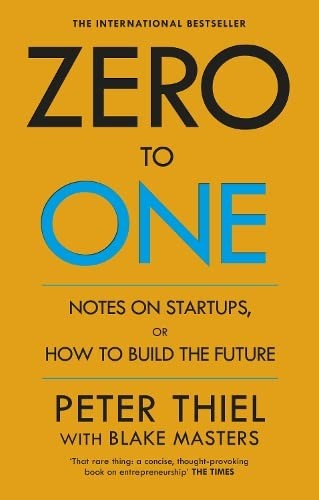
TL;DR: Zero to One: Notes on Startups, or How to Build the Future by Peter Thiel with Blake Masters argues that real progress comes from creating something new, going from zero to one, not copying what already exists. Thiel says great companies seek monopolies through unique technology, avoid cutthroat competition and are built on secrets that most people have not yet discovered.
Peter Thiel co-founded PayPal, was an early investor in Facebook and later started Palantir. In 2012 he taught a course on startups at Stanford, and student Blake Masters turned his class notes into a popular online essay series that became Zero to One in 2014. The book is short and provocative, and it encourages readers to think independently about the future. Many of its ideas are contrarian, and some are controversial. Here’s a summary of its main ideas.
Table of Contents
Zero to One at a Glance
| Detail | Info |
|---|---|
| Author | Peter Thiel with Blake Masters |
| Published | 2014 |
| Genre | Business, entrepreneurship |
| Core idea | Create new things instead of copying existing ones |
| Structure | Fourteen short chapters on technology, monopoly, secrets, teams and the future |
| Best for | Founders, investors, product builders and readers interested in innovation |
What Is Zero to One About?
Thiel divides progress into two kinds. Horizontal or extensive progress means copying things that work, going from one to n, and the clearest example is globalization. Vertical or intensive progress means doing new things, going from zero to one, such as inventing the typewriter. He argues that the world needs more of the second kind.
A central test is what he calls the contrarian question: what important truth do very few people agree with you on? A good answer points to a secret, something true but not widely known, which can be the foundation for a valuable company.
Key Ideas, Part by Part
Learning From the Dot-Com Bubble
Thiel reflects on the bubble of the late 1990s and draws lessons that still shape how entrepreneurs think. He says the crash taught people to be modest, to avoid grand plans and to prefer incremental improvements. He believes those lessons are wrong: better to make bold plans and take big bets than to settle for small, safe ones.
He argues for definite optimism, a clear vision of the future and a plan to build it, in contrast to indefinite optimism, which assumes things will get better without specific effort.
Monopoly Versus Competition
One of the book’s most discussed claims is that competition is overrated. In perfect competition, no company makes an economic profit, and firms struggle to survive. Monopolies, in contrast, can earn large profits and use them to invest in people and long-term ideas. Thiel says that creative monopolies that provide new products benefit society, and he separates them from monopolies that rely on legal or political advantage.
He lists four traits of a lasting business advantage: proprietary technology, which should be at least ten times better than the closest substitute, network effects, economies of scale and branding. He also advises starting with a small market and dominating it, then expanding to adjacent ones, as PayPal and Amazon did.
Secrets, Teams and Distribution
Thiel argues that there are still unanswered questions in nature and in business. Finding a secret requires looking in places others ignore and having the confidence to pursue unpopular ideas. He explains that the best founders think like contrarians who see an opening everyone else misses.
On building a team, he highlights the importance of the founding group. He compares early startups to a family or a band, in which cultural fit and a shared mission matter as much as skill. He also describes the PayPal mafia, a group of early employees who went on to found or fund other companies. Thiel adds that great products need distribution, whether through sales or marketing, and that many engineers underestimate how hard it is to reach customers.
Seven Questions and the Future
Thiel offers seven questions that every business must answer. Can you create breakthrough technology instead of an incremental improvement? Is this the right time to start? Are you starting with a big share of a small market? Do you have the right team? Do you have a way to not just create but deliver your product? Will your market position be defensible in ten or twenty years? Have you identified a unique opportunity that others do not see?
The book ends with reflections on the power law, the idea that a small number of investments or companies produce most of the returns, and on the role of technology, which he sees as complementing humans, not simply replacing them.
6 Key Takeaways From Zero to One
- Go from zero to one. New creation beats copying.
- Ask the contrarian question. Look for important truths that few believe.
- Seek a creative monopoly. Build something so unique that competition is irrelevant.
- Start small. Dominate a niche before expanding.
- Value the founding team. Early hires shape culture and results.
- Plan for the long term. Bold, definite plans beat drift.
Ideas Worth Remembering
- Progress comes from doing new things, not from doing the same thing again. (paraphrased)
- A startup should aim to be the last mover in its field, not just the first. (paraphrased)
- Great companies are built on secrets. (paraphrased)
- Sales and distribution matter as much as the product. (paraphrased)
How to Apply Zero to One in Real Life
- Answer the contrarian question. Write down a truth that you believe and few others share.
- Define your niche. Pick a small market you can dominate.
- Test the ten-times rule. Ask whether your product is far better than alternatives.
- Review the seven questions. Score your idea honestly on each one.
- Plan your distribution. Decide how customers will find and buy your product.
Criticisms and Limits
Critics point out that many of Thiel’s claims are broad generalizations. His praise for monopolies overlooks the harm that dominant firms can cause to consumers and workers, and his dismissal of competition conflicts with economists who see it as a source of innovation. Some of the book’s examples, including the claim about cleantech, are debated, and the focus on founders may undervalue luck and timing. Thiel’s political views also shape how some readers receive the book.
As a provocation, it succeeds: it forces you to defend your assumptions. Use it as a source of questions, not as a rulebook.
Zero to One in One Minute
Progress means creating something new. Ask what important truth few people agree with you on. Aim for a creative monopoly through proprietary technology, network effects, scale and brand, and start with a small market you can dominate. Build a tight founding team, plan your distribution and answer the seven questions. Be definite about the future and make bold bets, since a few winners produce most returns.
The Power Law in Plain Terms
Thiel’s power law says that a handful of outcomes dwarf the rest. In venture investing, one investment may return more than all the others combined. He applies this thinking to careers and life: instead of spreading your effort evenly across many options, commit to the few that could matter most. The idea can feel uncomfortable because it rejects balance, so decide whether it fits your situation before adopting it.
Zero to One for Non-Founders
You don’t need to launch a company to use the book. Employees can look for the unique contribution only they can make, writers can ask what new thing they can add to a crowded field and students can choose subjects where they have a rare edge. The question is what you can create that doesn’t yet exist, and how you can become the best at it.
Differences From The Lean Startup
Zero to One and The Lean Startup are often read together, but they take different stances. Ries encourages small experiments and constant adjustment, while Thiel prefers a bold, definite vision. Ries distrusts big plans made under uncertainty, and Thiel distrusts incrementalism. Many founders combine the two: a daring long-term goal with a practical process of testing along the way.
Zero to One Versus Conventional Advice
Conventional startup advice says to be flexible, improve bit by bit and fight for market share. Thiel suggests the opposite: plan carefully, aim for a lasting advantage and be wary of crowded markets. This contrast makes the book useful as a counterweight. Even if you decide to follow the standard path, asking why you disagree with Thiel forces you to articulate what your venture does that is different and why it will last.
Questions to Ask Before You Start
Try answering these in writing. What do we know that others don’t? Why is now the right time? What small group of customers will love this first? Who must be on the team? How will customers hear about us? Why will we still matter in ten years? Short, honest answers expose gaps early, when they are cheaper to fix, and can make a pitch to partners or investors much clearer.
Who Should Read Zero to One?
Read it if you’re thinking about starting a company, investing in startups or working on new products. It’s brief and thought-provoking even for readers who disagree with it. For a more process-oriented approach, pair it with The Lean Startup.
What to Read Next
- The Lean Startup by Eric Ries a method for testing ideas quickly
- The Hard Thing About Hard Things by Ben Horowitz the realities of running a company
- Crossing the Chasm by Geoffrey A. Moore taking technology products to the mainstream
Related: The Lean Startup summary and key takeaways and Good to Great summary and key takeaways.
Frequently Asked Questions
What is the main idea of Zero to One?
That the most valuable companies create new things and aim for a creative monopoly, instead of copying competitors.
What does zero to one mean?
Going from nothing to something new (vertical progress), as opposed to one to n, which copies what exists.
What is the contrarian question?
What important truth do very few people agree with you on?
Why does Thiel criticize competition?
Because in perfect competition profits vanish, leaving firms little room to invest in long-term innovation.
Who wrote Zero to One?
Peter Thiel wrote it with Blake Masters, based on notes from Thiel’s Stanford course.