
Disclosure: As an Amazon Associate, Bookish Wisdom earns from qualifying purchases. This doesn’t change our picks or your price.
TL;DR: The Power of Now by Eckhart Tolle teaches that suffering comes largely from dwelling on the past or fearing the future, and that peace is found by focusing on the present moment. Tolle explains how to observe your thoughts rather than identify with them, and how acceptance and presence can end inner conflict.
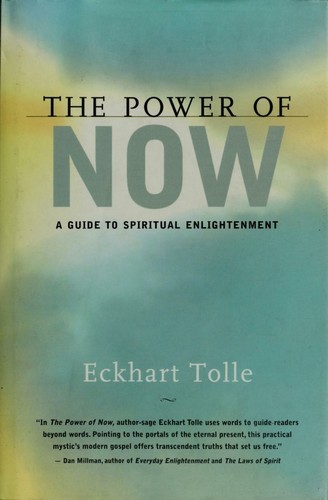
The Power of Now is a spiritual self-help book that became an international bestseller after Oprah Winfrey recommended it. Eckhart Tolle, born in Germany and raised partly in Spain, describes how he experienced a sudden shift in consciousness at age 29, after a night of deep despair, and then spent years studying and teaching. The book is written as a series of questions and answers, and it draws on many traditions without belonging to one. Here’s a summary of its main ideas, written as a practical overview of mindfulness-style teachings.
Table of Contents
The Power of Now at a Glance
| Detail | Info |
|---|---|
| Author | Eckhart Tolle |
| First published | 1997 (widely popular after 1999) |
| Genre | Spirituality, mindfulness, self-help |
| Core idea | Live in the present moment and observe the mind |
| Structure | Ten chapters, many in question-and-answer form |
| Best for | Readers who want a contemplative approach to stress and anxiety |
What Is The Power of Now About?
Tolle’s main claim is that most human suffering is created by the mind, specifically by compulsive thinking about the past and future. He says we are not our thoughts; we are the awareness that observes them. When you notice that you are thinking, you step out of the mind’s grip into presence, which he sees as the source of peace.
The book also introduces concepts such as the ego, a mind-made sense of self built from identification with thoughts, roles and possessions, and the pain-body, an accumulation of old emotional pain that feeds on negativity. Rather than fighting these, Tolle suggests observing them with acceptance until they lose power.
Key Ideas, Part by Part
You Are Not Your Mind
The opening chapters describe the problem: an overactive mind that creates inner noise. Tolle argues that identifying with thoughts keeps us in a state of constant worry or regret. The first step is to become aware of the voice in the head and recognize that it isn’t who you are. Observation itself creates a gap between you and your thoughts.
He suggests that the end of suffering lies in consciousness, the ability to witness mind without being run by it.
Moving Into the Now
Later chapters explore how to practice presence. Tolle says that past and future exist only as thoughts, while life always unfolds in the present. He recommends simple practices, such as paying attention to breathing, listening to sounds, feeling the energy of the body and noticing the space between thoughts. He also describes inner body awareness, a way to anchor attention in the body’s sensations.
He suggests that chronic psychological time, the mind’s constant projection of past and future, is the source of anxiety, guilt and resentment, and that you can step out of it in any moment.
The Pain-Body and Relationships
Tolle describes the pain-body as an energy field of accumulated emotional pain that can take over, causing arguments or moods. He advises recognizing it when it arises, without judgment, and not feeding it with stories. He extends this to relationships, claiming that many conflicts happen when two pain-bodies meet, and that presence allows you to respond with compassion.
He also explains how to make relationships conscious by dropping the need to be right and seeing others as fellow beings rather than as roles.
Acceptance and Surrender
The last chapters cover surrender, which Tolle defines as the simple acceptance of what is in the present moment. He distinguishes it from passive resignation: you can take action to change a situation, but you do so from acceptance rather than resistance. He encourages readers to accept even difficult feelings, since resistance intensifies pain.
He ends with the idea that peace and joy come from the realization that you are the awareness behind thoughts, a state he calls the unconditioned consciousness.
7 Key Takeaways From The Power of Now
- You are not your thoughts. Observing your mind creates freedom from compulsive thinking.
- Live in the present. Past and future exist as thoughts; life happens now.
- Notice the pain-body. Recognize old emotional patterns without feeding them.
- Accept what is. Resistance to the present moment creates unnecessary suffering.
- Use the body as an anchor. Feeling the breath or inner body returns you to presence.
- Drop the need to be right. Ego-driven arguments harm relationships.
- Act from acceptance. You can change situations without fighting reality.
Ideas Worth Remembering
- The present moment is the only moment in which life actually happens. (paraphrased)
- The mind is a useful tool but a poor master. (paraphrased)
- Treat the present moment as if you had chosen it, rather than fighting it. (paraphrased)
- Becoming aware is the first and strongest step toward change. (paraphrased)
How to Apply The Power of Now in Real Life
- Take conscious breaths. Several times a day, pause and follow three full breaths.
- Name your thinking. When you notice worry, silently say thinking, then return to your senses.
- Feel your hands. Use sensations in your body as a quick anchor to the present.
- Pause in conflict. Before responding, notice your feelings and breathe once.
- Practice acceptance. Pick one small irritation, such as traffic, and allow it without complaint.
Criticisms and Limits
Critics say that The Power of Now is repetitive and that it presents spiritual claims as certain without evidence. Some find its tone too confident, and others note that it can be misread as encouraging people to avoid planning or responsibility. Tolle does not argue for ignoring the future, but for planning without being consumed by worry.
Readers also differ on whether the practice is enough for serious problems such as trauma, depression or injustice. Many therapists use mindfulness as one tool alongside others. If the book’s style doesn’t suit you, the practical techniques can be found in more secular mindfulness guides.
About Eckhart Tolle
Eckhart Tolle was born Ulrich Tölle in Germany in 1948 and moved to England as a young man, where he studied at the University of London. He says that after years of depression, an inner transformation changed his life, and he later worked as a spiritual teacher. He has written several books, including A New Earth and Stillness Speaks, and his talks reached many through video and audio. Readers sometimes find his language abstract, so it can help to read the book slowly and try the practices.
How the Book Relates to Modern Mindfulness
Many of Tolle’s practices resemble modern mindfulness: observing thoughts, using breath as an anchor and accepting feelings without judgment. Mindfulness-based therapies such as MBSR and MBCT use similar techniques and have research support for reducing stress and relapse into depression. The Power of Now differs in its spiritual tone and its emphasis on a dramatic shift in consciousness. Readers who prefer a secular, research-based approach may prefer Jon Kabat-Zinn’s books, while those who like Tolle’s voice often read both.
A Short Daily Practice From the Book
A simple routine drawn from the book takes ten minutes. Sit comfortably and take a few slow breaths. Notice any thoughts and label them, then gently return to the feeling of your breath. Next, scan your body for sensations, resting attention for a moment on the hands and feet. Finally, listen to the sounds around you without naming them. If your mind wanders, that’s normal. The aim is to practice returning, not to achieve a perfect state. Over weeks, many readers report feeling calmer.
Who May Want to Read With Care
Some readers find the book’s claims about enlightenment too abstract or even mystical, and critics note that it offers little scientific evidence for its ideas. People who are dealing with trauma or depression may find that some meditation practices bring up difficult feelings, and a therapist can help. The book is not a substitute for professional care. If you or someone you know is struggling, call or text 988 in the US to reach the 988 Suicide and Crisis Lifeline.
Discussion Questions for The Power of Now
The book can spark thoughtful conversation. How often do you notice your mind drifting to the past or future? What does the idea of observing thoughts mean to you? Can you recall a moment when you felt fully present, and what made it possible? Do you agree that suffering is largely created by the mind? How does acceptance differ from giving up? What parts of the book felt useful, and which felt too abstract? Sharing answers with a friend or in a small group often helps clarify what you take away.
A Short Glossary of Tolle’s Terms
Tolle uses a few special terms. The ego is the mind-made self built on identification with thoughts and roles. The pain-body is stored emotional pain that can take over. Presence means awareness of the present moment. Psychological time is the mind’s focus on past and future rather than now. Surrender means accepting the moment as it is, then acting with clarity. The inner body is awareness of the body’s energy and sensations from within. Understanding these terms in plain language makes the book easier to follow.
Who Should Read The Power of Now?
Read it if you struggle with overthinking, anxiety or constant mental chatter, and you’re open to a contemplative approach. It’s also a good choice for readers curious about mindfulness or spirituality who want a short, direct text. If you prefer research and clinical examples, you might start with a secular mindfulness book first, then return to Tolle for inspiration.
What to Read Next
- Wherever You Go, There You Are by Jon Kabat-Zinn a secular introduction to mindfulness meditation
- Man’s Search for Meaning by Viktor E. Frankl a psychologist’s account of finding meaning in hardship
- The Untethered Soul by Michael A. Singer another popular book on observing your thoughts
Related: summaries of the best self-help books ever written and Ego Is the Enemy summary and key takeaways.
Frequently Asked Questions
What is the main idea of The Power of Now?
That peace comes from living in the present moment and recognizing that you are the awareness behind your thoughts.
What is the pain-body?
Tolle’s term for accumulated emotional pain that can take over and cause negative moods or conflicts.
Is The Power of Now religious?
It’s a spiritual book that draws on several traditions, but it isn’t tied to a particular religion.
Is The Power of Now hard to read?
Some readers find parts abstract. The question-and-answer sections help, and many read it in small sections.
What should I read after The Power of Now?
Try Wherever You Go, There You Are for secular mindfulness, or Man’s Search for Meaning.