

Disclosure: As an Amazon Associate, Bookish Wisdom earns from qualifying purchases. This doesn’t change our picks or your price.
TL;DR: The Subtle Art of Not Giving a F*ck by Mark Manson argues that we have limited attention for what matters, so we should choose our struggles carefully. Instead of chasing constant positivity, accept that life involves pain, take responsibility for your problems and focus on values that matter.
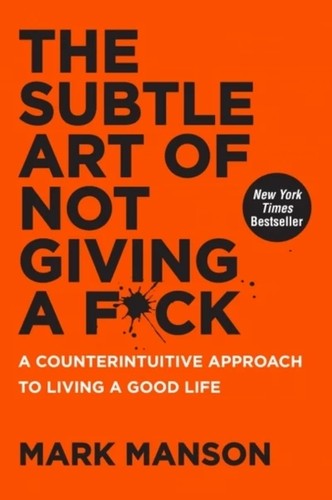
The Subtle Art of Not Giving a F*ck was a surprise hit in 2016, turning a profane blog voice into a bestselling self-help book. Mark Manson, a blogger and former dating coach, argues that the culture of relentless positivity makes people unhappy, and that a better path is to care about fewer things and accept that life includes suffering. The book is funny, blunt and filled with personal stories and examples. Here’s a summary of the main ideas, with the language kept as clean as possible.
Table of Contents
The Subtle Art of Not Giving a F*ck at a Glance
| Detail | Info |
|---|---|
| Author | Mark Manson |
| Published | 2016 |
| Genre | Self-help, personal development |
| Core idea | Choose what to care about and accept life’s problems |
| Structure | Nine chapters of essays |
| Best for | Readers tired of toxic positivity who want a frank approach to values |
What Is The Subtle Art of Not Giving a F*ck About?
Manson begins with the story of Charles Bukowski, a poet who struggled for decades and whose epitaph read Don’t Try, to illustrate that success often comes from accepting failure rather than chasing positivity. He argues that everyone has a limited number of things they can care about, and that the key to a good life is to choose carefully.
He says that wanting to feel good all the time is a recipe for misery, because problems never end; they only change. Happiness comes from solving problems, and the question is not whether you’ll struggle, but what you want to struggle for.
Key Ideas, Part by Part
Don’t Try and Happiness Is a Problem
The first chapters argue that the pursuit of positive experiences is itself a negative experience, and that accepting negative experiences is a positive one. Manson describes the feedback loop from hell, in which you feel bad about feeling bad, and suggests that the way out is to stop caring about the feeling.
He also says that happiness is a result of solving problems, not of avoiding them, and that a life without problems would be meaningless.
You Are Not Special and the Value of Suffering
In the third chapter, Manson challenges the idea that everyone is exceptional. Most of us are average at most things, and that’s okay. Believing you’re special leads to entitlement or fragility. He proposes that true self-worth comes from accepting your ordinariness and finding meaning in effort.
The fourth chapter discusses the value of suffering. Pain is a signal and a teacher, and our values determine which pain we choose. Good values, such as honesty and curiosity, are reality-based, constructive and under your control. Bad values, such as pleasure or popularity, depend on external things.
You Are Always Choosing and You’re Wrong About Everything
Manson separates fault from responsibility. Many problems aren’t your fault, but you are responsible for how you respond. Taking responsibility is a source of power. He introduces the idea of responsibility and fault with examples such as a baby abandoned on a doorstep, who isn’t at fault but must take responsibility as an adult.
He then argues that we should hold our beliefs lightly. We are often wrong, and growth means replacing a bad belief with a less wrong one, a mindset of constant uncertainty and humility.
Failure, Saying No and Death
The later chapters describe failure as the way forward: feedback is essential, and the do something principle says that action produces motivation, not the other way around. Manson says that saying no is a vital skill that allows us to define our values and boundaries. Commitment, he adds, brings freedom by reducing options.
He ends with death. Remembering that we will die helps us choose what we care about and encourages us to live in line with our values.
7 Key Takeaways From The Subtle Art of Not Giving a F*ck
- Care about fewer things. Your attention is limited, so choose what’s worth it.
- Accept discomfort. Wanting constant positivity increases anxiety.
- Be responsible, not guilty. You may not be at fault, but you are responsible for your response.
- Choose good values. Honesty, curiosity and humility are within your control.
- Stay open to being wrong. Hold beliefs loosely and update them.
- Take action to get motivated. Doing something creates momentum.
- Learn to say no. Boundaries clarify what matters.
Ideas Worth Remembering
- Chasing positive feelings all the time can itself make you feel worse. (paraphrased)
- Good values are realistic, constructive and within your control. (paraphrased)
- Not caring about everything lets you care about what truly matters. (paraphrased)
- Pain is part of any worthwhile pursuit; the question is which pain you choose. (paraphrased)
How to Apply The Subtle Art of Not Giving a F*ck in Real Life
- List your top three values. Decide what you want to care about, and notice what you spend energy on.
- Use the do something principle. When you feel stuck, take a tiny action to build momentum.
- Question your beliefs. Ask what you might be wrong about and seek different views.
- Practice saying no. Decline one commitment this week that doesn’t fit your values.
- Reflect on mortality. Spend a few minutes imagining the end of your life and what you’d want to have done.
Criticisms and Limits
Critics say that The Subtle Art is built on familiar advice dressed in swearing, and that its examples sometimes oversimplify. Others note that the title may suggest indifference, while the book actually encourages caring deeply about the right things. Some readers also feel it speaks mostly to people with privilege, since not everyone has the freedom to pick which problems to care about.
Another criticism is that the book can be repetitive and that its anecdotes are sometimes more entertaining than convincing. Still, many readers appreciate its honesty, and it has helped open conversations about the limits of positive thinking.
The Role of Profanity and Tone
The book’s title and style have been a draw and a barrier for readers. Manson uses profanity as a way to cut through platitudes, and many find the voice refreshing and funny. Others find it grating or find that the swearing distracts from the ideas. Behind the language, the book’s arguments are grounded in familiar themes from philosophy and psychology, including acceptance, responsibility and values. If the tone bothers you, try the audiobook, where the humor lands differently, or read a short excerpt before you decide.
How It Relates to Stoicism and Other Ideas
Many of Manson’s ideas echo older traditions. The emphasis on controlling your response resembles Stoicism, and the focus on meaning in suffering is close to Viktor Frankl’s work. The notion of accepting uncertainty has parallels in existentialism and in modern cognitive behavioral therapy. Manson doesn’t cite many of these sources directly, but readers who enjoy this book often move on to Meditations, Man’s Search for Meaning or The Obstacle Is the Way to see how the ideas have been developed.
Who Mark Manson Is
Mark Manson is an American writer who began as a dating blogger and then turned to broader topics of self-improvement. He was born in Texas, studied at Boston University and has lived in many countries. The Subtle Art of Not Giving a F*ck followed his blog posts and became one of the best-selling books of its year. His later books include Everything Is F*cked, which expands on themes of hope and values, and Will, which he co-wrote with the actor Will Smith. Knowing his background helps explain the book’s blunt, irreverent style.
A Weekly Exercise for Values
To apply the book, try a weekly values check. Write down what you spent time and money on, and what you complained about. Then ask what these reveal about your actual values, which may differ from the ones you claim. Choose one value you want to prioritize, such as honesty or learning, and decide on one action that fits it. Review the following week. This simple practice helps you see where your attention goes and encourages you to move it toward things you truly care about.
Discussion Questions for The Subtle Art
This book makes a lively book club pick. Which of your values are within your control and which are not? When have you felt trapped in the feedback loop from hell? Do you agree that happiness comes from solving problems? What would it mean to care about fewer things in your life? Where do you confuse fault with responsibility? Which problem would you choose to struggle with, and why? The humor of the book often leads to honest, funny conversation, but be kind: people may share difficult experiences.
Quick Chapter Guide
The nine chapters are Don’t Try; Happiness Is a Problem; You Are Not Special; The Value of Suffering; You Are Always Choosing; You’re Wrong About Everything (Maybe); Failure Is the Way Forward; The Importance of Saying No; and And Then You Die. Each chapter combines a story, an argument and a takeaway, so you can read them in any order. If you have limited time, chapters three, five and eight give the clearest picture of the book’s approach. The book is short, usually under 250 pages, and easy to read in a weekend.
Who Should Read The Subtle Art of Not Giving a F*ck?
Read it if you’re tired of cheerful self-help and want a frank, funny take on values and acceptance. It suits readers who like blog-style writing, and those who feel overwhelmed by trying to care about everything. If strong language bothers you or you want a more academic treatment, you may prefer Stoic or psychology books with a similar message.
What to Read Next
- The Obstacle Is the Way by Ryan Holiday a Stoic guide to turning problems into advantages
- Man’s Search for Meaning by Viktor E. Frankl a classic on finding meaning in suffering
- Everything Is F*cked by Mark Manson Manson’s follow-up on hope and values
Related: The Obstacle Is the Way summary and key takeaways and Ego Is the Enemy summary and key takeaways.
Frequently Asked Questions
What is the main idea of The Subtle Art of Not Giving a F*ck?
That you should choose carefully what you care about, accept that life involves problems and take responsibility for your response.
Is the book about not caring?
No. It’s about caring about fewer and better things, rather than everything.
What is the do something principle?
The idea that action creates motivation, so you start with a small step instead of waiting to feel inspired.
Is The Subtle Art worth reading?
Many readers find it funny and refreshing, though the profanity and repetition can bother some.
What should I read after The Subtle Art?
Try The Obstacle Is the Way or Man’s Search for Meaning for related ideas.