
Disclosure: As an Amazon Associate, Bookish Wisdom earns from qualifying purchases. This doesn’t change our picks or your price.
TL;DR: Rich Dad Poor Dad by Robert Kiyosaki contrasts two father figures and their views of money. Kiyosaki argues that the rich buy assets, not liabilities, build businesses and investments rather than relying on a paycheck, and learn financial literacy early. The book is motivational but light on details and is best treated as a mindset book.
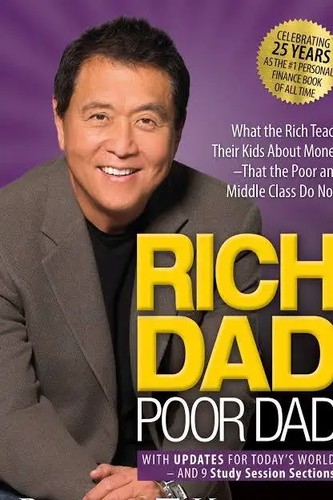
Rich Dad Poor Dad has sold tens of millions of copies since 1997 and is often credited with starting many readers’ interest in investing and entrepreneurship. Robert Kiyosaki tells the story of growing up with two father figures: his highly educated but always-short-of-money real dad, and his friend Mike’s father, a high-school dropout who became wealthy. The contrast gives the book its structure and its message. Here’s a summary of the six lessons, plus a balanced look at its strengths and criticisms. This is a summary of a book’s ideas, not personal financial advice.
Table of Contents
Rich Dad Poor Dad at a Glance
| Detail | Info |
|---|---|
| Author | Robert T. Kiyosaki |
| Published | 1997 |
| Genre | Personal finance, mindset |
| Core idea | Build assets and financial education, not just a salary |
| Structure | Six lessons plus a how-to chapter |
| Best for | Readers new to money mindset who want motivation |
What Is Rich Dad Poor Dad About?
Kiyosaki describes learning about money from two men: his poor dad, his biological father, a respected educator who believed in school, a stable job and saving, and his rich dad, the father of his friend Mike, who built a business empire and taught the boys through hands-on lessons. The rich dad’s central lesson is that the poor and middle class work for money, while the rich make money work for them.
Kiyosaki says that school doesn’t teach financial literacy, and that this leaves many people in a cycle he calls the rat race, in which they earn, spend and remain dependent on a paycheck. His remedy is to learn about accounting, investing, law and markets, and to acquire income-producing assets.
Key Ideas, Part by Part
Lesson 1: The Rich Don’t Work for Money
Rich dad refuses to pay the boys for work, and tells them to think differently about earning. Kiyosaki explains that fear and greed keep many people in jobs they dislike, and that the key is to learn to make money work for you. He recommends developing financial intelligence rather than only seeking a higher salary.
Lesson 2: Why Teach Financial Literacy?
This lesson gives the well-known definition: assets put money in your pocket, and liabilities take money out of your pocket. Kiyosaki argues that people often confuse the two, treating their house as an asset even though it generates costs. He recommends focusing on buying real assets such as businesses, stocks and income-producing real estate.
He also says that financial literacy includes reading financial statements, understanding how income and expenses flow and knowing the difference between a balance sheet and an income statement.
Lesson 3: Mind Your Own Business
Kiyosaki urges readers to build their own business or asset column while keeping a day job. He says most people focus on their profession, but the rich focus on building assets. He recommends buying assets first and letting them fund luxuries.
Lessons 4 to 6: Taxes, Inventing Money and Learning
The remaining lessons cover how corporations and taxes work, the role of financial innovation and the importance of learning. Kiyosaki argues that the wealthy use legal structures to reduce taxes, and that opportunities come to those who have financial education and see them. He also advises working to learn rather than to earn, picking jobs that teach skills such as sales, communication and leadership.
He closes with practical steps for getting started: find a reason bigger than reality, make choices daily, pick friends carefully, master a formula and then another, pay yourself first and buy information.
7 Key Takeaways From Rich Dad Poor Dad
- Assets versus liabilities. Focus on acquiring things that produce income.
- Financial literacy matters. Learn accounting, investing and basic law.
- Make money work for you. Look for income beyond your job.
- Pay yourself first. Prioritize investing before spending.
- Learn instead of just earn. Choose roles that teach valuable skills.
- Mind your own business. Build your own assets while you work.
- Don’t let fear and greed decide. Notice emotions that drive money decisions.
Ideas Worth Remembering
- Financial education is a separate skill that school often leaves out. (paraphrased)
- What you own matters more than what you earn. (paraphrased)
- Fear and greed can keep people trapped in a cycle of earning and spending. (paraphrased)
- Mindset about money shapes how you handle it. (paraphrased)
How to Apply Rich Dad Poor Dad in Real Life
- Make a simple balance sheet. List what you own and owe, and classify each item as an asset or liability.
- Track your cash flow. Write down monthly income and expenses to see where money goes.
- Start small. Begin investing a fixed amount each month in diversified, low-cost options.
- Educate yourself. Read basic finance books and take free courses before taking risks.
- Seek advice. Consult a licensed financial professional before major decisions.
Criticisms and Limits
Critics point out that the book contains few verifiable details, such as the identity of rich dad or specific numbers, and that some of its claims about taxes and investing are oversimplified or misleading. Others note that the advice to leverage debt to buy assets can be risky for readers without savings or knowledge, especially in downturns.
Kiyosaki’s later seminars and products have also been criticized as high-pressure. Many financial educators advise reading the book as an inspirational story rather than a manual, verifying any plan with independent sources and a licensed advisor, and avoiding investments you don’t understand.
A Balanced Look at the Book
Rich Dad Poor Dad is one of the most popular and most criticized personal finance books. Admirers say it changed their thinking about money, encouraging them to start investing and businesses. Critics, including financial journalists, note that the book offers few specifics, that rich dad may be an invented composite and that some advice, such as buying real estate with debt, can be risky. A sensible approach is to treat it as motivation and then supplement it with evidence-based books on investing.
Why the Asset and Liability Definition Matters
Kiyosaki’s simple rule that assets put money in your pocket while liabilities take money out is easy to remember, but it simplifies. A house you live in has costs but also provides shelter and may rise in value. A rental property can be an asset if its income exceeds expenses, but it can become a liability if it doesn’t. The key idea is to look at cash flow and ask whether something pays you or costs you. This lens can be a useful check on spending, even if you don’t follow every example.
What Financial Professionals Suggest Instead
Many financial planners recommend building an emergency fund, paying off high-interest debt, contributing to retirement accounts and investing in low-cost diversified index funds. Books like The Simple Path to Wealth and The Psychology of Money offer that kind of advice in accessible language. They emphasize patience and avoiding big risks. Reading Kiyosaki alongside them can give you both the motivation to start and a steady method to continue.
Rich Dad Series and Further Reading
Kiyosaki has written dozens of books, including Cashflow Quadrant, Rich Dad’s Guide to Investing and Rich Dad’s Retire Young, Retire Rich. Many repeat themes from the first. The Cashflow Quadrant, which describes four ways of earning income, is a popular follow-up. If you’re new, read the first book, decide whether the approach appeals to you and then compare with other sources. Be cautious about any program that promises quick riches, and remember that investing involves risk, including loss of principal.
Discussion Questions for Rich Dad Poor Dad
Because the book is both inspiring and debated, it makes for good discussion. Which of the six lessons stands out to you? Do you agree with the definition of assets and liabilities? How did your family talk about money when you were growing up? What would you want schools to teach about finances? Which criticisms of the book do you find fair? What first step would you take after reading it? Asking these questions helps you separate useful ideas from claims that need more evidence.
Money Basics to Learn Alongside the Book
To turn the book’s mindset into action, learn a few basics. Build an emergency fund of three to six months of expenses. Pay off high-interest debt. Understand how compound interest works, and how fees affect returns. Learn the difference between stocks, bonds and funds, and the risks of each. Check whether your employer offers a retirement match. Consider speaking with a fee-only financial planner. These steps are widely recommended, and they provide a foundation that makes it safer to explore the entrepreneurial ideas in Kiyosaki’s book.
Rich Dad Poor Dad in One Minute
The book’s core claim is that financial education and income-producing assets matter more than a salary alone. Learn the difference between assets and liabilities, keep your day job while building assets, avoid decisions driven by fear or greed and keep learning. Treat it as motivation, verify specifics elsewhere and talk to a licensed professional before investing.
Who Should Read Rich Dad Poor Dad?
Read it if you’re new to thinking about money and need motivation to learn more, if you’re curious about entrepreneurship or if you want an easy introduction to the idea of passive income. It’s less useful as a practical guide to investing or taxes. If you want specifics, pair it with a book on index investing, budgeting or retirement planning.
What to Read Next
- The Psychology of Money by Morgan Housel timeless lessons on behavior and wealth
- The Simple Path to Wealth by J.L. Collins a clear guide to low-cost index investing
- I Will Teach You to Be Rich by Ramit Sethi a practical six-week program for money systems
Related: books like Rich Dad Poor Dad and The Simple Path to Wealth summary and key takeaways.
Frequently Asked Questions
What is the main idea of Rich Dad Poor Dad?
That financial education and owning income-producing assets matter more than a high salary.
What is the difference between an asset and a liability?
In Kiyosaki’s definition, assets put money in your pocket and liabilities take money out.
Is Rich Dad Poor Dad a true story?
It’s presented as autobiography, though critics question whether rich dad was a real person or a composite.
Is Rich Dad Poor Dad good financial advice?
It’s motivational but light on detail, and some advice is risky. Consider it a mindset book and consult a professional.
What should I read after Rich Dad Poor Dad?
Try The Psychology of Money for behavior and The Simple Path to Wealth for practical investing.