

Disclosure: As an Amazon Associate, Bookish Wisdom earns from qualifying purchases. This doesn’t change our picks or your price.
TL;DR: The Simple Path to Wealth argues that building wealth doesn’t have to be complicated. JL Collins’s recipe: avoid debt, spend less than you earn, invest the difference in a low-cost total stock market index fund, and don’t panic when markets crash. Over time, this creates freedom, or what he calls F-you money.
Note: This summary is for educational purposes and isn’t financial advice. Consider your own situation or speak with a qualified professional before investing.
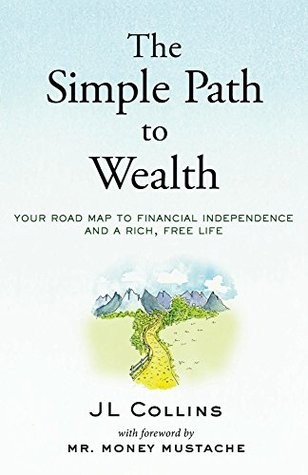
Published in 2016, The Simple Path to Wealth: Your Road Map to Financial Independence and a Rich, Free Life began as a series of letters JL Collins wrote to his daughter, who wasn’t interested in money but wanted to know what to do with it. Those letters became a popular blog series on investing, then this book. It’s now one of the most recommended personal finance books in the financial independence community.
Table of Contents
The Simple Path to Wealth at a Glance
| Detail | Info |
|---|---|
| Author | JL Collins |
| Published | 2016 |
| Genre | Personal finance / investing |
| Structure | Short chapters on mindset, debt, the stock market, index funds, asset allocation, withdrawals and retirement accounts |
| Best for | Beginners, young professionals and anyone who finds investing intimidating |
What Is The Simple Path to Wealth About?
Collins believes the investment industry makes things complicated because complexity is profitable for it. For most people, he argues, a simple approach using broad, low-cost index funds outperforms expensive, actively managed strategies over the long run.
Key Ideas From The Simple Path to Wealth
F-You Money
Collins’s term for having enough savings that you can walk away from a bad job or situation. Money’s greatest value, he argues, is freedom.
Avoid Debt
He treats debt, especially high-interest consumer debt, as an emergency. Paying it off is one of the best returns available. He’s also skeptical of car loans and of treating a home as an investment.
Spend Less Than You Earn, Invest the Rest
The gap between what you earn and what you spend is what builds wealth. Collins encourages a high savings rate, ideally 50 percent for those seeking early financial independence, though he acknowledges it depends on circumstances.
The Market Always Goes Up, Eventually
Collins argues that while the stock market crashes regularly, it has historically recovered and continued rising over the long term. The key is to keep investing through downturns and never sell in a panic.
Use a Total Stock Market Index Fund
His core recommendation is a low-cost total US stock market index fund. He frequently names Vanguard’s VTSAX, which owns a slice of essentially every publicly traded US company. Index funds have low fees and avoid the risk of picking individual stocks or fund managers.
Wealth Building vs. Wealth Preservation
While you’re building wealth, Collins suggests being mostly in stocks. As you near or enter retirement, adding bonds can smooth the ride. His simple portfolio for the preservation stage combines a stock index fund with a bond index fund.
The 4 Percent Rule
Drawing on research like the Trinity Study, Collins discusses withdrawing around 4 percent of your portfolio per year as a guideline for sustainable retirement income, while encouraging flexibility in bad market years.
Use Tax-Advantaged Accounts
He explains how to use retirement accounts like 401(k)s and IRAs to reduce taxes, and why he likes Vanguard’s investor-owned structure.
5 Key Takeaways From The Simple Path to Wealth
- Simplicity wins. A few low-cost index funds beat complex strategies for most people.
- Debt is an emergency. Clear high-interest debt before anything else.
- Savings rate drives freedom. The more you save, the sooner you’re free.
- Stay the course. Crashes are normal; panic selling is the real danger.
- Money buys freedom. F-you money gives you choices.
Ideas Worth Remembering
- Money can buy many things, but the most valuable is freedom. (paraphrased)
- The market is a powerful wealth-building tool, but only if you hold on through the crashes. (paraphrased)
- Complexity serves the people selling it, not you. (paraphrased)
What Do Critics Say?
Some readers feel the book is too US-centric, with advice built around American funds and accounts. Others note that a 100 percent stock portfolio can be emotionally hard to hold during deep crashes. Collins acknowledges this and stresses knowing your own tolerance for volatility.
Who Should Read The Simple Path to Wealth?
It’s perfect for beginners, young adults starting their careers and anyone overwhelmed by investing jargon. Experienced investors may find it basic, but many still recommend it as the book they wish they’d read first.
What to Read Next
- The Psychology of Money by Morgan Housel on how behavior shapes wealth.
- Your Money or Your Life by Vicki Robin and Joe Dominguez on money and life energy.
- The Little Book of Common Sense Investing by John C. Bogle on index investing.
Related: The Almanack of Naval Ravikant summary and summary of Think and Grow Rich.
Frequently Asked Questions
What is the main idea of The Simple Path to Wealth?
The main idea is that building wealth is simple: avoid debt, spend less than you earn, invest the rest in low-cost broad index funds and stay invested through market crashes.
What is F-you money?
F-you money is JL Collins’s term for having enough savings that you have the freedom to walk away from a job or situation that doesn’t serve you.
What fund does JL Collins recommend?
Collins frequently recommends a low-cost total US stock market index fund, using Vanguard’s VTSAX as his main example. He suggests adding a bond index fund in the wealth-preservation stage.