
Disclosure: As an Amazon Associate, Bookish Wisdom earns from qualifying purchases. This doesn't change our picks or your price.
Spoiler warning: this analysis discusses the whole book, including the ending of The Namesake.
Quick answer: The main themes in The Namesake by Jhumpa Lahiri are identity and names, immigration and belonging, family and generations, loss and love and relationships. Each is explained below with what it means, how it develops in the story and questions you can use for study or discussion.
Quick facts
- Book: The Namesake by Jhumpa Lahiri
- First published: 2003
- Main themes: identity and names, immigration and belonging, family and generations, loss and love and relationships
Table of Contents
About The Namesake
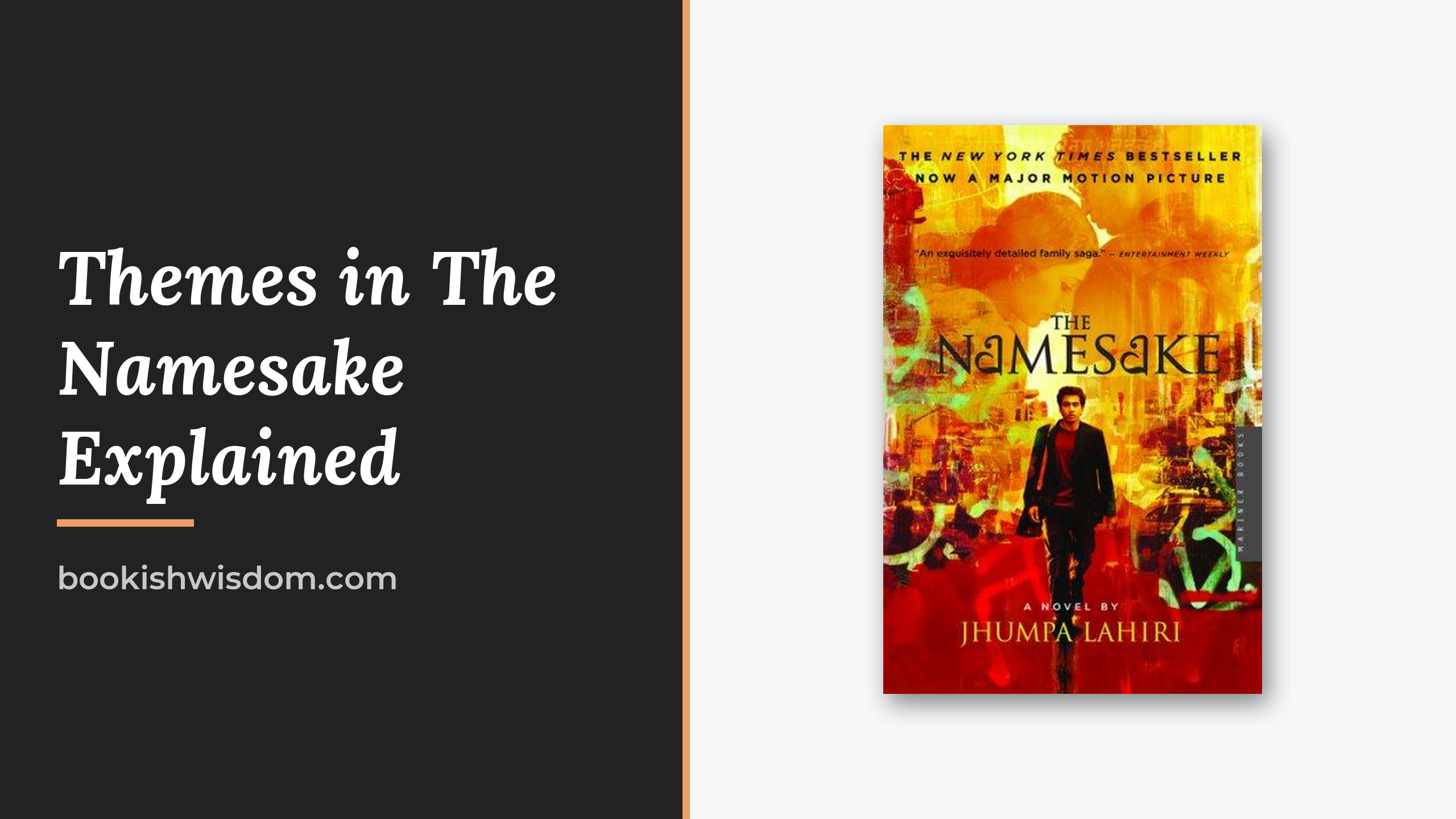
After an arranged marriage in Calcutta, Ashoke and Ashima Ganguli move to Cambridge, Massachusetts, in 1968. When their son is born, they name him Gogol after the Russian writer, a name connected to a train accident Ashoke survived. Gogol grows up embarrassed by his unusual name and his parents' Bengali customs. As an adult he changes his name to Nikhil, moves to New York and dates American women, trying to escape his heritage. His father's death forces him to rethink who he is.

Check price of The Namesake on Amazon
The Main Themes in The Namesake
1. Identity and names
Gogol's name becomes a symbol of his struggle with identity. Lahiri shows how names carry family history and expectations, and how hard it is to define yourself.
Question to consider: Where in The Namesake does identity and names matter most to the characters, and what does Jhumpa Lahiri want readers to think about it?
2. Immigration and belonging
Ashima feels lonely in America, while Gogol feels caught between cultures. The novel explores the immigrant experience across two generations.
Question to consider: Where in The Namesake does immigration and belonging matter most to the characters, and what does Jhumpa Lahiri want readers to think about it?
3. Family and generations
Gogol pulls away from his parents but later understands their sacrifices. The book shows how children slowly come to see their parents as people.
Question to consider: Where in The Namesake does family and generations matter most to the characters, and what does Jhumpa Lahiri want readers to think about it?
4. Loss
Ashoke's death changes Gogol.
Question to consider: Where in The Namesake does loss matter most to the characters, and what does Jhumpa Lahiri want readers to think about it?
5. Love and relationships
Gogol's relationships reflect his search for identity.
Question to consider: Where in The Namesake does love and relationships matter most to the characters, and what does Jhumpa Lahiri want readers to think about it?
Symbols and Motifs
- The name Gogol. It represents identity and history.
- The train. It symbolises fate and survival.
- The Overcoat. Gogol's book stands for his father's love.
- The house. It represents family.
How the Themes Connect
Identity and names are the novel's core, while immigration and belonging explain Gogol's struggles. Family and generations show how he comes to understand his parents, loss changes him and love and relationships reflect his search. The novel ends with Gogol opening the book his father gave him, finally ready to understand himself.
How to Write About the Themes of The Namesake
If you are writing an essay or preparing for class, these steps help:
- Pick one theme. A focused argument is stronger than a list of everything.
- Find evidence in the text. Point to specific scenes, characters and choices rather than general impressions.
- Explain, don't just describe. After each example, say what it shows about the theme.
- Connect to the ending. Ask how the final chapters resolve or complicate the theme.
- Consider other readings. A fair essay acknowledges that readers can disagree.
Discussion Questions
- Which of the themes above feels most relevant to your own life, and why?
- Do the characters in The Namesake handle identity and names well or badly?
- How does the title relate to the themes of the book?
- Would the story change if it were set in a different time or place?
- What does Jhumpa Lahiri leave unresolved, and why might that be?
Books With Similar Themes
- Interpreter of Maladies by Jhumpa Lahiri
- The Joy Luck Club by Amy Tan
Related: The Namesake by Jhumpa Lahiri: Summary and Key Takeaways · 15 Books Like The Namesake You’ll Love
Frequently Asked Questions
What is the main theme of The Namesake?
The central theme is identity and names, supported by immigration and belonging and family and generations.
How many themes does The Namesake have?
This guide covers 5 main themes, but readers may find others.
Who wrote The Namesake?
The Namesake was written by Jhumpa Lahiri and first published in 2003.
Is The Namesake a good book for studying themes?
Yes. Its themes are clear enough to follow and rich enough to support essays and group discussion.
What should I read after The Namesake?
Try Interpreter of Maladies by Jhumpa Lahiri or The Joy Luck Club by Amy Tan.