

Disclosure: As an Amazon Associate, Bookish Wisdom earns from qualifying purchases. This doesn't change our picks or your price.
Spoiler warning: this analysis discusses the whole book, including the ending of Travels with Charley.
Quick answer: The main themes in Travels with Charley by John Steinbeck are rediscovering America, change and loss, loneliness and companionship, race and injustice and aging. Each is explained below with what it means, how it develops in the story and questions you can use for study or discussion.
Quick facts
- Book: Travels with Charley by John Steinbeck
- First published: 1962
- Main themes: rediscovering America, change and loss, loneliness and companionship, race and injustice and aging
Table of Contents
About Travels with Charley
In 1960, at the age of fifty-eight, John Steinbeck sets out to rediscover the country he has written about for decades. He drives a pickup truck with a camper shell, which he names Rocinante after Don Quixote's horse, accompanied by his elderly French poodle, Charley. Over about ten thousand miles, they travel from Long Island to Maine, across the Midwest to the Pacific Northwest, down to California and Texas and through the South, where Steinbeck witnesses ugly protests against school integration in New Orleans.
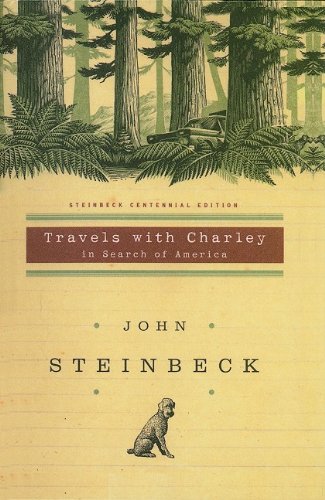
Check price of Travels with Charley on Amazon
The Main Themes in Travels with Charley
1. Rediscovering America
Steinbeck feels he has lost touch with the country and wants to see it again with fresh eyes. He finds both beauty and disappointment, and admits the America he remembered may have existed only in memory.
Question to consider: Where in Travels with Charley does rediscovering America matter most to the characters, and what does John Steinbeck want readers to think about it?
2. Change and loss
Everywhere Steinbeck sees growing towns, highways, mobile homes and waste. His hometown of Salinas feels foreign, and he realizes you can't go home again.
Question to consider: Where in Travels with Charley does change and loss matter most to the characters, and what does John Steinbeck want readers to think about it?
3. Loneliness and companionship
Traveling alone, Steinbeck relies on Charley for company. The dog helps him meet strangers and eases his solitude.
Question to consider: Where in Travels with Charley does loneliness and companionship matter most to the characters, and what does John Steinbeck want readers to think about it?
4. Race and injustice
In New Orleans, Steinbeck sees crowds screaming at Black children entering a white school. The scene shocks him and darkens the end of his journey.
Question to consider: Where in Travels with Charley does race and injustice matter most to the characters, and what does John Steinbeck want readers to think about it?
5. Aging
Steinbeck is aware of his own mortality, and the trip is partly a test of his strength. Charley's age mirrors his own.
Question to consider: Where in Travels with Charley does aging matter most to the characters, and what does John Steinbeck want readers to think about it?
Symbols and Motifs
- Rocinante. The camper truck, named after Don Quixote's horse, suggests that the trip is a slightly foolish but noble quest.
- Charley. The poodle stands for loyal companionship and a way of seeing people without prejudice.
- The highways. The new interstates symbolize a faster, more uniform America that skips past small towns.
- The redwoods. The ancient trees represent timelessness and Steinbeck's awe at nature.
How the Themes Connect
The themes connect through Steinbeck's search for an America he fears has vanished. Change, aging and loneliness make the journey personal, while the scenes in the South give it moral weight. Later researchers found that Steinbeck embellished or invented some encounters, so readers often treat the book as part travelogue and part fiction.
How to Write About the Themes of Travels with Charley
If you are writing an essay or preparing for class, these steps help:
- Pick one theme. A focused argument is stronger than a list of everything.
- Find evidence in the text. Point to specific scenes, characters and choices rather than general impressions.
- Explain, don't just describe. After each example, say what it shows about the theme.
- Connect to the ending. Ask how the final chapters resolve or complicate the theme.
- Consider other readings. A fair essay acknowledges that readers can disagree.
Discussion Questions
- Which of the themes above feels most relevant to your own life, and why?
- Do the characters in Travels with Charley handle rediscovering America well or badly?
- How does the title relate to the themes of the book?
- Would the story change if it were set in a different time or place?
- What does John Steinbeck leave unresolved, and why might that be?
Books With Similar Themes
-

Blue Highways by William Least Heat-Moon
-
On the Road by Jack Kerouac
Related: Travels with Charley by John Steinbeck: Summary and Key Takeaways · 15 Books Like Travels with Charley You’ll Love
Frequently Asked Questions
What is the main theme of Travels with Charley?
The central theme is rediscovering America, supported by change and loss and loneliness and companionship.
How many themes does Travels with Charley have?
This guide covers 5 main themes, but readers may find others.
Who wrote Travels with Charley?
Travels with Charley was written by John Steinbeck and first published in 1962.
Is Travels with Charley a good book for studying themes?
Yes. Its themes are clear enough to follow and rich enough to support essays and group discussion.
What should I read after Travels with Charley?
Try Blue Highways by William Least Heat-Moon or On the Road by Jack Kerouac.