

Disclosure: As an Amazon Associate, Bookish Wisdom earns from qualifying purchases. This doesn’t change our picks or your price.
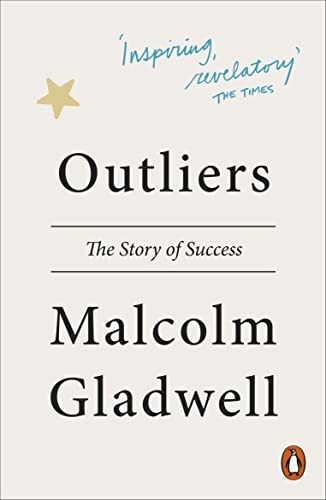
TL;DR: Outliers: The Story of Success by Malcolm Gladwell argues that high achievers owe their success not only to talent and effort but to opportunity, timing, culture and circumstance. Using examples from hockey players to the Beatles to Bill Gates, Gladwell shows how hidden advantages shape who gets ahead.
Outliers, published in 2008, is Malcolm Gladwell’s study of why some people become extraordinarily successful. Instead of looking at individual traits, he looks at where people come from and when they were born. The book gave the world the 10,000-hour rule and the Matthew Effect, and has been widely debated. Gladwell tells stories in his usual lively style, and it’s easy to see why it became a bestseller. Here’s a summary of the book’s two parts, Opportunity and Legacy, along with the main takeaways.
Table of Contents
Outliers at a Glance
| Detail | Info |
|---|---|
| Author | Malcolm Gladwell |
| Published | 2008 |
| Genre | Psychology, sociology, nonfiction |
| Core idea | Success depends on opportunity, timing and culture |
| Structure | Two parts: Opportunity and Legacy |
| Best for | Readers who like story-driven explanations of success |
What Is Outliers About?
Gladwell opens with the Roseto mystery: a small Pennsylvania town in which residents had remarkably low rates of heart disease in the mid-twentieth century, apparently because of close community ties. He uses it to argue that we can’t understand people without understanding their world. In the rest of the book, he applies this lens to success.
He challenges the myth of the self-made man, arguing that exceptional achievers benefit from hidden advantages, such as being born at the right time, living in a certain place or having access to special resources. This doesn’t mean effort doesn’t matter, but that opportunity multiplies it.
Key Ideas, Part by Part
Part One: Opportunity
In the first chapter, The Matthew Effect, Gladwell shows that elite Canadian hockey players are disproportionately born in January, February and March. Because the age cutoff for youth leagues is January 1, children born early in the year are bigger and more skilled at young ages, receive more coaching and advance. The principle, to those who have, more will be given, applies to schools and careers.
The second chapter introduces the 10,000-hour rule, based on research by psychologist Anders Ericsson on violinists. Gladwell says that expertise takes roughly ten thousand hours of practice, as with the Beatles, who played over a thousand live shows in Hamburg before their breakthrough, and Bill Gates, who had unusual access to a computer terminal as a teenager at Lakeside School. Opportunities to practice matter as much as the practice itself.
Genius, Intelligence and Context
In the next chapters, Gladwell compares Chris Langan, a man with an extremely high IQ who didn’t achieve conventional success, with Robert Oppenheimer, who used practical intelligence to navigate complex situations. He argues that beyond a certain IQ level, extra points don’t predict greater success, and that skills such as knowing how to speak up and ask for what you need are shaped by family and culture.
He uses research on parenting styles, describing concerted cultivation in middle-class families, where children learn to negotiate with adults, versus natural growth in working-class families, where children learn to defer. These differences, he says, affect later opportunities.
The Three Lessons of Joe Flom
Gladwell tells how a group of Jewish lawyers in New York, including Joe Flom, rose in the 1970s by specializing in hostile takeovers, a field that established firms disdained. He argues that their success was shaped by demographic luck: they were born during the Great Depression, when the birth rate was low, resulting in smaller classes and less competition, and their parents’ work in the garment industry gave them skills in negotiation and hard work.
Part Two: Legacy
In the second part, Gladwell turns to culture. He tells of feuds in Harlan, Kentucky, which he links to the culture of honor brought by Scots-Irish herders, and describes how Korean Air had a high crash rate in the 1990s, partly because of a hierarchical culture in which junior officers hesitated to challenge captains. After the airline retrained its crews to communicate directly and used English, its safety record improved.
He also looks at rice paddies and math, suggesting that the intense work ethic developed over generations of rice farming is related to Asian students’ strong math performance, and at the KIPP Academy, whose longer school days and year narrow gaps between poor and middle-class students, as evidence that summer learning loss matters. The epilogue returns to his own Jamaican family’s story to reflect on how history shapes opportunity.
7 Key Takeaways From Outliers
- Success is not self-made. Hidden advantages and timing matter.
- Cutoff dates matter. Small early advantages can compound over time.
- Practice takes time. Mastery requires thousands of hours.
- Opportunity multiplies effort. Access to resources shapes who can practice.
- Culture shapes behavior. Legacies influence communication and work habits.
- Context matters. Understand people in their communities.
- We can change the system. Better schedules, schools and training can widen opportunity.
Ideas Worth Remembering
- Talent and hard work matter, but they operate within circumstances people do not choose. (paraphrased)
- Small early advantages can grow into large differences. (paraphrased)
- Mastery usually takes a very long time and a lot of deliberate practice. (paraphrased)
- Cultural habits can be passed down and also changed. (paraphrased)
How to Apply Outliers in Real Life
- Look for opportunity. Seek chances to practice, even small ones.
- Track your hours. Log time spent on a skill you want to master.
- Challenge age grouping. If you coach or teach, consider how cutoffs affect children.
- Learn communication norms. Practice speaking up respectfully in your workplace.
- Support access. Help others get opportunities that you’ve had.
Criticisms and Limits
Critics say that Outliers presents compelling stories but sometimes overstates its conclusions, and that its use of the 10,000-hour rule oversimplifies the research. Some also find that its cultural claims rely on generalizations. Gladwell’s narrative style, which links diverse anecdotes into a single theme, can be convincing and slippery at the same time.
Even so, the book has changed how many people think about success. By highlighting hidden advantages, it encourages empathy and invites readers to ask how we can open doors for more people.
The 10,000-Hour Rule, Explained and Revisited
Gladwell’s version of the 10,000-hour rule has been widely quoted, but Anders Ericsson, whose research he drew on, said it was oversimplified. Ericsson noted that the figure was an average and that quality of practice, not just quantity, matters. In his book Peak, he describes deliberate practice with feedback. Studies also show that practice explains only part of the differences in performance in fields like music, sports and chess. Treat the rule as a reminder that mastery takes time, not as a magic formula.
Criticisms of Outliers
Critics argue that Gladwell sometimes cherry-picks examples and draws sweeping conclusions from limited data. Some say his cultural explanations, as in the cases of Korean Air and rice-paddy math, risk stereotyping. Others note that his emphasis on opportunity may understate individual agency. Gladwell responds that he’s offering a different way to look at success, not denying effort. Many readers find the stories persuasive and thought-provoking, but it’s wise to look at the underlying research when a claim matters to you.
Using the Book to Rethink Fairness
One of the book’s most useful messages is that small structural choices can have large effects. If youth sports leagues group children by birth year, relatively older children get an advantage that can last. If schools lose learning over summer, children without enrichment fall behind. Understanding these patterns suggests practical changes, such as staggered cutoffs, summer programs and more flexible grouping, which can make opportunities fairer. Parents, teachers and managers can ask where hidden advantages and barriers exist in their own settings.
Discussion Questions
To reflect on the book, ask: What advantages or opportunities did you have that you didn’t choose? Which stories in the book surprised you most? Do you agree that culture shapes behavior in the ways described? How might you create opportunities for others? What would change if your community adopted fairer cutoff rules? Do you think the 10,000-hour idea matches your experience? Discussing these questions can reveal how circumstances and effort both shape success.
More Malcolm Gladwell
If you enjoyed Outliers, Gladwell has many other books. The Tipping Point explores how ideas and trends spread like epidemics. Blink looks at snap judgments. David and Goliath examines underdogs and the advantages of disadvantage. Talking to Strangers considers why we misread people we don’t know. His podcast, Revisionist History, revisits overlooked events and ideas. His style combines stories with research, and while some claims have been debated, his books are good starting points for conversations about psychology and society.
Key Terms Explained Simply
The Matthew Effect means that early advantages accumulate, like a snowball. Deliberate practice is focused, feedback-rich training aimed at improving. Concerted cultivation describes middle-class parenting that actively develops children’s skills and sense of entitlement to ask for help. Culture of honor refers to a tradition in which people respond strongly to insults. Power distance describes how much a society accepts unequal power. Summer learning loss is the drop in skills children experience when school is out. These terms help explain the patterns Gladwell describes.
Who Should Read Outliers?
Read it if you like stories that connect psychology, sociology and history, if you want to rethink what it takes to succeed or if you work in education, coaching or management. It’s quick to read and works well for book clubs. If you want a more rigorous take on practice and expertise, add Peak or Range.
What to Read Next
- Peak by Anders Ericsson and Robert Pool the science of deliberate practice
- Range by David Epstein a case for generalists in a specialized world
- The Tipping Point by Malcolm Gladwell Gladwell on how ideas and trends spread
Related: Range summary and key takeaways and books like Thinking, Fast and Slow.
Frequently Asked Questions
What is the main idea of Outliers?
That success results from a combination of talent, effort, opportunity, timing and cultural background, not from individual talent alone.
What is the 10,000-hour rule?
The idea that mastery takes about ten thousand hours of practice, popularized by Gladwell from research by Anders Ericsson.
What is the Matthew Effect?
The principle that advantages accumulate: those who start with a small edge receive more opportunities and pull further ahead.
Is Outliers accurate?
It’s engaging, but some critics say it oversimplifies research and generalizes about cultures.
What should I read after Outliers?
Try Peak, Range or The Tipping Point.