
Disclosure: As an Amazon Associate, Bookish Wisdom earns from qualifying purchases. This doesn’t change our picks or your price.
TL;DR: In Same as Ever, Morgan Housel argues that while the future is impossible to predict, human behavior barely changes. Instead of forecasting what will be different, focus on what will stay the same: greed, fear, the power of stories, the role of luck and risk, and our habit of underestimating surprises. These timeless patterns are a better guide to money and life than any prediction.
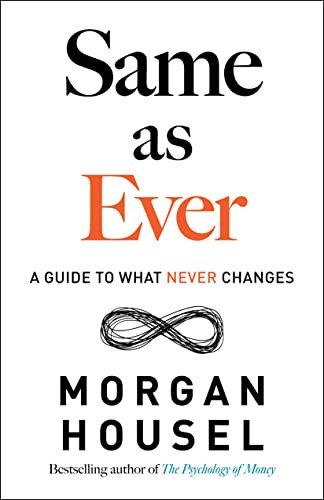
Published in 2023, Same as Ever: A Guide to What Never Changes is Morgan Housel’s follow-up to his massive bestseller The Psychology of Money. Housel, a partner at the Collaborative Fund and former columnist for The Motley Fool and The Wall Street Journal, uses the same format: short, story-driven chapters, each built around one lesson. The book contains 23 brief stories about the timeless patterns of human behavior.
Table of Contents
Same as Ever at a Glance
| Detail | Info |
|---|---|
| Author | Morgan Housel |
| Published | 2023 |
| Genre | Psychology / money / history |
| Structure | 23 short, standalone chapters, each a story and a lesson |
| Best for | Investors, business readers and fans of The Psychology of Money |
What Is Same as Ever About?
Housel opens with a simple observation: nobody can reliably predict major events, from pandemics to market crashes. But we can be confident about how people will react to them. Fear, greed, overconfidence and the need for stories are constants. Understanding these gives you an edge that forecasts can’t.
Key Ideas From Same as Ever
The Biggest Risk Is What You Don’t See
The most important events are usually the ones nobody saw coming. Since you can’t predict them, the best defense is to save more than seems necessary and build room for error, so surprises don’t wipe you out.
Expectations Shape Happiness
Happiness depends heavily on the gap between expectations and reality. As circumstances improve, expectations often rise just as fast, which is why people can feel no happier despite real progress.
The Best Story Wins
People are persuaded by stories more than statistics. The best idea doesn’t always win; the idea that’s told best often does. This affects politics, business and investing.
Incentives Are Powerful
Incentives can lead reasonable people to believe and do unreasonable things. When predicting behavior, ask what people are rewarded for.
Calm Plants the Seeds of Crazy
Stability breeds complacency and risk-taking, which eventually create instability. Long, calm stretches in markets and life often set up the next crisis.
Progress Is Slow; Setbacks Are Fast
Good news compounds quietly over time, while bad news arrives suddenly and dramatically. That’s why the world often feels worse than it is.
Long-Term Thinking Is Harder Than It Sounds
Everyone says they think long term, but the long term is just a series of short terms you must endure. Patience requires tolerating frustration along the way.
Nothing Is Free
Every reward has a price, often paid in volatility, uncertainty or stress. Accepting that price, rather than trying to avoid it, is part of succeeding.
5 Key Takeaways From Same as Ever
- Focus on what never changes. Human behavior is more predictable than events.
- Build room for error. Savings and humility protect you from surprises.
- Manage expectations. Happiness depends on the gap between expectations and reality.
- Respect stories and incentives. They drive behavior more than logic.
- Accept the cost of rewards. Volatility and patience are the price of long-term gains.
Ideas Worth Remembering
- The future is uncertain, but people’s behavior is not. (paraphrased)
- The best story wins, not the best idea. (paraphrased)
- Calm breeds complacency, and complacency breeds crisis. (paraphrased)
Who Should Read Same as Ever?
It’s ideal for investors, business leaders and anyone who enjoyed The Psychology of Money. Its short chapters make it easy to read in small sessions, and its lessons apply to careers, relationships and life decisions as well as money.
What to Read Next
- The Psychology of Money by Morgan Housel on behavior and wealth.
- The Black Swan by Nassim Nicholas Taleb on rare, unpredictable events.
- Thinking in Bets by Annie Duke on making decisions under uncertainty.
Related: The Black Swan summary and The Simple Path to Wealth summary.
Frequently Asked Questions
What is the main idea of Same as Ever?
The main idea is that the future is unpredictable, but human behavior stays consistent, so focusing on what never changes is more useful than trying to forecast what will.
Is Same as Ever as good as The Psychology of Money?
Many readers consider it a worthy companion. The Psychology of Money focuses on personal finance behavior, while Same as Ever looks at broader timeless patterns in life and history.
How long is Same as Ever?
It’s a relatively short book of about 200 pages, divided into 23 brief chapters, so most readers finish it in a few sittings.