

Disclosure: As an Amazon Associate, Bookish Wisdom earns from qualifying purchases. This doesn’t change our picks or your price.
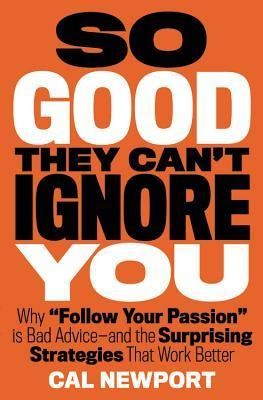
TL;DR: In So Good They Can’t Ignore You, Cal Newport argues that follow your passion is bad career advice. Most people don’t have a pre-existing passion waiting to be discovered. Passion usually comes after you get good at something valuable. Build rare skills (career capital), then trade them for the traits that make work satisfying: autonomy, mastery and mission.
Published in 2012, this was Cal Newport’s first big mainstream book, and it has become a modern classic of career advice. The title comes from a line comedian Steve Martin gave aspiring performers: be so good they can’t ignore you. Newport organizes the book around four rules, each challenging a common belief about finding work you love.
Table of Contents
So Good They Can’t Ignore You at a Glance
| Detail | Info |
|---|---|
| Author | Cal Newport |
| Published | 2012 |
| Genre | Careers / self-help |
| Structure | Four rules, each illustrated with interviews and case studies |
| Best for | Students, early-career professionals and career changers |
What Is So Good They Can’t Ignore You About?
Newport noticed that the passion hypothesis, the idea that you should first identify your passion and then find a job that matches it, leaves many people anxious and job-hopping. He studied people who love their work and found that most of them didn’t start with a clear passion. They became passionate as they built skills, gained respect and earned control over what they did.
Key Ideas: The Four Rules
Rule 1: Don’t Follow Your Passion
Newport points out that few people have a clear, career-ready passion, and that research on workplace satisfaction suggests passion tends to grow over time with experience and competence. Believing there’s one perfect job out there can make you less happy with the job you have.
Rule 2: Be So Good They Can’t Ignore You
The heart of the book is the craftsman mindset: focusing on what value you can offer the world rather than what the world can offer you. The skills you build become career capital, which is what lets you negotiate for a great job. To build it, Newport recommends deliberate practice: stretching beyond your comfort zone, getting honest feedback and sticking with difficult work. He profiles musicians, TV writers and venture capitalists who did exactly this.
Rule 3: Turn Down a Promotion
Control over what you do and how you do it is one of the most powerful traits of a dream job. But Newport warns of two control traps. The first is trying to gain control before you have enough career capital, such as quitting to pursue a dream with no rare skills to back it up. The second is that once you do have valuable skills, employers will push back when you try to gain more autonomy, because they benefit from keeping you. He suggests a test: will people pay for it? If they will, you probably have enough capital to make your move.
Rule 4: Think Small, Act Big
A unifying mission makes work deeply meaningful, but good missions are usually found at the cutting edge of a field, which you only reach after building career capital. Newport recommends small, concrete experiments, or little bets, to test mission ideas, and aiming for projects that are remarkable: worth remarking on and launched in a venue where people notice.
5 Key Takeaways From So Good They Can’t Ignore You
- Passion follows mastery. Get good first and passion often follows.
- Adopt the craftsman mindset. Ask what value you’re producing, not whether your job is perfect.
- Build career capital. Rare and valuable skills are what you trade for a great career.
- Time your bids for control. Seek autonomy once people will pay for your skills.
- Test missions with small bets. Experiment cheaply before betting everything on one big idea.
Ideas Worth Remembering
- Working right trumps finding the right work. (paraphrased)
- Passion is a side effect of mastery. (paraphrased)
- If you want something rare and valuable, you need something rare and valuable to offer in return. (paraphrased)
What Do Critics Say?
Some readers feel Newport is too dismissive of passion, especially for people who do have strong early interests in art or science. Others note that many of his examples come from knowledge work. Still, most agree the advice is a healthy antidote to pressure to find the one perfect calling.
Who Should Read So Good They Can’t Ignore You?
It’s ideal for college students choosing a path, graduates in their first jobs and anyone stuck wondering whether they picked the wrong career. Parents guiding teens through big decisions will also find it a useful perspective.
What to Read Next
- Mastery by Robert Greene on the long apprenticeship behind great careers.
- Deep Work by Cal Newport on the focused practice that builds rare skills.
- Peak by Anders Ericsson and Robert Pool on deliberate practice.
Related: best non-fiction books to read in your 20s and Digital Minimalism summary.
Frequently Asked Questions
What is the main idea of So Good They Can’t Ignore You?
The main idea is that you shouldn’t wait to find your passion. Build rare and valuable skills first, then use that career capital to gain autonomy, mastery and mission, which is what makes people love their work.
What is career capital?
Career capital is the set of rare and valuable skills you build over time. It’s what you can trade for better opportunities, more control and more meaningful work.
What is the craftsman mindset?
The craftsman mindset is a focus on the value you produce and the quality of your work, rather than on whether your job matches your passions.