
Disclosure: As an Amazon Associate, Bookish Wisdom earns from qualifying purchases. This doesn’t change our picks or your price.
TL;DR: In The Laws of Human Nature, Robert Greene describes 18 deep patterns that drive human behavior, from irrationality and narcissism to envy, conformity and our denial of death. Each law shows how these forces work in other people and in ourselves, with historical stories as examples. The goal is to become calmer, more perceptive and less controlled by emotion.
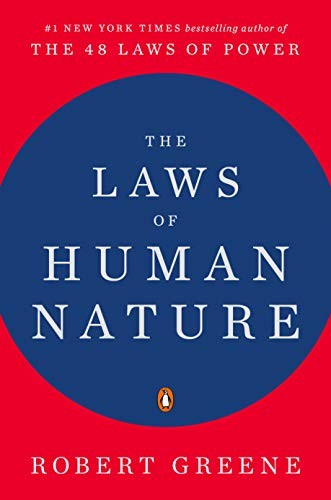
Published in 2018, The Laws of Human Nature is Robert Greene’s most ambitious book, running to more than 600 pages. Like The 48 Laws of Power and Mastery, it blends psychology with stories of historical figures, from Pericles and Queen Elizabeth I to Martin Luther King Jr. and Howard Hughes. But this time, Greene turns the lens inward: understanding human nature starts with understanding your own.
Table of Contents
The Laws of Human Nature at a Glance
| Detail | Info |
|---|---|
| Author | Robert Greene |
| Published | 2018 |
| Genre | Psychology / self-help / history |
| Structure | 18 chapters, one per law, each with a historical story and practical lessons |
| Best for | Leaders, managers, writers and anyone curious about why people act as they do |
What Is The Laws of Human Nature About?
Greene argues that despite technological progress, human behavior is shaped by ancient, largely unconscious forces. People who understand these patterns can read others more accurately, avoid manipulation, and manage their own worst impulses. People who don’t are pushed around by emotions they never notice.
The 18 Laws, Explained Briefly
- Irrationality: Emotions shape our thinking far more than we admit. Learn to notice when feelings are steering your decisions.
- Narcissism: Everyone needs attention and validation. Turn your self-love outward into empathy.
- Role-playing: People wear masks. Learn to read nonverbal cues and manage the impression you make.
- Compulsive behavior: Character shows in repeated patterns. Judge people by their actions over time.
- Covetousness: We want what we can’t have. Scarcity and absence increase desire.
- Shortsightedness: We overreact to the present. Step back and consider the long view.
- Defensiveness: People resist being told they’re wrong. Persuade by making others feel respected.
- Self-sabotage: Our attitude colors what we see. Choose a more open, expansive attitude.
- Repression: Everyone has a dark side, or shadow. Acknowledge yours so it doesn’t control you.
- Envy: Envy is common and usually hidden. Learn the signs and channel it into motivation.
- Grandiosity: Success can inflate the ego. Stay grounded and realistic about your abilities.
- Gender rigidity: Greene argues that we all have both masculine and feminine traits, and that embracing both makes us more complete.
- Aimlessness: Without a sense of purpose, people drift. Find a direction that fits your character.
- Conformity: Groups pull us toward their norms. Keep independent judgment while working with others.
- Fickleness: People are ambivalent about leaders. Earn authority through example and empathy.
- Aggression: Some aggression is hidden behind friendly faces. Recognize it and channel your own assertiveness constructively.
- Generational myopia: Each generation is shaped by its era. Understand your generation’s blind spots.
- Death denial: Accepting mortality can make life feel more urgent and meaningful.
5 Key Takeaways From The Laws of Human Nature
- Start with yourself. You can’t read others clearly until you see your own biases and shadow.
- Watch patterns, not promises. Repeated behavior reveals character better than words.
- Empathy is a skill. Understanding what others need gives you more influence than force.
- Expect hidden emotions. Envy, insecurity and aggression often hide behind polite surfaces.
- Think long term. Calm, patient thinking beats emotional reaction in almost every situation.
Ideas Worth Remembering
- We are all more emotional and less rational than we like to believe. (paraphrased)
- The character people show in small things reveals how they’ll act in big ones. (paraphrased)
- Awareness of death can sharpen your sense of what matters. (paraphrased)
What Do Critics Say?
Critics note the book’s length and its reliance on selective historical anecdotes rather than controlled research. Some find Greene’s portrayal of people overly cynical. Fans argue that the stories make abstract psychology memorable and that the book is more compassionate than The 48 Laws of Power.
Who Should Read The Laws of Human Nature?
It’s best for readers who enjoy long, story-driven nonfiction and want to understand workplace politics, leadership or relationships more deeply. If you prefer short, practical self-help, you might dip into individual chapters instead of reading cover to cover.
What to Read Next
- Mastery by Robert Greene on developing deep skill in a field.
- Influence by Robert Cialdini on the science of persuasion.
- Thinking, Fast and Slow by Daniel Kahneman on the two systems behind our decisions.
Related: best books on logic and critical thinking and summaries of the best self-help books ever written.
Frequently Asked Questions
How many laws are in The Laws of Human Nature?
There are 18 laws, covering irrationality, narcissism, role-playing, compulsive behavior, covetousness, shortsightedness, defensiveness, self-sabotage, repression, envy, grandiosity, gender rigidity, aimlessness, conformity, fickleness, aggression, generational myopia and death denial.
What is the main idea of The Laws of Human Nature?
The main idea is that ancient, mostly unconscious patterns drive human behavior. By understanding them in yourself and others, you can become calmer, more empathetic and harder to manipulate.
Is The Laws of Human Nature better than The 48 Laws of Power?
They have different aims. The 48 Laws of Power focuses on tactics for gaining power, while The Laws of Human Nature focuses on understanding people, including yourself. Many readers find the latter more useful for everyday relationships.